





Written By: Dr. Gagandeep Singh, MBBS (/about/dr-gagandeep-singh/)
Medically Reviewed By: Dr. Gagandeep Singh, MBBS (/about/dr-gagandeep-singh/)
Last Updated: 15 Oct 2026
KEY TAKEAWAYS
- There is no guaranteed “cure” for high blood pressure — but in selected patients whose hypertension is driven mainly by excess weight and insulin resistance, BP can genuinely normalise, not just get controlled.
- “Essential” hypertension (roughly 90-95% of cases) simply means no single identifiable cause was found on standard work-up — it does not mean there is no cause, and a metabolic driver is very often present.
- A large Swedish nationwide registry study found 39.3% of patients were in blood-pressure remission two years after significant weight loss via metabolic surgery — though more than half relapsed again by ten years, underscoring that remission is real but not automatically permanent.
- Whether you can realistically come off medication depends on how recently you were diagnosed, whether you have any organ damage yet, and how much of the picture is metabolic versus structural or genetic.
- Stopping or reducing blood pressure medication is a physician-supervised decision only — never self-directed. Abrupt discontinuation carries a real risk of rebound hypertension.
Table of Contents
- Can high blood pressure be cured?
- Is high blood pressure reversible?
- What is the root cause of high blood pressure?
- Who can realistically see their BP normalise?
- Can I stop BP medication if my readings normalise?
- What does the evidence actually say about BP remission?
- Control versus reversal — what’s the real difference?
- Frequently Asked Questions
- References
Can high blood pressure be cured?
No treatment guarantees a permanent “cure” for high blood pressure, and no responsible clinician should promise one. But in selected patients — typically those whose hypertension is driven mainly by excess weight, visceral fat, and insulin resistance, without long-standing organ damage — blood pressure can genuinely normalise, and some are able to reduce or stop medication under physician supervision. This is different from the everyday sense of “cure,” and it does not apply to everyone.
The honest answer sits between two extremes people usually hear. One extreme says hypertension is a lifelong sentence you simply medicate forever. The other, often from wellness marketing, promises a permanent fix through a diet or supplement. Neither is accurate.
What the evidence actually supports is narrower and more useful: when high blood pressure is substantially caused by a metabolic problem — excess visceral fat driving insulin resistance, which in turn drives sodium retention and sympathetic nervous system overactivity — treating that root cause can bring pressure down into the normal range without daily medication, in some people. In others, especially with longer-standing disease or existing organ involvement, medication remains the safer and more realistic path, alongside lifestyle change that still meaningfully reduces cardiovascular risk.
This is the same logic we apply across metabolic conditions at Redial Clinic — treat the engine, not the dashboard. For blood pressure specifically, see our guide on hypertension reversal without medication for what “without medication” realistically means and for whom.
Is high blood pressure reversible?
High blood pressure is reversible in a meaningful subset of patients — most reliably in those whose hypertension is closely linked to excess weight and insulin resistance. It is not reversible in the same way for everyone: duration of disease, existing organ damage, and how much of the cause is metabolic versus structural or genetic all shape the realistic outcome.
It helps to separate two different questions that get blurred together. The first is “can BP numbers come down?” — yes, for almost everyone, through some combination of medication and lifestyle change. The second, much narrower question is “can the underlying disease process itself resolve, so the numbers stay normal without ongoing treatment?” That second outcome is what we mean by reversal or remission, and it is realistic only for a subset of patients — generally those with a strong metabolic driver, caught relatively early, who make and sustain substantial changes.
There is a large body of research connecting insulin resistance directly to hypertension mechanistically — insulin resistance promotes sodium retention in the kidney, activates the sympathetic nervous system, and impairs blood vessel relaxation, all of which raise pressure independent of salt intake alone. This mechanistic link, described by Ferrannini and colleagues and later elaborated by DeFronzo and Tripathy, is exactly why treating insulin resistance directly — not just restricting salt — has a realistic chance of normalising blood pressure in patients where it is the dominant driver.
Research links insulin resistance with hypertension. In a small 1987 clamp study of 13 young, normal-weight adults with untreated essential hypertension, insulin-mediated glucose uptake was markedly lower than in matched controls and tracked with the severity of blood pressure [2]. More recent reviews describe how the high insulin levels that accompany insulin resistance can increase sodium reabsorption and retention, and activate both the sympathetic nervous system and the renin-angiotensin-aldosterone system [3]. In our clinical view, this is why treating insulin resistance directly, and not only restricting salt, is a reasonable strategy where it is the dominant driver.
What is the root cause of high blood pressure?
In the majority of cases (roughly 90-95%), high blood pressure is labelled “essential” or “primary” hypertension — meaning no single identifiable structural cause (like a kidney artery blockage or adrenal tumour) was found. But “essential” does not mean “causeless.” In most of these patients, the root driver is metabolic: visceral fat and insulin resistance that raise pressure through sodium retention, sympathetic overactivation, and blood vessel stiffening.
This is one of the more under-communicated facts in hypertension care. “Essential hypertension” is often presented to patients as if it were a diagnosis in itself, when it is really a label meaning “the standard work-up didn’t find a single structural cause.” It does not mean a cause doesn’t exist — it usually means the cause is a systemic metabolic process rather than a single blocked artery or a single overactive gland.
Insulin resistance sits upstream of a large share of what gets filed under “essential” hypertension, alongside belly fat and visceral adiposity specifically, and the broader link between hypertension and diabetes that we see so often in the same patients.
A man in his early 40s came to our Green Park clinic on two antihypertensive medications, told for years that his “high BP just runs in the family.” His fasting insulin and waist circumference told a different story — clear insulin resistance and central obesity, with no family history his relatives could confirm either. We are cautious about generalising from one case, but this pattern — a metabolic driver hiding behind a genetic-sounding label — is one we see often enough to flag.
We also walk through this visually in our post on looking beyond the BP number, covering the vessel wall, kidneys and metabolic factors such as insulin resistance.
Visceral fat matters more than body weight alone. In Japanese patients, the ratio of visceral to subcutaneous fat is higher than in Caucasian patients, which may explain why they are more susceptible to metabolic disorders despite being less obese [3].
Genuinely non-metabolic causes of high blood pressure do exist and need to be ruled out — kidney disease, certain hormonal conditions (like primary aldosteronism or thyroid disorders), some medications, and true genetic/familial hypertension. These cases behave differently and usually need ongoing medical management rather than a metabolic-reversal approach. This is exactly why a proper work-up matters before assuming any single cause.
Who can realistically see their BP normalise?
The patients most likely to see blood pressure genuinely normalise are those diagnosed relatively recently, carrying excess weight or visceral fat, with measurable insulin resistance, and without existing kidney, heart, or eye damage. The longer hypertension has gone unaddressed and the more organ involvement has already occurred, the more the realistic goal shifts from reversal toward optimised control.
Profile comparison: reversible-leaning vs. control-only picture
| Favours a metabolic-driven, potentially reversible picture | Favours a fixed or structural picture — control, not reversal, is the realistic goal |
| Diagnosed within the last 1–5 years | Diagnosed 10+ years ago, or duration unknown |
| Overweight/obesity or high waist circumference present | Normal body weight, no visceral-fat driver identifiable |
| Raised fasting insulin / HOMA-IR, TG:HDL ratio, or other insulin-resistance markers | No insulin-resistance markers; likely renal, endocrine, or genetic driver |
| No evidence yet of kidney, heart, or retinal damage on work-up | Existing target-organ damage (kidney, heart, eyes) already present |
| Willing and able to sustain structured diet + resistance-training change for 6–12+ months | Multiple other chronic conditions, or unable to sustain lifestyle change |
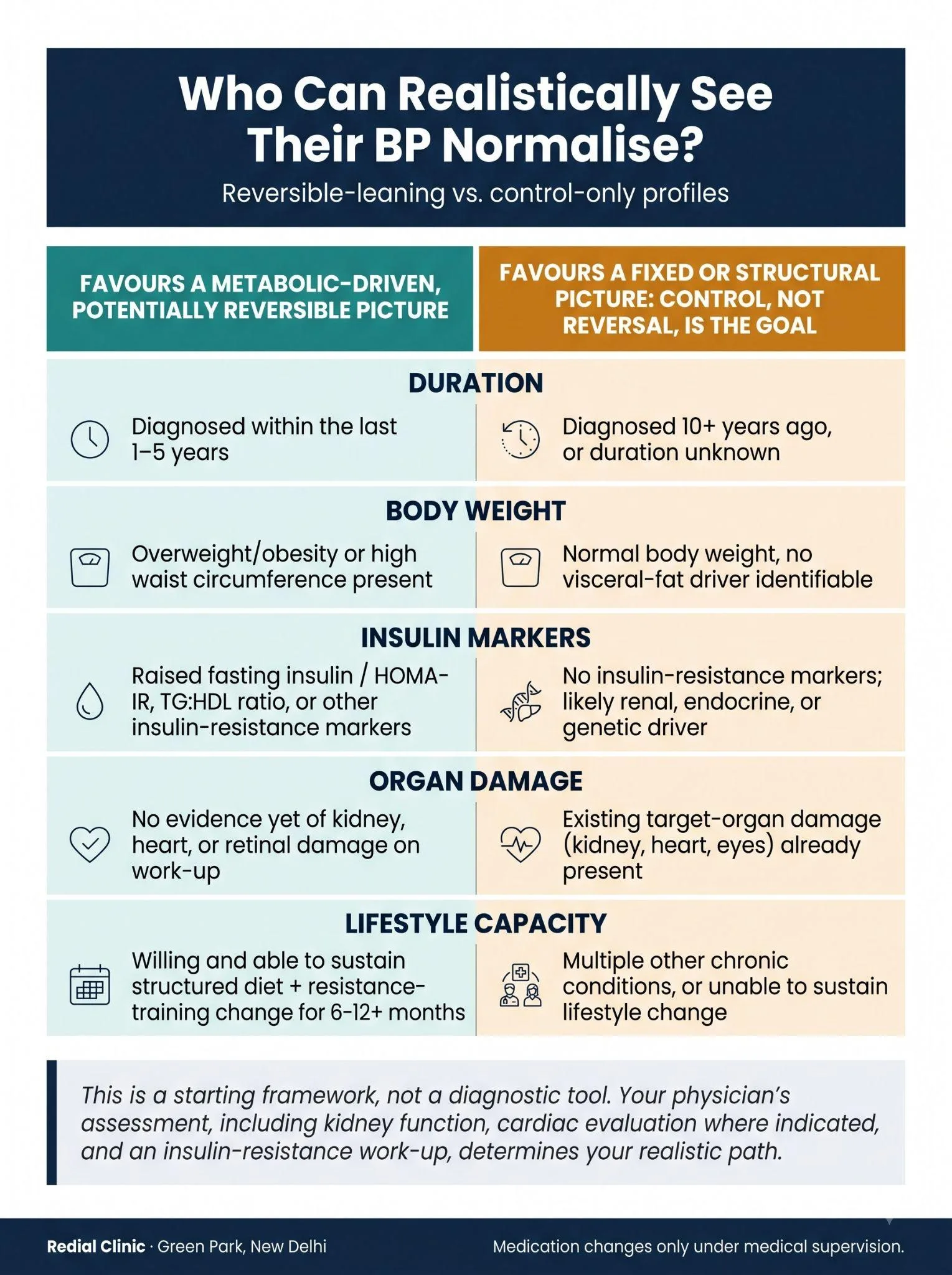
None of these factors work in isolation, and this table is a starting framework, not a diagnostic tool — an individual assessment by your physician, including kidney function, cardiac evaluation where indicated, and a proper insulin-resistance work-up, is what actually determines your realistic path. What the table is useful for is setting expectations honestly before you start: someone newly diagnosed with a high waist circumference and no organ damage is working with a very different starting point than someone who has had uncontrolled hypertension for fifteen years.
Can I stop BP medication if my readings normalise?
Not on your own — stopping or reducing blood pressure medication must always be a physician-supervised decision, never a self-directed one, even if your readings look normal for weeks or months at home. Blood pressure medications also protect blood vessels, kidneys, and the heart independent of the number on the cuff, and abrupt discontinuation carries a real risk of rebound hypertension.
This is one of the most important safety points in this entire article, so it’s worth restating plainly: a normal home BP reading while on medication tells you the medication is working, not that the underlying condition has resolved. Only a physician, typically through a structured, monitored taper — sometimes alongside continued lifestyle change and repeat testing — can determine whether a dose reduction or discontinuation is appropriate, and for which specific medication class. Some antihypertensives (particularly certain beta-blockers and centrally-acting agents) carry a specific rebound-hypertension risk if stopped abruptly, which is a separate danger from simply “needing” the medication again.
What a supervised process typically looks like: sustained lifestyle change over months, gradual and monitored dose reduction (never an abrupt stop) by your physician, home BP monitoring through the taper, and a clear plan to resume medication promptly if pressure rises again. This is fundamentally different from a patient quietly stopping their tablets because a home monitor showed a few good readings — that pattern is one of the more common and preventable causes of hypertensive emergencies we see.
We have seen patients who, encouraged by a run of normal home readings after losing weight, stopped their BP medication without telling us — only to return weeks later with pressure back in the 160s/100s range, sometimes with symptoms. In every case we’ve discussed this with, the lifestyle change itself was real and valuable; the problem was skipping the physician-supervised taper step, not the change itself.
What does the evidence actually say about BP remission?
The best available evidence — a Swedish nationwide registry study of nearly 16,000 patients with hypertension who underwent metabolic (bariatric) surgery — found that 39.3% were in blood-pressure remission (off medication, normal readings) at two years. But of those who achieved remission, more than half (56.3%) had relapsed again by ten years. This is the clearest large-scale evidence that BP remission is real, achievable in a meaningful minority, and not automatically permanent.
This 2021 study by Stenberg and colleagues, published in PLoS Medicine, also found that patients who achieved remission had roughly half the risk of major cardiovascular events and death compared with those who didn’t — even accounting for relapse over time. The factors most associated with achieving remission were higher postoperative weight loss and shorter duration of hypertension before treatment; factors reducing the chance of remission included longer disease duration, higher number of antihypertensive drugs already required, older age, and existing cardiovascular disease — closely matching the profile framework above.
This particular study used bariatric surgery as the weight-loss intervention, which is a more intensive route than most patients pursue — but the underlying physiological principle (substantial, sustained weight loss reduces insulin resistance and lowers BP) applies more broadly. A 2021 American Heart Association scientific statement reviewing weight-loss strategies for hypertension similarly concluded that obesity drives much of the risk for primary hypertension through neurohormonal activation, inflammation, and kidney dysfunction — and that sustained weight loss, however achieved, is one of the few interventions that addresses the mechanism itself rather than just the number.
The study was observational, so it shows an association between remission and lower cardiovascular risk rather than proving that remission itself causes it [4].
Table-stakes context most other BP articles skip: weight loss studies in general populations (not surgical) show real but more modest average BP reductions — meaningful clinically, but the size of effect on remission specifically is best documented through the more intensive weight-loss pathways studied so far. This is an active area of research, and results at the smaller lifestyle-only scale vary considerably between individuals.
Control versus reversal — what’s the real difference?
Control means your blood pressure numbers are in a safe range, whether through medication, lifestyle change, or both — but the underlying disease process may still be present and would return if the intervention stopped. Reversal (or remission) means the underlying driver has been substantially reduced, so blood pressure stays in a normal range without ongoing treatment — though it can still relapse if the driver (typically weight/insulin resistance) returns.
Three states, compared
| What changes | What it means for medication | |
| Medication control | BP numbers come down while the drug is on board; the underlying insulin resistance/visceral fat is unchanged | Stopping the drug typically brings pressure back up |
| Lifestyle control | Sodium reduction, weight loss, activity lower readings; root metabolic driver only partly addressed | May allow a lower medication dose under supervision; needs to be maintained indefinitely |
| Metabolic remission (selected patients) | Substantial, sustained reduction in visceral fat and insulin resistance | Some patients normalise BP and come off medication under physician supervision — with real relapse risk if weight is regained |
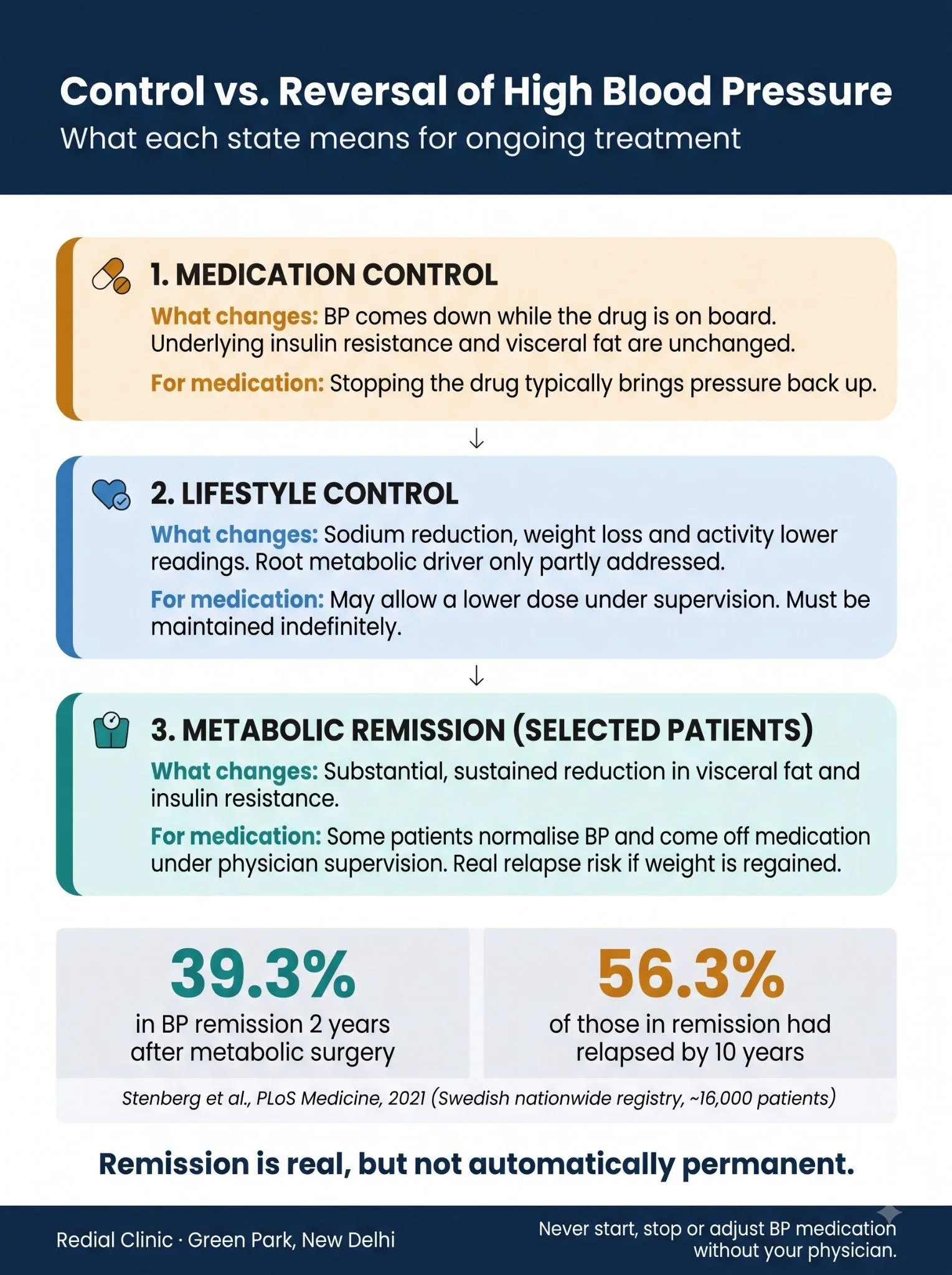
This distinction matters because it changes what “success” looks like for different patients. For someone with 15 years of uncontrolled hypertension and existing kidney involvement, well-managed control with medication plus supportive lifestyle change is a genuinely good outcome — not a failure to “reverse.” For someone newly diagnosed with clear metabolic drivers, aiming for remission through the two-lever approach — reducing glucose/insulin load through diet and increasing glucose disposal through resistance training and structured activity — is a realistic, evidence-supported goal worth pursuing under medical supervision.
Our broader approach to natural ways to lower blood pressure and lifestyle modifications for blood pressure control cover the practical how-to; this article is focused specifically on what’s realistic to expect from that effort.
For the mechanism behind why hypertension develops in the first place — not just in young adults but at any age — see our companion piece on what causes high blood pressure, which walks through the causation chain this article builds on.
MEDICAL DISCLAIMER
This article is for educational purposes only and does not constitute medical advice, diagnosis, or treatment. High blood pressure, its causes, and its management vary significantly between individuals. Never start, stop, or adjust any blood pressure medication without direct guidance from your physician. If you experience symptoms such as severe headache, chest pain, vision changes, or shortness of breath alongside high blood pressure readings, seek immediate medical attention. The clinical observations described as vignettes in this article are illustrative composites and are marked as pending confirmation by Dr. Gagandeep Singh.
BOOK A METABOLIC BLOOD PRESSURE REVIEW
If your blood pressure readings are creeping up, or you’re on medication and want to understand whether a metabolic driver is contributing, a structured review can clarify your realistic path — whether that’s better-optimised control or a genuine attempt at metabolic reversal under supervision. At Redial Clinic in Green Park, New Delhi, our metabolic blood-pressure review includes an insulin-resistance work-up (fasting insulin, HOMA-IR), waist circumference and body composition assessment, and a physician-led discussion of what’s realistic for your specific profile — never a one-size-fits-all promise.
Book a metabolic blood-pressure review: /treatments/hypertension-reversal/
Frequently Asked Questions
Can high blood pressure be cured permanently?
No treatment guarantees a permanent cure for everyone. In selected patients whose hypertension is driven mainly by excess weight and insulin resistance, and who have no long-standing organ damage, blood pressure can normalise and some are able to reduce or stop medication under physician supervision — but this outcome is not guaranteed, and relapse is possible if the underlying weight/metabolic driver returns. For most people, especially with longer-standing disease, well-managed control remains the realistic and medically appropriate goal.
High blood pressure is common in India. The ICMR-INDIAB national survey of 113,043 adults estimated hypertension prevalence at 35.5%, with abdominal obesity at 39.5% [1].
Is high blood pressure reversible?
It can be, for a meaningful subset of patients — most reliably those with a strong metabolic driver (excess visceral fat, insulin resistance) caught relatively early, without existing kidney, heart, or eye damage. Reversal (remission) means blood pressure returns to normal without ongoing medication; this is different from control, where numbers are managed but the underlying process may still be present.
Can I stop BP medication if my readings normalise?
Not without your physician’s direct guidance. A run of normal home readings while on medication usually means the medication is working, not that the condition has resolved. Stopping or reducing antihypertensive medication must be a supervised, gradual process — abrupt discontinuation carries a real risk of rebound hypertension, and some medication classes carry specific withdrawal risks.
What is the root cause of high blood pressure?
Most high blood pressure (roughly 90-95% of cases) is labelled “essential” hypertension, meaning no single structural cause was identified — but this usually does not mean there is no cause. In a large share of these patients, the root driver is metabolic: visceral fat and insulin resistance raising pressure through sodium retention, sympathetic nervous system activation, and blood vessel stiffening. Non-metabolic causes (kidney disease, hormonal conditions, certain medications, true genetic hypertension) also exist and should be ruled out by a physician.
References
- Ferrannini E et al. — Insulin Resistance in Essential Hypertension (1987)
https://doi.org/10.1056/NEJM198708063170605 - DeFronzo RA, Tripathy D — Skeletal Muscle Insulin Resistance Is the Primary Defect in Type 2 Diabetes (2009)
https://doi.org/10.2337/dc09-S302 - Stenberg E et al. — Remission, Relapse, and Risk of Major Cardiovascular Events After Metabolic Surgery in Persons With Hypertension (2021)
https://doi.org/10.1371/journal.pmed.1003817 - Hall ME et al. — Weight-Loss Strategies for Prevention and Treatment of Hypertension (2021)
https://doi.org/10.1161/HYP.0000000000000202 - Anjana RM et al. — ICMR-INDIAB National Cross-Sectional Study (2023)
https://doi.org/10.1016/S2213-8587(23)00119-5

 Facebook
 Instagram
 LinkedIn