



Written by: Dr. Gagandeep Singh, MBBS
Medically reviewed by: Dr. Gagandeep Singh, MBBS
Last updated: 20 June 2026 · Redial Clinic, Green Park, New Delhi
| Key Takeaways High blood pressure in young adults is increasingly common and is rarely explained by stress alone. In many young people it travels with belly fat and insulin resistance — part of a metabolic pattern, not an isolated reading. High insulin promotes sodium retention, activates the nervous system and stiffens arteries, all of which raise blood pressure. Other contributors include high salt and ultra-processed food, excess alcohol, poor sleep, and a family history. Some causes are secondary (kidney, hormonal, certain medications) and must be excluded by a doctor, especially when BP is very high or hard to control. Early metabolic hypertension is often improvable — addressing the root can reduce readings and, under supervision, medication needs. |
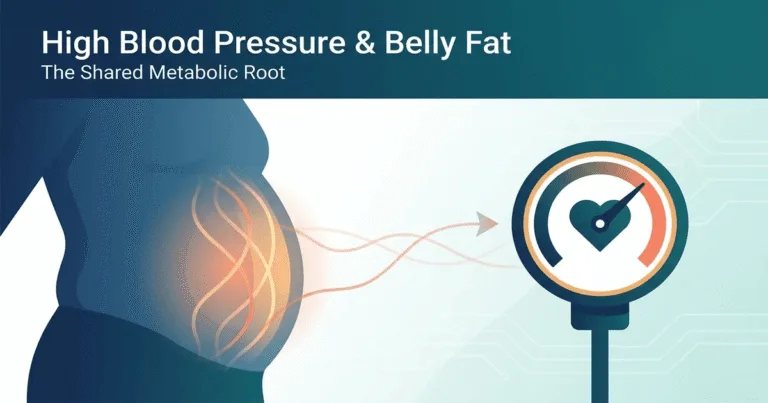
A blood-pressure reading of 150/95 in someone in their early thirties used to be unusual; in our clinic it is now routine. So what causes high blood pressure in young adults? The reflex answer is “stress and salt,” and while those matter, they miss the bigger story for many young patients: high blood pressure often arrives as part of a metabolic pattern, travelling alongside belly fat and insulin resistance.
This article explains the real drivers of early hypertension, which causes a doctor must rule out, and why treating the metabolic root — not just the number — gives young adults the best long-term outcome.
Why do young adults get high blood pressure?
Most early high blood pressure is primary (essential) hypertension linked to metabolic factors — excess weight, especially visceral belly fat, and insulin resistance — combined with high salt and processed-food intake, excess alcohol, poor sleep and inactivity. A smaller share is secondary to kidney or hormonal causes that need exclusion.
It is reassuring and clarifying to know that most cases are not mysterious. They reflect the same metabolic shift driving the rise in diabetes and obesity among young Indians.
That said, when blood pressure is very high, very resistant to treatment, or appears suddenly, a doctor should look for secondary causes — kidney disease, thyroid or adrenal problems, and certain medications or supplements.
How is high blood pressure linked to belly fat and insulin resistance?
When cells resist insulin, the body produces more of it, and high insulin raises blood pressure through several routes: it makes the kidneys retain sodium and water, activates the sympathetic “fight-or-flight” nervous system, and contributes to stiffer, less flexible arteries. Belly fat amplifies all of these effects.
This is the connection most young patients are never told about. Insulin resistance in essential hypertension is well documented — the higher the insulin, the more the pressure-raising machinery is switched on.
It also explains why high blood pressure, high sugar and excess weight so often appear together. We explore that overlap in the link between hypertension and diabetes.
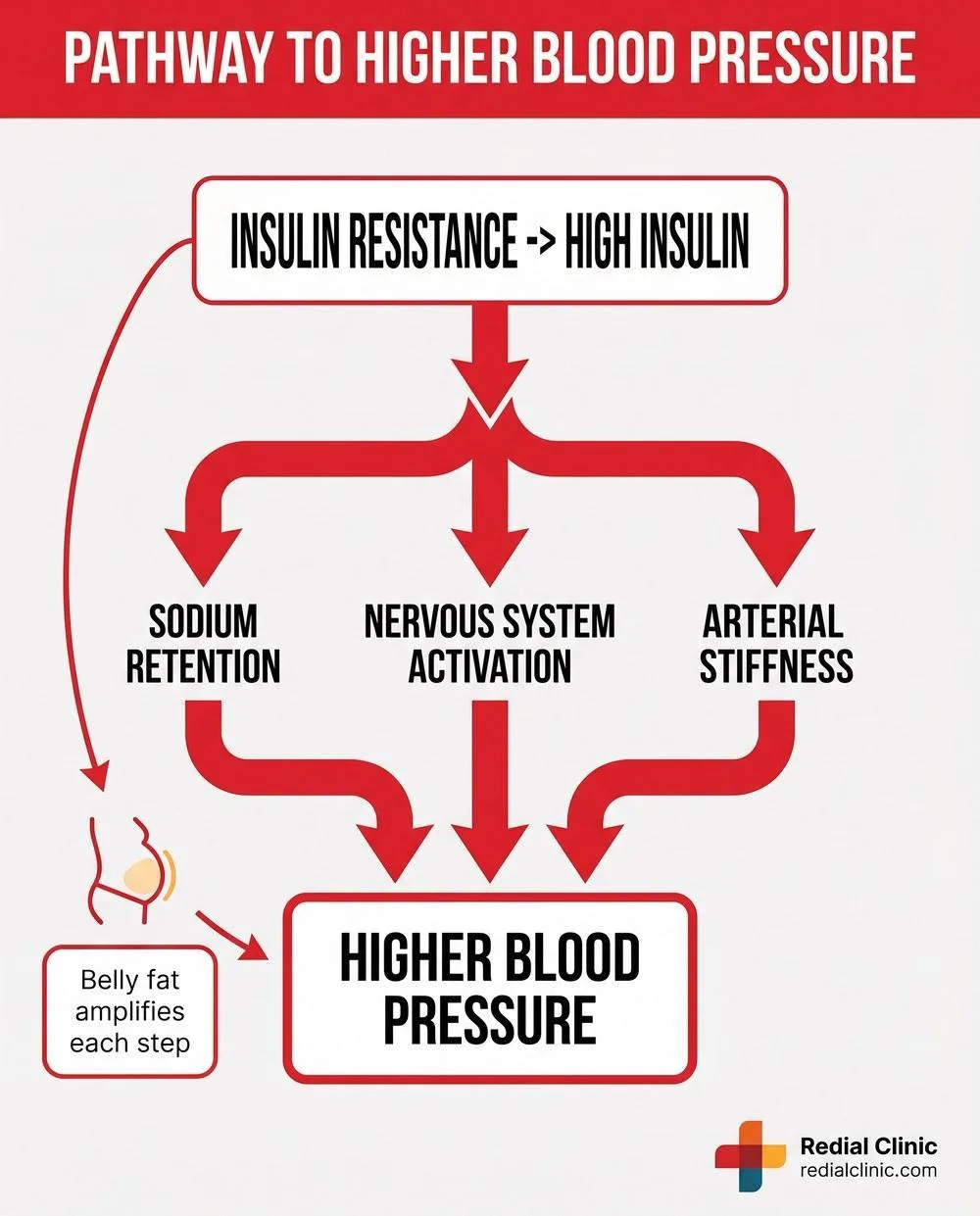
Infographic showing how insulin resistance raises blood pressure via sodium retention, nervous system activation and arterial stiffness
What other factors raise blood pressure in young people?
Beyond insulin resistance, the main drivers are a high-salt, ultra-processed diet, excess alcohol, low physical activity, poor or short sleep, chronic stress, smoking, and a family history of hypertension. Some supplements, painkillers and stimulants can also push readings up.
Salt matters, but it is rarely the only villain — pinning early hypertension entirely on salt misses the metabolic picture. The modern young-adult lifestyle stacks several of these factors together.
Sleep deserves special mention: short or poor sleep raises blood pressure and worsens insulin resistance, creating a loop that is easy to overlook in a busy professional’s life.
| A typical young patient we see in Green Park is a software professional in their early thirties: expanding waistline, six hours of broken sleep, daily takeaway meals, and a blood pressure of 145/95 they assumed was just work stress. Their fasting insulin and waist measurement usually tell the real story. |
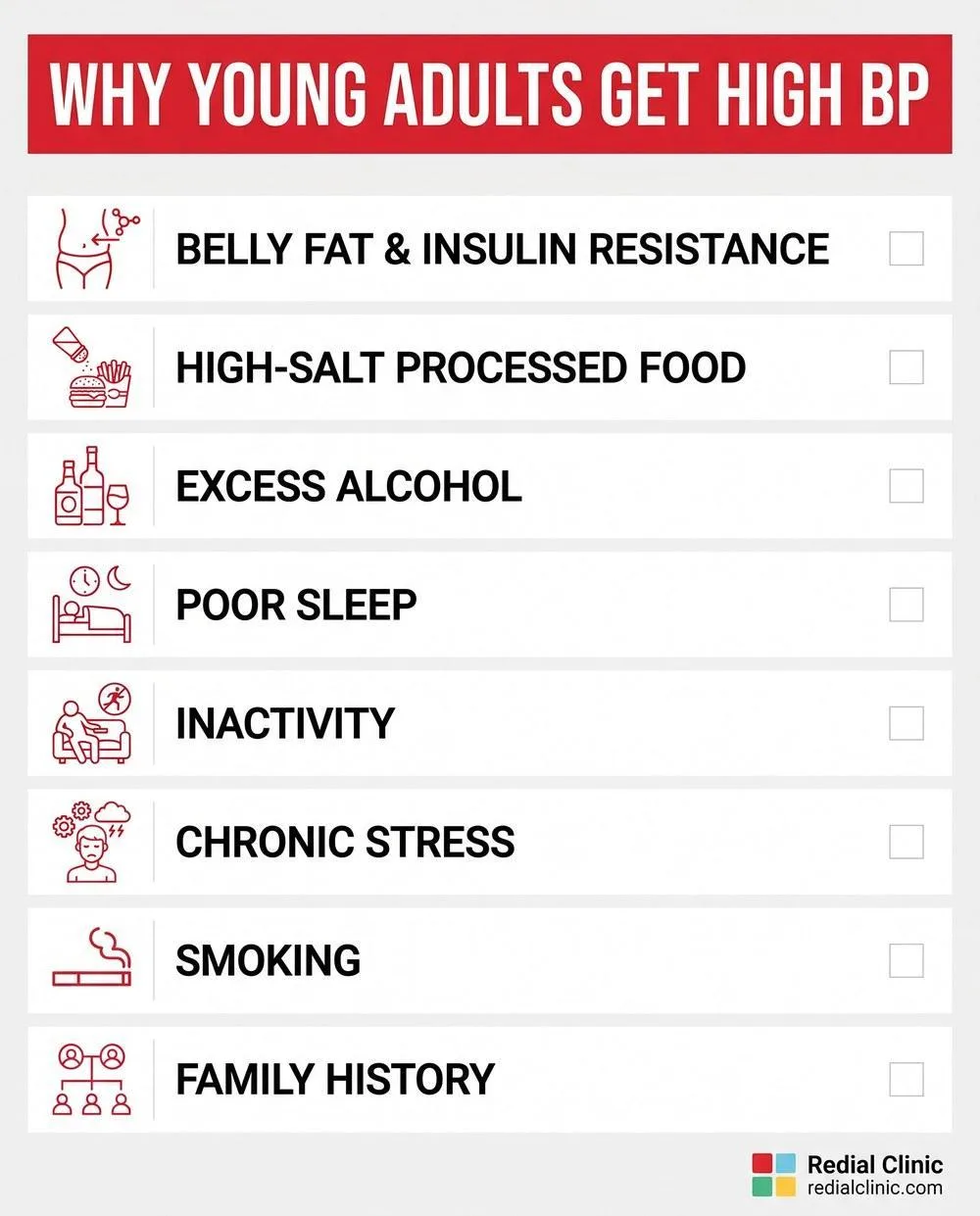
Infographic checklist of common causes of high blood pressure in young adults
Can high blood pressure at a young age be reversed?
Often, yes — early metabolic hypertension frequently improves when the root cause is addressed: losing visceral fat, improving insulin sensitivity, cutting processed salt and alcohol, sleeping better and exercising. Many young adults lower their readings substantially, and some reduce medication under their doctor’s supervision.
The same two-lever metabolic work that reverses insulin resistance tends to bring blood pressure down with it. Our guides to natural ways to lower blood pressure and lifestyle modifications for blood-pressure control give the practical steps, and our hypertension reversal programme supervises the medical side.
Important caveat: if you are already on blood-pressure medication, do not stop or reduce it yourself. As your metabolism improves, your doctor can adjust the dose safely — but unsupervised changes can be dangerous.
Frequently Asked Questions
Why do young adults get high blood pressure?
Most early high blood pressure is primary hypertension linked to metabolic factors — belly fat and insulin resistance — combined with high salt and processed food, excess alcohol, poor sleep and inactivity. A smaller proportion is secondary to kidney or hormonal causes, which a doctor should exclude when readings are very high or hard to control.
Can high blood pressure at a young age be reversed?
Often it can be substantially improved when the root cause is addressed through weight loss, better insulin sensitivity, reduced salt and alcohol, good sleep and exercise. Many young adults lower their readings and some reduce medication under supervision. Any medication change must be made by your doctor.
Is high blood pressure in young adults dangerous?
Yes, if ignored. Even at a young age, sustained high blood pressure raises the long-term risk of heart, kidney and brain disease, and it compounds other metabolic risks. The encouraging part is that early intervention is highly effective. Getting assessed and acting early changes the trajectory.
How is high blood pressure linked to belly fat?
Belly (visceral) fat drives insulin resistance, which raises insulin levels. High insulin makes the kidneys retain sodium, activates the sympathetic nervous system, and stiffens arteries — all of which raise blood pressure. This is why losing visceral fat often lowers readings.
Next step
| If you are under 40 with rising blood pressure, the most useful next step is to check what is driving it — including your waist circumference, insulin resistance and metabolic markers.
Book a Metabolic Assessment at Redial Clinic, Green Park, New Delhi. |
Medical disclaimer: This article is for informational purposes only and does not constitute medical advice. Always consult a qualified healthcare professional before making changes to your diet, exercise, medication, or treatment plan.
References
1. Ferrannini E, Buzzigoli G, Bonadonna R, et al., “Insulin Resistance in Essential Hypertension,” New England Journal of Medicine, 1987. https://doi.org/10.1056/NEJM198708063170605
2. Taylor R, “Type 2 Diabetes: Etiology and Reversibility,” Diabetes Care, 2013. https://doi.org/10.2337/dc12-1805
3. Anjana RM, Unnikrishnan R, Deepa M, et al., “Metabolic non-communicable disease health report of India: the ICMR-INDIAB national cross-sectional study (ICMR-INDIAB-17),” The Lancet Diabetes & Endocrinology, 2023. https://doi.org/10.1016/S2213-8587(23)00119-5
4. DeFronzo RA, Tripathy D, “Skeletal Muscle Insulin Resistance Is the Primary Defect in Type 2 Diabetes,” Diabetes Care, 2009. https://doi.org/10.2337/dc09-S302

 Facebook
 Instagram
 LinkedIn