



Written By: Mansi Bhatt, MSc Food and Nutrition
Medically Reviewed By: Dr. Gagandeep Singh, MBBS
Last Updated: 29 September 2026 · Redial Clinic, Green Park, New Delhi.
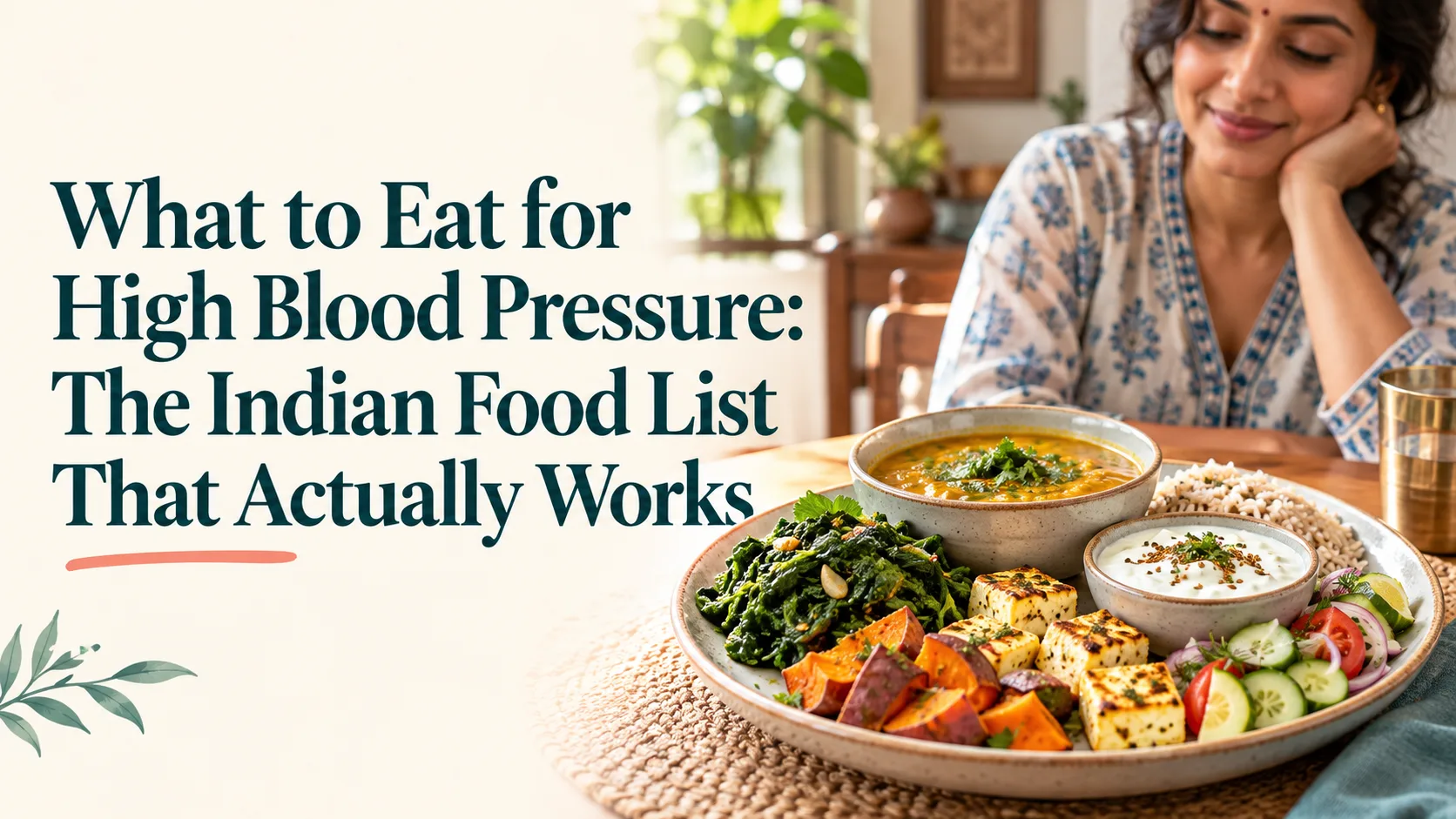
A potassium-rich, protein-forward Indian plate — the pattern this guide builds toward.
| Key Takeaways Cutting salt alone rarely normalises blood pressure — most Indian diets are also short on potassium, and it is the sodium-to-potassium ratio, not sodium in isolation, that tracks most closely with BP. Potassium-rich Indian foods — palak, banana, coconut water, curd, sweet potato, dal — help the kidneys excrete more sodium and relax blood vessel walls. Protein (paneer, eggs, fish, dal) and fibre blunt the insulin spikes that drive sodium and water retention — a mechanism plain “low-salt” advice misses. Refined carbohydrates (maida, sugar, white rice in excess, bakery snacks) raise insulin, which itself pushes the kidneys to hold onto sodium — cutting these matters as much as cutting salt. This is a companion piece to our DASH diet guide — read this for the specific food list and myth-correction; read that one for the full day-wise Indian DASH meal pattern. Medication changes are a physician decision only — never stop or reduce a blood pressure drug because your diet has improved without medical supervision. |
What to Eat for High Blood Pressure?
For high blood pressure, prioritise potassium-rich vegetables and fruits (palak, banana, coconut water, sweet potato), good-quality protein (paneer, eggs, fish, dal), curd, nuts, and healthy fats, while cutting refined carbohydrates, processed and packaged snacks, and pickled or ultra-processed foods — not just table salt.
This is the direct answer, but the reasoning matters. Most Indian households are told a single instruction — “kam namak khao” (eat less salt) and stop there. Salt reduction helps, but it is one lever out of at least three: sodium intake, potassium intake, and the insulin response driven by refined carbohydrates. A plate can be technically “low-salt” and still keep blood pressure elevated if it is also low in potassium and high in refined carbs.
At Redial Clinic in Green Park, New Delhi, we build blood pressure nutrition plans around all three levers together, because in our experience patients who fix only the salt shaker often plateau.
*Disclaimer: Before you raise your potassium intake: If you have chronic kidney disease, or take an ACE inhibitor (such as ramipril or enalapril), an ARB (such as telmisartan or losartan), or a potassium-sparing diuretic (such as spironolactone), high potassium intake can push blood potassium to dangerous levels. Speak to your doctor before increasing potassium-rich foods or coconut water, and never take potassium supplements unless they have been prescribed.
Why “Just Cut Salt” Is Incomplete Advice
Cutting salt alone is incomplete because blood pressure responds to the balance between sodium and potassium, not sodium in isolation; most Indian diets run low on potassium-rich whole foods even when they are technically low-salt, which blunts the benefit of salt reduction alone.
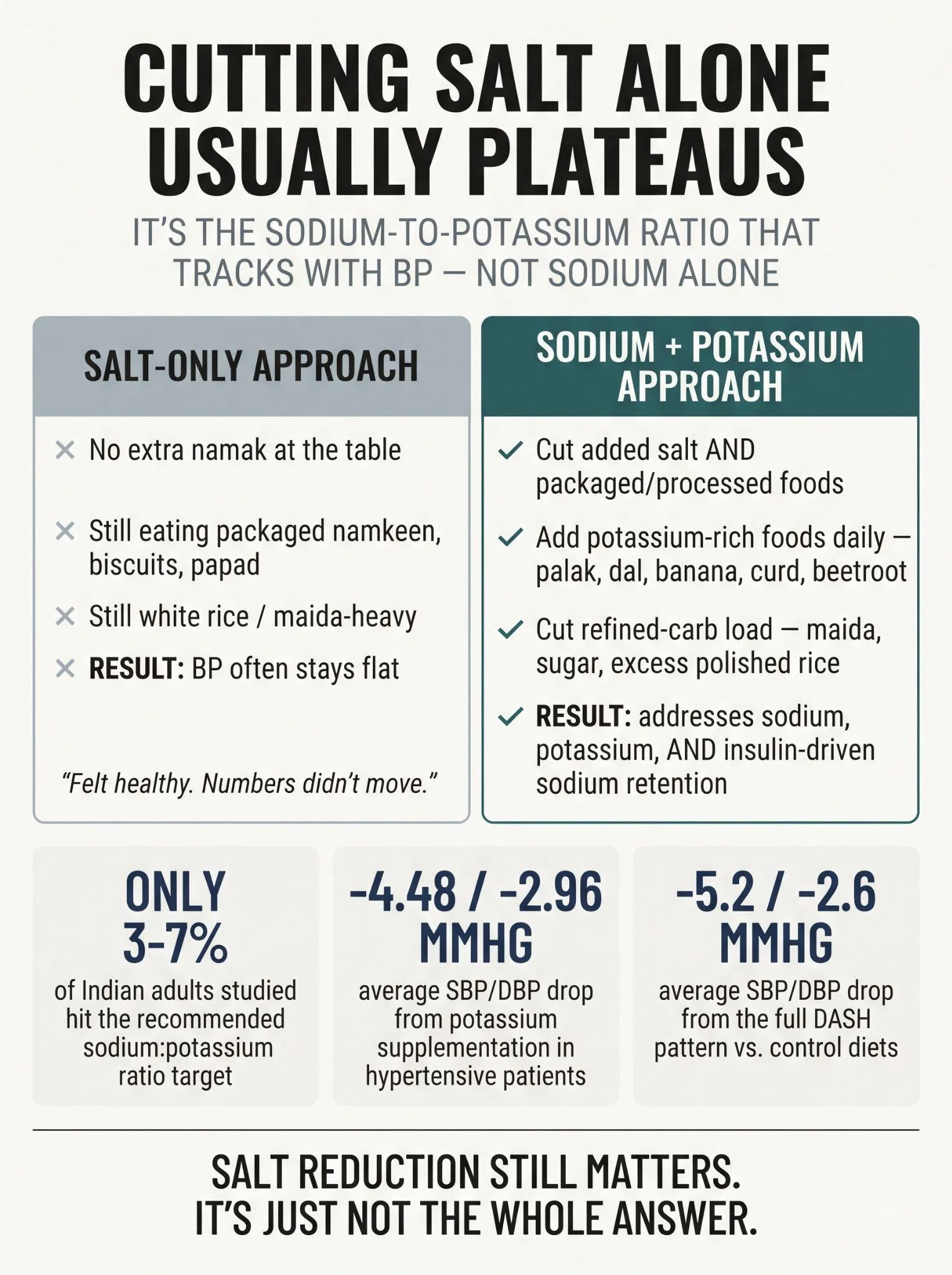
Population studies from North India have found that the urinary sodium-to-potassium ratio meets the recommended target of below 1 in only about 3% of rural and under 7% of urban adults studied — meaning the typical Indian diet is not just “high-salt,” it is simultaneously potassium-poor. Higher potassium excretion (a marker of intake) was linked to meaningfully lower systolic blood pressure on follow-up in this data. Researchers therefore concluded that promoting potassium-rich foods may be a more realistic strategy than sodium reduction alone.
[1]. Separately, a systematic review and meta-analysis of randomised controlled trials in people with hypertension found that potassium supplementation reduced systolic blood pressure by an average of 4.48 mmHg and diastolic blood pressure by 2.96 mmHg — with the largest benefit seen in people whose baseline potassium intake was low and whose sodium intake was high.
[2]. That description fits a large share of urban Indian diets: rice- or roti-heavy, snack-heavy, and light on vegetables and fruit.
There is also an insulin dimension the “salt-only” framing misses entirely. Refined carbohydrates — maida, sugar, white bread, most packaged snacks, and excess polished rice — spike insulin. Elevated insulin makes the kidneys reabsorb more sodium and water, which raises blood pressure independent of how much salt is on the plate [3]. This is why some patients who switch to “low-salt” biscuits and namkeen (which are still high in refined carbohydrate) see little change in their readings.
Which Indian Foods Lower Blood Pressure?
Indian foods that support lower blood pressure include leafy greens (palak, methi), non-starchy vegetables (lauki, tinda, bhindi, karela), potassium-rich staples (sweet potato, banana, coconut water), curd, good-quality protein (paneer, eggs, fish, dal), nuts, and cooking fats like ghee or olive oil used in place of refined vegetable oils.
* Disclaimer: If your blood pressure reads 180/120 mmHg or higher, or you have high readings along with chest pain, a severe headache, breathlessness, blurred vision, confusion or weakness on one side of the body, seek emergency medical care. Food changes are for long-term control, not for a blood pressure emergency.
Group these into practical categories for your kitchen:
- Leafy greens and non-starchy vegetables: palak, methi, lauki, tinda, turai, karela, cabbage, bhindi — high potassium, high fibre, low glycaemic load.
- Potassium-dense staples: banana, sweet potato (shakarkandi), coconut water, beetroot, tomato — use these to actively raise potassium intake, not just as “healthy defaults.”
- Protein sources: paneer, eggs, fish (rohu, pomfret, salmon where available), chicken, dal/lentils, curd — protein and fibre slow the insulin spike that drives sodium retention.
- Fermented dairy: plain curd/dahi and buttermilk (chaas) — potassium-rich and a good substitute for salty packaged drinks.
- Nuts and seeds: almonds, walnuts, pumpkin seeds in moderate quantity — potassium and magnesium alongside healthy fats.
- Fats to prefer: desi ghee, cold-pressed mustard oil, extra virgin olive oil, coconut oil — in place of refined/reused vegetable oils, which are more strongly linked to processed-food patterns.
- What to actively cut back: packaged namkeen, papad, pickles (achaar), instant noodles, bakery items (maida-based), restaurant curries finished with excess butter/cream, and processed/canned foods — these concentrate sodium and refined carbohydrate together, which is the worst combination for blood pressure.
| From the clinicA common pattern we see at the clinic: a patient arrives having already cut salt at home — no extra namak on the table, less pickle — but is still snacking on packaged namkeen and biscuits through the day and eating white rice at both lunch and dinner. Their BP barely moves until we rebuild the plate around dal, palak, curd, and a fruit, and cut the packaged snacks — not just the salt shaker. |
Potassium-Rich Indian Foods: The Data Table
The Indian foods with the highest potassium content per 100 g include spinach (about 558 mg), sweet potato (about 475 mg), potato with skin (about 425 mg), dal/lentils (about 369 mg), banana (about 358 mg), beetroot (about 305 mg), tomato (about 237 mg), pomegranate (about 236 mg), coconut water (about 250 mg) and curd (about 155 mg).
Use this table to build a plate that actively raises potassium intake rather than assuming any “healthy-sounding” food automatically does so.
| Food (100 g, edible portion) | Potassium (mg) | % of adult daily target* |
| Spinach (palak), raw | ~558 mg | ~16% |
| Sweet potato (shakarkandi), baked | ~475 mg | ~14% |
| Potato, with skin | ~425 mg | ~12% |
| Dal/lentils, cooked | ~369 mg | ~11% |
| Banana | ~358 mg | ~10% |
| Beetroot, cooked | ~305 mg | ~9% |
| Coconut water, unsweetened | ~250 mg | ~7% |
| Tomato, raw | ~237 mg | ~7% |
| Pomegranate | ~236 mg | ~7% |
| Curd/dahi, plain | ~155 mg | ~4% |
*Based on a general adult daily target of 3500 mg potassium; individual targets vary and patients with chronic kidney disease must have potassium intake guided by their treating physician, not by this table.
Potassium-rich Indian foods ranked by content per 100 g — build meals around the top of this list.
*Disclaimer: Check before you raise potassium. Potassium-rich foods are safe for most people, but they can push potassium to dangerous levels if you have chronic kidney disease or take certain blood pressure medicines: ACE inhibitors (such as ramipril or enalapril), ARBs (such as telmisartan or losartan), or potassium-sparing diuretics (such as spironolactone). If you take any of these, ask your doctor before significantly increasing high-potassium foods, including coconut water, banana and sweet potato, and have your potassium levels checked as advised.
Which Fruits Are Good for High Blood Pressure?
The best fruits for high blood pressure are banana, pomegranate, guava, papaya, kiwi, berries, watermelon, and orange — chosen for their combination of potassium, fibre, and a relatively low glycaemic load that avoids the insulin-driven sodium retention that refined-sugar snacking causes.
A few practical notes for choosing fruit:
- Banana and coconut are useful potassium sources, but portion them (half to one banana at a time) if you are also watching blood sugar or weight, since they carry more natural sugar than berries or guava.
- Pomegranate and berries combine potassium with polyphenols and a lower glycaemic load — a good default choice between meals.
- Watermelon is hydrating and potassium-containing but has a high glycaemic index in large portions — keep servings modest, particularly for patients with coexisting insulin resistance or type 2 diabetes.
- Whole fruit is preferred over fruit juice — juicing strips fibre and concentrates sugar, blunting the blood-pressure benefit and adding an insulin load.
- Avoid relying on dried fruit (raisins, dried apricots) as a primary strategy — they are potassium-dense but also calorie- and sugar-dense per gram, so small handfuls only.
The DASH-Pattern Plate, Indian Style
The DASH pattern for blood pressure — Dietary Approaches to Stop Hypertension — emphasises vegetables, fruits, whole/adapted proteins, nuts, and healthy fats while minimising refined carbohydrates, sugar, and processed food; for Indian kitchens this means building each plate around palak/dal/paneer-style combinations rather than Western low-fat dairy and whole-grain bread.
This section is a summary only. For the complete day-wise Indian-adapted DASH meal plan, principles, and a fuller Western-vs-Indian DASH comparison, read our companion guide:
DASH Diet Explained (with an Indian Twist)
In brief, the Indian-adapted DASH plate we use at Redial Clinic looks like this at each meal:
- Half the plate: non-starchy vegetables and/or a potassium-rich item (palak, lauki, tomato, beetroot).
- A quarter of the plate: protein (paneer, egg, fish, dal, chicken).
- A quarter of the plate or less: controlled carbohydrate (roti/rice portion, or a low-GI substitute).
- A cooking fat from the “prefer” list (ghee, olive oil, mustard oil) rather than reused refined oil.
A systematic review and meta-analysis of 20 randomised controlled trials (1,917 participants) found the DASH dietary pattern lowers systolic blood pressure by an average of 5.2 mmHg and diastolic blood pressure by 2.6 mmHg compared with control diets, with larger reductions in participants who started with higher blood pressure or higher BMI [4]. That is a clinically meaningful reduction from diet alone, though individual results vary and it does not replace prescribed medication without medical supervision.
Does Cutting Salt Alone Lower Blood Pressure?
Cutting salt alone can lower blood pressure somewhat, but the effect is usually smaller than combining sodium reduction with higher potassium intake and lower refined-carbohydrate intake; the ratio of sodium to potassium in the diet predicts blood pressure outcomes more consistently than sodium reduction by itself.
This is the core myth this article sets out to correct. Salt restriction is genuinely useful, especially in salt-sensitive individuals, and nobody should read this as license to season freely. But in Indian dietary surveys, sodium intake is frequently double or more the recommended limit while potassium intake sits well below target — meaning the sodium-to-potassium ratio, not sodium in isolation, is usually the bigger problem
Two people can eat identical amounts of salt and see different blood pressure responses depending on how much potassium, protein, and refined carbohydrate the rest of their plate contains.
Practically, this means: yes, reduce added salt, packaged snacks, and pickles — and, at the same time, actively add potassium-rich vegetables, fruit, dal, and curd, and cut refined-carbohydrate load. Doing only the first half is why many patients feel like they “ate healthy” for months without their BP reading changing much.
* A note on medication: Dietary changes — including the pattern described in this article — can meaningfully support blood pressure control, and in selected patients under physician supervision may allow a gradual reduction in medication dose. This is always a decision made by your treating doctor based on your readings over time, never something to do on your own. Never stop or reduce a prescribed antihypertensive medication without medical guidance; doing so can cause a dangerous rebound rise in blood pressure.
Many “low-sodium” or “lite” salts replace sodium with potassium chloride. They carry the same risks as high-potassium foods for people with kidney disease or on the medicines listed above, so check with your doctor before switching.
If you are elderly, on a diuretic (“water pill”), or pregnant, don’t restrict salt sharply without medical advice. Very low salt intake can lower blood sodium in some people. High blood pressure in pregnancy always needs care from your obstetrician.
A Realistic Day of Eating
A realistic day for blood pressure combines a protein- and potassium-forward breakfast, a dal/vegetable/protein lunch, a fruit or nuts snack, and a light dinner built around vegetables and protein rather than refined carbohydrate — quantities should be individualised to your weight, activity, and any coexisting conditions.
| Meal | Example |
| Breakfast | Vegetable-and-egg bhurji or moong dal chilla with palak, a small bowl of curd, and a glass of coconut water |
| Lunch | Dal or grilled fish/paneer, sautéed palak or lauki sabzi, cucumber-tomato salad, one roti or a controlled portion of rice |
| Snack | A small bowl of pomegranate or berries, or a handful of almonds/walnuts |
| Dinner | Chicken or paneer curry cooked in ghee with a side of beetroot or tinda sabzi and a light salad; keep starch minimal |
Note: quantities depend on your weight, activity level, kidney function, and any coexisting conditions (diabetes, chronic kidney disease). This is a pattern to adapt with a clinician or nutritionist, not a fixed prescription.
Why a salt-only strategy plateaus, and what a sodium-plus-potassium approach adds.
| From the clinicWe often see patients who have been “salt-conscious” for years — home cooking, minimal added namak — yet their BP sits stubbornly at 140/90. Once we assess their full diet, the gap is usually on the potassium side: little dal, little green vegetable, fruit skipped most days, and rice or maida-heavy snacking filling the calorie gap. Rebuilding potassium intake alongside the existing salt discipline is often what finally moves the number. |
Related Reading from Redial Clinic
This guide is one part of a broader approach to blood pressure nutrition. For deeper detail on specific angles, see:
- DASH Diet Explained (with an Indian Twist) — the full day-wise Indian DASH meal plan and principles.
- Natural Ways to Lower Blood Pressure — the broader lifestyle approach beyond diet alone.
- Lifestyle Modifications for Blood Pressure Control — a practical lifestyle checklist.
- The Link Between Hypertension and Diabetes — why insulin resistance connects both conditions.
- Hypertension Reversal Treatment Programme — how Redial Clinic structures supervised, physician-led care.
Ready for a Personalised Blood Pressure Nutrition Plan?
A food list is a starting point, not a substitute for an individualised plan that accounts for your current medications, kidney function, blood sugar, and weight. If your blood pressure readings are not moving despite “eating healthy,” a structured nutrition review often finds the gap.
Book a Metabolic Assessment at Redial Clinic, Green Park, New Delhi. |
Frequently Asked Questions
Q1. What should I eat to lower blood pressure?
Prioritise potassium-rich vegetables and fruits (palak, banana, coconut water, sweet potato, beetroot), good-quality protein (paneer, eggs, fish, dal), curd, and nuts, while cutting refined carbohydrates, packaged snacks, and pickled/processed foods. Reducing added salt still matters, but pairing it with higher potassium intake produces a bigger, more consistent effect on blood pressure than salt reduction alone.
Q2. Which Indian foods lower blood pressure?
Leafy greens (palak, methi), non-starchy vegetables (lauki, tinda, karela, bhindi), potassium-dense staples (sweet potato, banana, coconut water, beetroot), curd, dal, paneer, eggs, and fish are the core Indian foods to build meals around. Limit packaged namkeen, papad, pickles, and maida-based bakery items, which combine high sodium with refined carbohydrate.
Q3. Which fruits are good for high blood pressure?
Banana, pomegranate, guava, papaya, kiwi, berries, watermelon, and orange are good choices — they combine potassium with fibre and a relatively manageable glycaemic load. Prefer whole fruit over fruit juice, and portion higher-sugar fruits like banana and watermelon if you are also managing blood sugar or weight.
Q4. Does cutting salt alone lower blood pressure?
Cutting salt alone can help, especially in salt-sensitive individuals, but the effect is usually smaller than combining it with higher potassium intake and lower refined-carbohydrate intake. The sodium-to-potassium ratio in the diet tracks with blood pressure more consistently than sodium reduction by itself — which is why many people who “cut salt” see only a partial improvement until they also raise potassium and cut back on refined-carb snacking.
Medical Disclaimer
This article is for educational purposes only and does not constitute individual medical advice. The foods, portions and meal patterns described here are general guidance and should be adapted to your health with your doctor or a qualified nutritionist.
Never stop, skip or reduce a prescribed blood pressure medicine because your diet or readings have improved. Stopping suddenly can cause a dangerous rebound rise in blood pressure. In some patients, dietary change can support a gradual reduction in medication, but this is always a decision for your treating physician, based on your readings over time. How much diet alone lowers blood pressure varies from person to person.
Speak to your doctor before significantly increasing potassium-rich foods, or using potassium-based “low-sodium” salt substitutes, if any of the following apply:
- You have chronic kidney disease.
- You take ACE inhibitors, ARBs, spironolactone or other potassium-sparing medicines.
- You have been told to limit potassium.
If your blood pressure reading is 180/120 mmHg or higher, or you have a severe headache, chest pain, breathlessness, sudden vision changes, confusion, or weakness or numbness on one side, seek emergency care immediately.
References
- Anand S, Shivashankar R, Kondal D, et al., “Potassium Intake in India: Opportunity for Mitigating Risks of High-Sodium Diets,” American Journal of Preventive Medicine, 2020. https://doi.org/10.1016/j.amepre.2019.09.017 Anand et al. — Potassium Intake in India
- Filippini T, Violi F, D’Amico R, Vinceti M, “The effect of potassium supplementation on blood pressure in hypertensive subjects: A systematic review and meta-analysis,” International Journal of Cardiology, 2017. https://doi.org/10.1016/j.ijcard.2016.12.048. Filippini et al. — The effect of potassium supplementation on blood pressure
- DeFronzo RA, Cooke CR, Andres R, Faloona GR, Davis PJ. “The effect of insulin on renal handling of sodium, potassium, calcium, and phosphate in man.” Journal of Clinical Investigation, 1975. https://doi.org/10.1172/JCI107996
- Siervo M, Lara J, Chowdhury S, et al., “Effects of the Dietary Approach to Stop Hypertension (DASH) diet on cardiovascular risk factors: a systematic review and meta-analysis,” British Journal of Nutrition, 2015. https://doi.org/10.1017/S0007114514003341 Siervo et al. — Effects of the DASH diet on cardiovascular risk factors
- Sacks FM, Svetkey LP, Vollmer WM, et al., “Effects on Blood Pressure of Reduced Dietary Sodium and the Dietary Approaches to Stop Hypertension (DASH) Diet,” New England Journal of Medicine, 2001. https://doi.org/10.1056/NEJM200101043440101 Sacks et al. — Effects on Blood Pressure of Reduced Dietary Sodium and the DASH Diet

 LinkedIn