




Medically Reviewed By: Dr. Gagandeep Singh, MBBS
Last Updated: 2 October 2026 · Redial Clinic, Green Park, New Delhi
Tracking fertility during PCOS reversal means keeping a simple record of your cycle and, with your doctor, confirming whether you are actually ovulating. A period on its own does not prove ovulation. This is not about obsession. It is about reconnecting with your biology, understanding your rhythm, and recognising a body that is responding to care.
| Key Takeaways PCOS is a reproductive, metabolic and psychological condition [1]. Insulin resistance is common, even in many women who are not overweight, though some lean women have normal insulin sensitivity [2]. A period is not proof of ovulation: ovulation problems can occur even with regular cycles, and a timed progesterone blood test is how ovulation is confirmed [1] [3]. Keep a cycle log. For adults, cycles shorter than 21 days or longer than 35 days, or fewer than 8 a year, count as irregular [1]. Basal body temperature charts are not recommended for confirming ovulation, because they do not reliably predict it [3]. A healthy lifestyle helps even without weight loss [1], but trials have not yet measured its effect on live births [4]. See a doctor if you have not conceived after 12 months of trying, or sooner if you are 36 or older or have irregular or absent periods [3]. |
Why does PCOS affect much more than your periods?
PCOS is a reproductive, metabolic and psychological condition, not only a gynaecological one [1]. It affects an estimated 10–13% of women [1], and Indian studies report anywhere from 3.7% to 22.5%, depending on the population studied and the criteria used [5]. Irregular cycles, weight changes, acne and fertility worries often arrive together.
For many women, PCOS means years of confusion, unpredictability, emotional exhaustion and fear about the future. Irregular cycles, weight that refuses to budge, acne, unwanted hair growth, and the silent question “Will I ever become a mother?” often arrive together. If you are new to the condition, start with our guide to what PCOS is.
Most women hear the same sentence: “Yeh PCOS hai… tablets lete raho.” Medicines can be an important part of care, but on their own they are often an incomplete answer, because PCOS is not merely a hormone problem.
Many women are diagnosed late. Dr. Gagandeep Singh, founder of Redial Clinic, spoke to News18 about why PCOS in teens often goes undiagnosed and how early action can help.
How is insulin resistance linked to ovulation in PCOS?
Women with PCOS often have marked insulin resistance that is not explained by weight alone, although some lean women have normal insulin sensitivity [2]. Insulin also acts on the ovary, where it influences androgen production, and higher androgens in turn worsen insulin resistance [2]. That loop is one way metabolism and ovulation become linked.
One of the most common myths in women’s health is that PCOS is only an ovarian problem. In many women, the chain looks like this:
- Insulin resistance and high insulin levels push up androgen production
- Hormonal imbalance disrupts ovulation
- Irregular ovulation affects fertility
When insulin sensitivity improves, ovulation can become more regular for some women. Fertility does not suddenly appear; it tends to return gradually, alongside metabolic change.
Does a period mean you have ovulated?
Not necessarily. A bleed does not prove that an egg was released, and ovulation problems can occur even when cycles look regular [1]. If ovulation needs to be confirmed, the usual test is a serum progesterone blood test taken in the second half of the cycle, about a week before your next expected period [3].
Some bleeds, such as a withdrawal bleed after a course of hormone tablets, happen without an egg being released. Watch our short reel to know more.
Fertility depends on the body ovulating consistently again. This is why tracking fertility during PCOS reversal matters, not anxiously, but wisely.
How do you track ovulation when you have PCOS?
Start with a cycle log, then confirm with tests your doctor orders. Note the first day of every period: for adults, cycles shorter than 21 days or longer than 35 days, or fewer than 8 a year, count as irregular [1]. A timed progesterone test confirms ovulation, while temperature charts are not reliable for it [3].
| Method | What it tells you | What the guidelines say |
| Cycle log (app or diary) | How long and how regular your cycles are over several months | Adults: under 21 or over 35 days, or fewer than 8 cycles a year, is irregular. In the first three years after periods start, up to 45 days can still be within range [1] |
| Progesterone blood test | Whether you ovulated in that cycle | Day 21 of a 28-day cycle; with longer, irregular cycles it is done later (for example day 28 of a 35-day cycle) and repeated weekly until the next period [3] |
| FSH and LH blood tests | The hormone pattern behind irregular cycles | Offered to women with irregular cycles [3] |
| Basal body temperature chart | A rise in temperature after ovulation | Not recommended for confirming ovulation, because it does not reliably predict it [3] |
| LH (ovulation) test strips | A surge of LH in urine | Neither guideline we cite advises on these for PCOS; ask your doctor whether they are useful for you |
| Ultrasound follicle tracking | Whether a follicle grows and releases an egg | Arranged by a gynaecologist or fertility specialist when it is needed |
Tracking methods at a glance. Your doctor decides which tests you need and when.
What signs suggest your cycle is improving?
The most useful sign is a cycle that becomes more regular over several months, ideally confirmed by a progesterone test. Other changes women notice, such as shifts in cervical mucus, steadier mood and energy, or less brain fog, are encouraging, but on their own they are not proof that you are ovulating.
As PCOS improves, subtle signs can appear:
- Cycle length moving towards the 21–35-day range [1], for example from very long gaps towards a monthly rhythm
- Cervical mucus patterns beginning to change
- Mood swings softening
- Energy stabilising and brain fog reducing
Why is hormone tracking useful during PCOS treatment?
Tracking turns slow, invisible change into something you and your doctor can see. Lifestyle management is a core part of PCOS care [1] and progress usually comes gradually, so a cycle log plus periodic blood tests offers reassurance, gives your clinician better information for decisions, and keeps the uncertainty manageable.
When care focuses on nutrition, strength training, stress regulation, sleep and emotional safety, the body tends to shift gradually. Hormone tracking in PCOS recovery supports:
- Reassurance during slow progress
- Better clinical decisions
- Emotional anchoring during uncertainty
Regular cycles matter beyond fertility, too: they are one of the clearest signs that treatment is moving in the right direction.

The hormones worth understanding while tracking fertility in PCOS: insulin, LH and FSH, progesterone and testosterone.
Which blood tests show progress in PCOS?
Your doctor may track glucose and insulin markers, testosterone or the free androgen index, LH and FSH, a timed progesterone level to confirm ovulation [3], and lipids. Which tests you need, and how often, depends on your symptoms and goals, so they should be ordered and interpreted by your doctor.
Encouraging changes on your reports can include:
- Glucose and insulin markers settling
- Testosterone or the free androgen index falling [4]
- LH and FSH moving into a more balanced pattern
- Progesterone rising after ovulation
- Lipid markers improving
What does improvement feel like day to day?
Many women notice everyday changes before their cycle settles: clothes fitting better without extreme dieting, fewer cravings, softer acne or hair fall, and less bloating. These are encouraging signs, but they vary from person to person and they are not a substitute for confirming ovulation with your doctor.
- Clothes fit better without extreme dieting
- Cravings reduce
- Acne and hair fall soften
- Bloating and water retention decrease
When cycles do return, it can bring real hope.
How does PCOS affect emotional health?
PCOS has psychological as well as reproductive and metabolic features [1]. Fear, shame, anxiety and loneliness are common, and fertility worries can intensify them. Gentle tracking can be grounding, because each ovulatory cycle is concrete evidence that your body is responding, but it should never become another source of pressure.
If tracking starts to feel stressful, take a break from it and talk to your doctor. Support for anxiety or low mood is part of good PCOS care.
What lifestyle changes support ovulation in PCOS?
A healthy lifestyle is the foundation of PCOS care, with benefits even without weight loss [1]. For adults, the guideline suggests 150–300 minutes of moderate activity a week, plus muscle strengthening on two non-consecutive days [1]. In women with higher weight, weight management can bring significant clinical improvements [1].
PCOS does not require starvation or endless cardio. It requires nourishment, strength, consistency and emotional safety.
It is worth being honest about the evidence. A Cochrane review of 15 trials (498 women) found that lifestyle change may modestly reduce weight, BMI and the free androgen index, but the evidence was low quality, and none of the trials measured live birth, miscarriage or menstrual regularity [4].
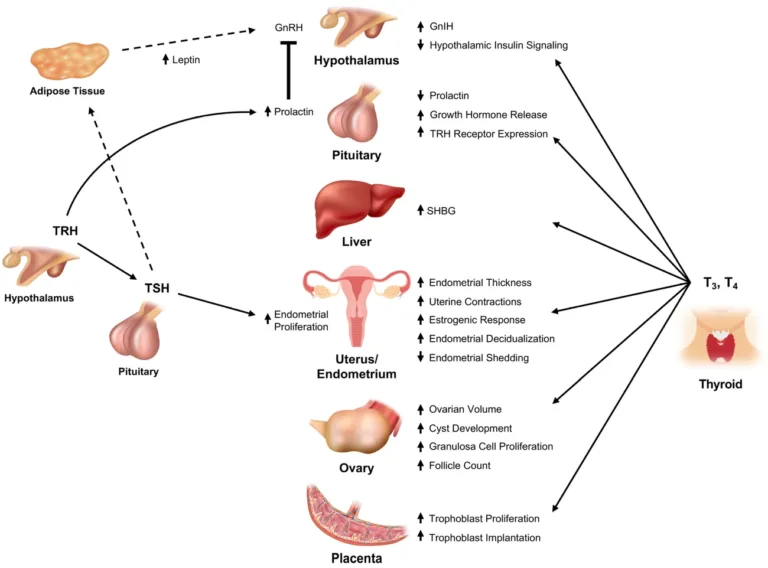
Medicines such as metformin, the contraceptive pill and ovulation-induction drugs, and supplements, should only be started, stopped or changed with your doctor. For practical next steps, read our guides to strength training for PCOS, PCOS and thyroid problems and supplements and herbs for PCOS, or see how our PCOS Management programme works.
When should you see a doctor about fertility?
See a doctor if you have not conceived after 12 months of regular unprotected sex [3]. Go sooner if you are 36 or older, or if you already have a known or suspected cause, such as irregular or absent periods [3]. Your doctor can then arrange ovulation tests and, where needed, specialist fertility care.
Frequently asked questions
Can women with PCOS conceive naturally?
It is possible. PCOS usually makes ovulation irregular rather than stopping it altogether, but your chances depend on your age, how often you ovulate and other factors. If you have not conceived after 12 months of regular unprotected sex, or sooner if you are 36 or older, see a doctor [3].
If my periods have returned, does it mean I am ovulating?
Not necessarily. A bleed does not always mean an egg was released, and ovulation problems can occur even with regular cycles [1]. If ovulation needs to be confirmed, your doctor can order a progesterone blood test timed to the second half of your cycle. Temperature charts are not reliable for this [3].
How long does PCOS reversal take?
There is no fixed timeline. Changes in weight, androgen markers and cycle length usually build over months rather than weeks, and they vary from woman to woman. Your doctor will normally review your cycle log and repeat blood tests at intervals to judge progress, rather than expecting a set result by a set date.
Does weight loss help in PCOS?
It can. In women with higher weight, weight management can bring significant clinical improvements, and a healthy lifestyle has benefits even without weight loss [1], which matters for women with lean PCOS too. In a Cochrane review, lifestyle change modestly reduced weight and androgen markers, although no trial measured live birth [4].
Does stress affect fertility in PCOS?
Stress matters in PCOS. The condition has recognised psychological features [1], and stress can disturb sleep, eating and activity, which all feed into metabolic health. Managing it through sleep, regular movement and support for anxiety or low mood is a sensible part of care. Talk to your doctor if stress feels overwhelming.
The bottom line
Tracking fertility during PCOS reversal is about connection, not control. You are not broken, and your hormones are not against you. With the right care, your body can respond.
At Redial Clinic, we help women with PCOS work towards more regular ovulation and steadier hormones through science-based nutrition, metabolic care, lifestyle therapy, strength training and emotional support, alongside the medical care their doctor recommends.
Next Step
| If you have irregular periods, stubborn weight or acne and suspect PCOS, a metabolic assessment can show whether insulin resistance is the driver sitting underneath it.
Book a Metabolic Assessment at Redial Clinic, Green Park, New Delhi. |
Medical Disclaimer
This article is for general education and is not a substitute for personalised medical advice, diagnosis or treatment. PCOS and fertility care should be individualised: do not start, stop or change medicines (including metformin, hormonal contraceptives or ovulation-induction drugs) or supplements without your doctor.
If you are trying to conceive, are pregnant, or have very heavy, painful or absent periods, speak to your gynaecologist. The studies cited cannot promise any outcome for you; individual results vary.
References
- Teede HJ, Tay CT, Laven JJE, et al., “Recommendations From the 2023 International Evidence-based Guideline for the Assessment and Management of Polycystic Ovary Syndrome,” Journal of Clinical Endocrinology & Metabolism, 2023. https://doi.org/10.1210/clinem/dgad463
- Diamanti-Kandarakis E, Dunaif A, “Insulin Resistance and the Polycystic Ovary Syndrome Revisited: An Update on Mechanisms and Implications,” Endocrine Reviews, 2012. https://doi.org/10.1210/er.2011-1034
- National Institute for Health and Care Excellence (NICE), “Fertility problems: assessment and treatment,” NICE guideline NG257, 2026. https://www.nice.org.uk/guidance/ng257
- Lim SS, Hutchison SK, Van Ryswyk E, et al., “Lifestyle changes in women with polycystic ovary syndrome,” Cochrane Database of Systematic Reviews, 2019. https://doi.org/10.1002/14651858.CD007506.pub4
- Ganie MA, Vasudevan V, Wani IA, et al., “Epidemiology, pathogenesis, genetics & management of polycystic ovary syndrome in India,” Indian Journal of Medical Research, 2019. https://doi.org/10.4103/ijmr.IJMR_1937_17

 LinkedIn