



Written by: Dr. Gagandeep Singh, MBBS
Medically reviewed by: Dr. Gagandeep Singh, MBBS
Last updated: 20 June 2026 · Redial Clinic, Green Park, New Delhi
| Key Takeaways Insulin resistance is the state where cells respond poorly to insulin, forcing the body to make more — and it is reversible for most people. It is reversed by two levers working together: lowering the glucose your body must handle (diet) and building the muscle that clears it (resistance training). Carbohydrate-aware Indian eating, more protein and fibre, and cutting sugary drinks reduce the insulin load directly. Skeletal muscle is the body’s largest glucose sink, so strength training improves insulin sensitivity independently of insulin itself. Sleep, stress and visceral (belly) fat all influence insulin resistance and are part of the plan. If you take glucose-lowering or blood-pressure medication, make these changes under medical supervision, because improving sensitivity can lower your dose needs. |
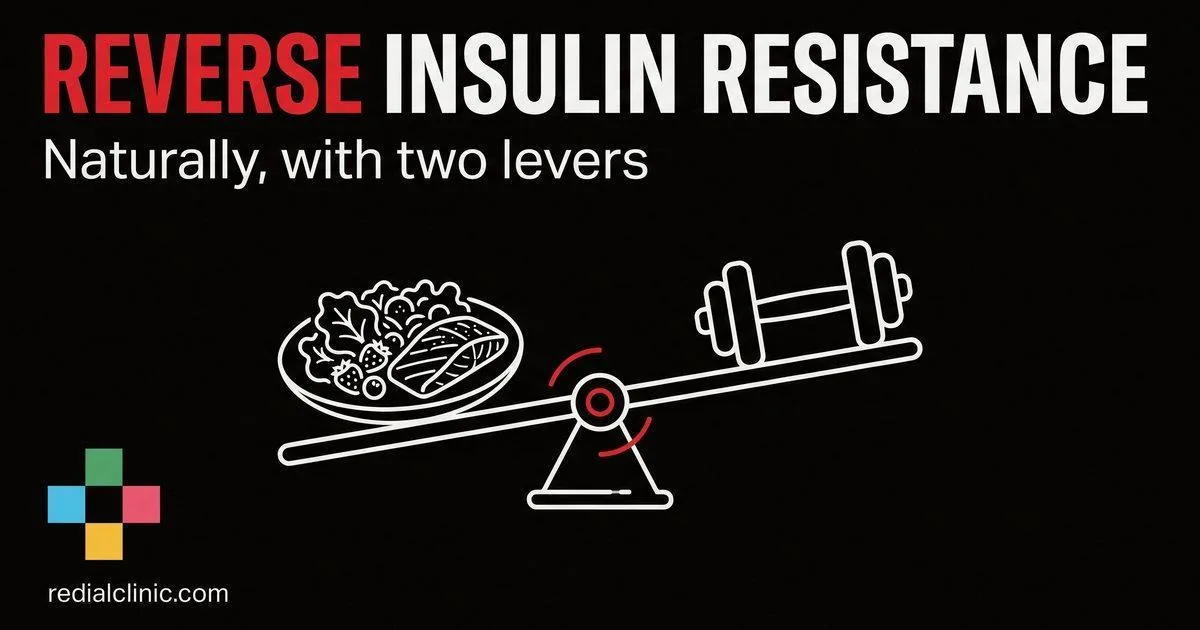
Insulin resistance is the quiet engine behind type 2 diabetes, PCOS, fatty liver and much stubborn weight gain — and the most empowering fact about it is that it responds to change. Learning how to reverse insulin resistance naturally is not about a single superfood or supplement; it is about pulling two physiological levers at the same time.
This guide explains exactly what those levers are, why they work, and how to apply them in an Indian context — with the honest caveats that keep the process safe if you are on medication.
Can insulin resistance be reversed naturally?
Yes. For most people insulin resistance can be substantially improved or reversed through diet, exercise, weight loss, sleep and stress management — no medication required for many. The earlier you act, the easier it is, because insulin resistance tends to deepen over years if left unaddressed.
Insulin resistance is not a fixed trait; it is a state the body has drifted into and can drift back out of. If the term is new to you, start with what insulin resistance is and how to detect it.
The Indian Diabetes Prevention Programme showed that structured lifestyle change significantly reduced progression to diabetes in Asian Indians with impaired glucose tolerance — direct evidence that working on insulin resistance early changes the trajectory.
What are the two levers that reverse insulin resistance?
The two levers are reducing glucose supply and increasing glucose demand. Diet lowers the glucose and insulin load arriving from refined carbohydrates and sugar; resistance training builds muscle, the body’s largest glucose-disposal organ. Used together they lower insulin levels and let sensitivity recover.
Most advice pulls only one lever — usually “eat less, walk more.” Walking helps, but without muscle many people stay metabolically underpowered. The combination is what shifts insulin resistance reliably.
Skeletal muscle insulin resistance is considered the primary defect in type 2 diabetes, which is precisely why building and using muscle is therapeutic, not optional.
| Lever | Why it works | Practical steps |
| Lower glucose supply (diet) | Less glucose means less insulin demand | Controlled rice/roti, more dal/paneer/eggs/vegetables, no sugary drinks or refined snacks |
| Raise glucose demand (muscle) | Muscle clears glucose, partly insulin-independently | Resistance training 2–4×/week; a short walk after meals |
| Support levers | Reduce the background insulin pressure | 7–8h sleep, stress management, reduce visceral fat |
Pull both main levers together for reliable improvement; the support levers protect the result.
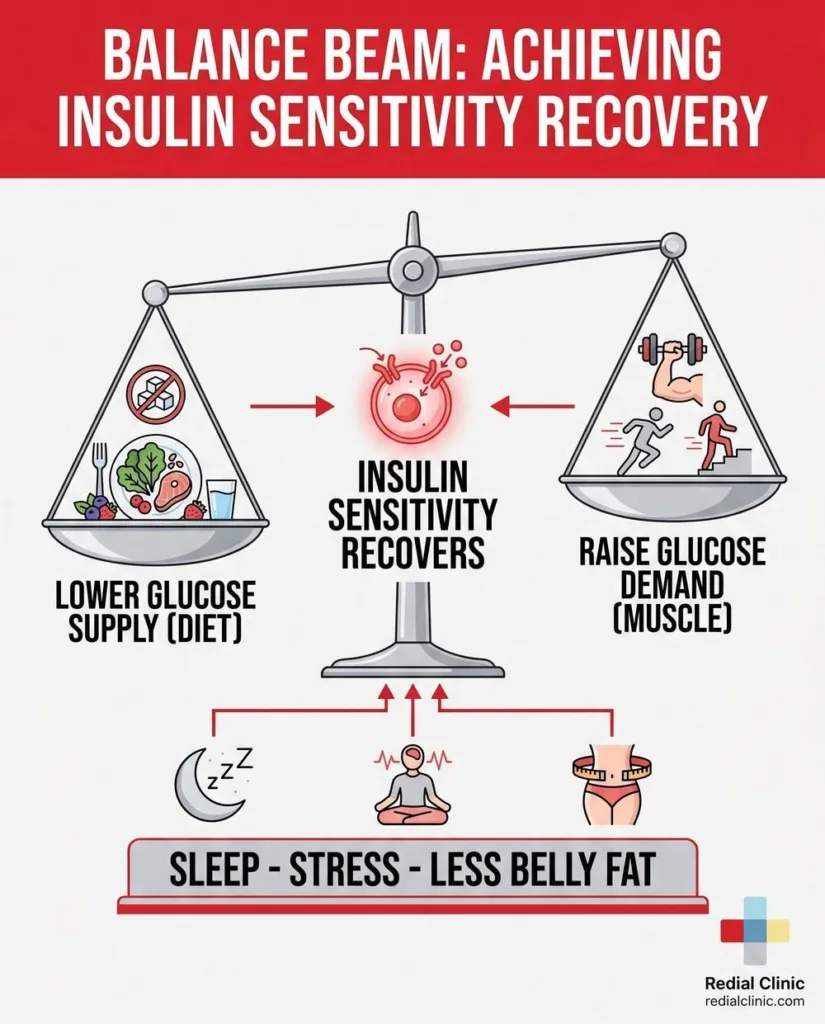
Infographic of the two levers that improve insulin sensitivity: lower glucose supply and raise glucose demand
What foods reverse insulin resistance?
No single food reverses insulin resistance, but a pattern does: more protein, fibre and non-starchy vegetables; controlled portions of rice, roti and other refined carbohydrates; and eliminating sugary drinks, juices and refined snacks. This lowers the repeated glucose-insulin spikes that drive the problem.
In practice this means rebalancing the Indian plate rather than abandoning it: dal, paneer, curd, eggs, vegetables and salads anchor the meal, with grains kept in check. A low-carbohydrate approach is beneficial for many, and our metabolic approach to weight loss for insulin resistance shows how to apply it sustainably.
Beware the health-halo foods — fruit juice, brown bread, cornflakes, digestive biscuits and multigrain atta often behave far more like refined carbohydrate than their packaging suggests.
| A frequent surprise in clinic: patients who have already cut out obvious sugar but still spike after meals discover the culprit is portion size of rice and roti, plus a daily glass of fruit juice they considered healthy. Adjusting those two things often moves their numbers more than any supplement they had tried. |
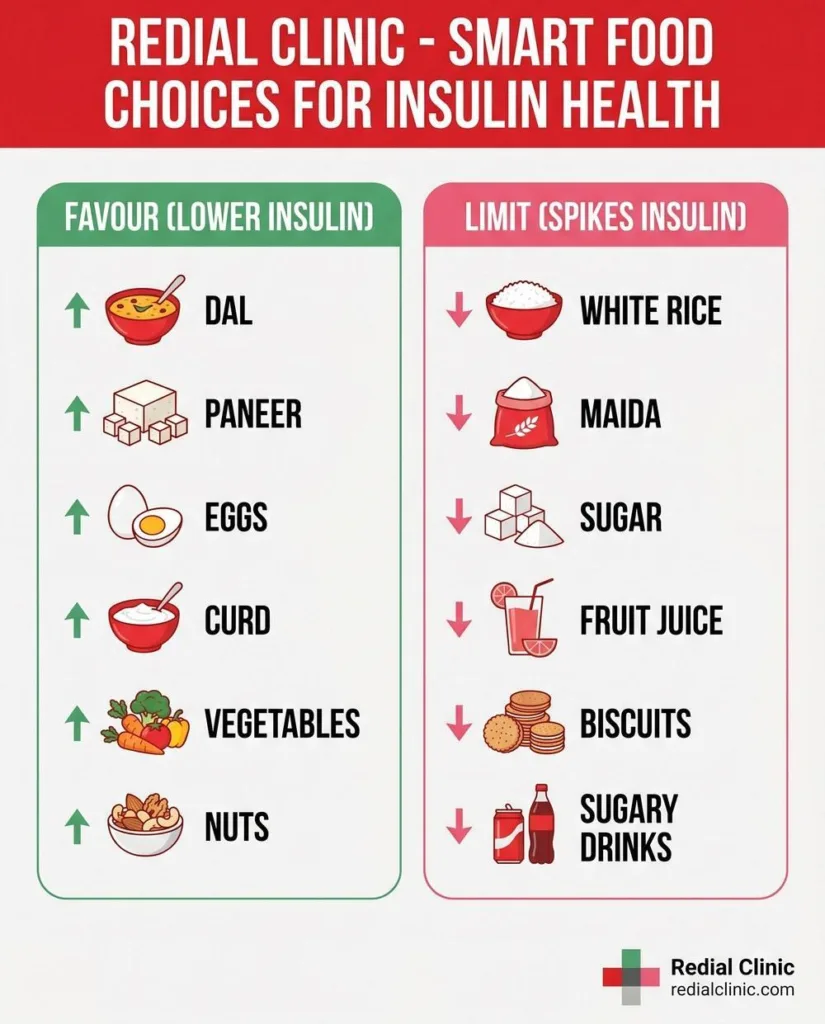
Infographic of foods to favour versus limit for insulin resistance
Does exercise reverse insulin resistance?
Yes, powerfully. Resistance training builds muscle that absorbs glucose and improves insulin sensitivity, while aerobic activity and post-meal walks help in the short term. The most effective routine combines strength work two to four times a week with daily movement.
Because muscle is the main site of glucose disposal, building it changes your metabolic capacity at the source. Our guide to the best exercise for metabolic health covers strength, cardio and home options.
A practical, underused tool is the ten-minute walk after meals, which blunts the post-meal glucose rise. Small, repeatable actions compound.
How long does it take, and what if I’m on medication?
Many people see measurable improvement in insulin markers within weeks to a few months of consistent change. If you take glucose-lowering or blood-pressure medication, do this under medical supervision — as sensitivity improves, your doses may need reducing to avoid hypoglycaemia or low blood pressure.
Speed depends on starting point, consistency and how much visceral fat you carry. The direction of travel, done right, is toward less medication, not more — but that adjustment is your doctor’s call.
Never reduce insulin, sulfonylureas or multiple blood-pressure medicines on your own while changing diet and exercise. Improving your metabolism is powerful enough to need monitoring.
Frequently Asked Questions
Can insulin resistance be reversed naturally?
Yes, for most people insulin resistance can be substantially improved or reversed through diet, resistance training, weight loss, sleep and stress management. The earlier it is addressed, the easier it is. Medication is sometimes used, but lifestyle change is the foundation.
What foods reverse insulin resistance?
There is no single magic food; a pattern works best — more protein, fibre and non-starchy vegetables, controlled refined carbohydrates, and no sugary drinks. This reduces the repeated glucose-insulin spikes that drive resistance. Watch out for health-halo foods like fruit juice and multigrain biscuits.
Does exercise reverse insulin resistance?
Yes. Resistance training is especially effective because muscle is the body’s largest glucose sink, and building it improves insulin sensitivity. Aerobic activity and short post-meal walks add further benefit. A combination of strength work and daily movement gives the best results.
How long does it take to reverse insulin resistance?
Many people see measurable improvement within a few weeks to a few months of consistent change, though timelines vary with starting point and visceral fat. If you are on medication, sensitivity can improve enough to require dose reduction, which should be supervised by your doctor.
Next step
|
If you suspect insulin resistance — belly fat, fatigue, post-meal crashes or a family history of diabetes — a metabolic assessment can confirm it and map your two-lever plan. Book a Metabolic Assessment at Redial Clinic, Green Park, New Delhi. |
Medical disclaimer: This article is for informational purposes only and does not constitute medical advice. Always consult a qualified healthcare professional before making changes to your diet, exercise, medication, or treatment plan.
References
1. Taylor R, “Type 2 Diabetes: Etiology and Reversibility,” Diabetes Care, 2013. https://doi.org/10.2337/dc12-1805
2. DeFronzo RA, Tripathy D, “Skeletal Muscle Insulin Resistance Is the Primary Defect in Type 2 Diabetes,” Diabetes Care, 2009. https://doi.org/10.2337/dc09-S302
3. Ramachandran A, Snehalatha C, Mary S, et al., “The Indian Diabetes Prevention Programme shows that lifestyle modification and metformin prevent type 2 diabetes in Asian Indian subjects with impaired glucose tolerance (IDPP-1),” Diabetologia, 2006. https://doi.org/10.1007/s00125-005-0097-z
4. Ludwig DS, Ebbeling CB, “The Carbohydrate-Insulin Model of Obesity: Beyond ‘Calories In, Calories Out’,” JAMA Internal Medicine, 2018. https://doi.org/10.1001/jamainternmed.2018.2933
5. Anjana RM, Unnikrishnan R, Deepa M, et al., “Metabolic non-communicable disease health report of India: the ICMR-INDIAB national cross-sectional study (ICMR-INDIAB-17),” The Lancet Diabetes & Endocrinology, 2023. https://doi.org/10.1016/S2213-8587(23)00119-5

 Facebook
 Instagram
 LinkedIn