





Exercise Routines for Weight & Diabetes Control
Authored by Dr. Gagandeep Singh, MBBS
The Story That Changed Everything
Exercise routines for weight and diabetes control often fail not because people don’t work hard—but because they’re doing the wrong type of exercise.
Ritu walked into my clinic tired, frustrated, and confused. She walked 45 minutes every morning, practiced yoga in the evenings, and attended aerobics on weekends. Yet her fasting sugars hovered around 160, her weight didn’t move, and she felt weaker every month.
She asked, “Doctor, I walk so much… should I just walk more?”
I replied with something most diabetics are never told:
Walking burns calories. Muscle burns sugar.
We replaced endless cardio with a structured plan combining cardio and strength training for diabetes, added recovery days, and progressed load safely.
Within 10 weeks:
- Fasting sugar dropped from 160 → 99
- Post-meal spikes reduced
- Weight reduced by 5.8 kg
- Cravings decreased
- Strength and confidence returned
Why Exercise Matters for Diabetes & Weight Control
1. Exercise Improves Insulin Sensitivity
Every workout increases muscle glucose uptake without requiring insulin—directly improving insulin resistance.
2. Strength Training Builds the Biggest Glucose Sink
More muscle means more glucose storage, fewer blood sugar swings, and faster diabetes reversal.
3. Cardio Improves Heart Health — But Isn’t Enough
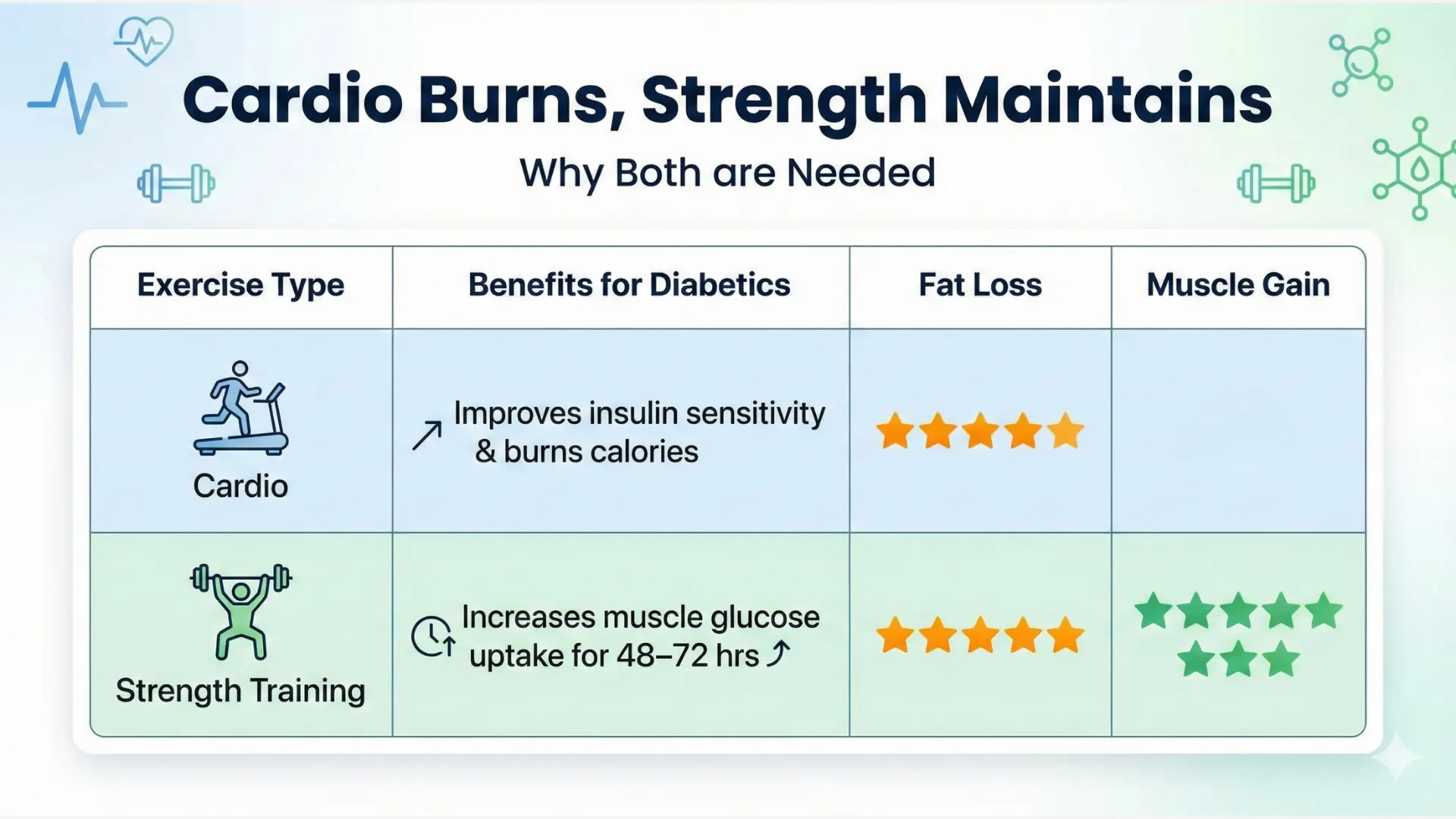
Cardio improves circulation and calorie burn, but cardio vs strength for diabetes is not a fair fight. Cardio alone cannot reverse insulin resistance.
4. The Combination Is Powerful
Combining cardio and resistance training improves fat loss, hormonal balance, and metabolic flexibility.
The Perfect Exercise Routines for Weight and Diabetes Control
This plan combines cardio, strength training, and recovery—the exact structure we use clinically.
Weekly Structure
5 training days + 2 recovery days
DAY 1 — Strength Training (Upper Body)
- Push-ups – 3×10
- Dumbbell shoulder press – 3×12
- Seated rows – 3×12
- Bicep curls – 3×12
- Tricep dips – 3×10
- Plank – 30 sec × 3
Upper-body training boosts metabolic rate and improves insulin sensitivity for 24–48 hours.
DAY 2 — Cardio + Core
- Leg raises – 3×12
- Russian twists – 3×15
- Side plank – 20 sec × 3
Cardio improves circulation and immediate glucose uptake.
DAY 3 — Strength Training (Lower Body)
- Squats – 3×12
- Glute bridges – 3×15
- Lunges – 3×10 each leg
- Calf raises – 3×15
- Step-ups – 3×12
- Light deadlifts – 3×10
Leg muscles are the largest glucose consumers in the body.
DAY 4 — Cardio Intervals
Intervals improve mitochondrial health and fat oxidation.
DAY 5 — Full Body Strength + Flexibility
- Lunges – 3×12
- Chest press – 3×12
- Dumbbell rows – 3×12
- Glute bridges – 3×15
- Planks – 3×30 sec
DAY 6 & 7 — Recovery
Rest normalizes hormones, rebuilds muscle, and prevents overtraining.
Bonus Tips to Maximize Results
- Build muscle first, fat loss follows
- Eat protein after workouts
- Track strength, not just weight
- Consistency beats intensity
FAQs
1. What exercise routines for weight and diabetes control work fastest?
Strength training combined with short cardio intervals works fastest.
2. Is walking enough for diabetes control?
Walking alone cannot reverse insulin resistance without muscle training.
3. Can beginners lift weights safely?
Yes. Bodyweight and gradual progression are safe and effective.
4. Should diabetics avoid heavy weights?
No. Properly supervised resistance training improves insulin sensitivity.
5. When will results appear?
Most patients see improvements within 3–6 weeks.
Final Verdict
Exercise routines for weight and diabetes control work best when muscle building is the foundation.
The ideal formula:
- 3 days strength training
- 2 days cardio
- 2 days recovery
This framework is used at Redial Clinic to reverse insulin resistance and restore metabolic health.
Related Treatment Programs
References
- American Diabetes Association — Exercise & insulin sensitivity
- Journal of Applied Physiology — GLUT-4 and resistance training
- Diabetes Care Journal — Cardio + resistance outcomes
- Harvard School of Public Health
Medical Disclaimer: This content is for educational purposes only and does not substitute professional medical advice, diagnosis, or treatment. Always consult your physician or a qualified healthcare provider before making any changes to your medication, diet, or treatment plan. Individual results may vary.

 Facebook
 Instagram
 LinkedIn