




Diabetes Reversal Through Diet: The Science, Strategy & a Real Transformation Story
The diabetes reversal diet is not a myth. When we improve insulin sensitivity through a low-carb, protein-rich, and healthy-fat approach, type 2 diabetes can be reversed safely and scientifically. This explainer breaks down how it works—with a real patient story.
A Story That Changed How We See Diabetes
One Monday morning, a 52-year-old gentleman named Rajesh walked into our clinic.
His first line was simple:
“Doctor saab, I have stopped eating sugar completely. Yet my sugars are rising. Why?”
He looked tired—not just physically, but emotionally. He had been trying everything he knew:
Less sugar, brown rice, multigrain rotis, oats for breakfast, and daily walks.
Yet his fasting sugar stayed around 170 mg/dL, and HbA1c was 8.3%.
He believed his body had “failed” him.
But his body had not failed—his strategy had.
The Real Problem Was Not Sugar. It Was Insulin Resistance.
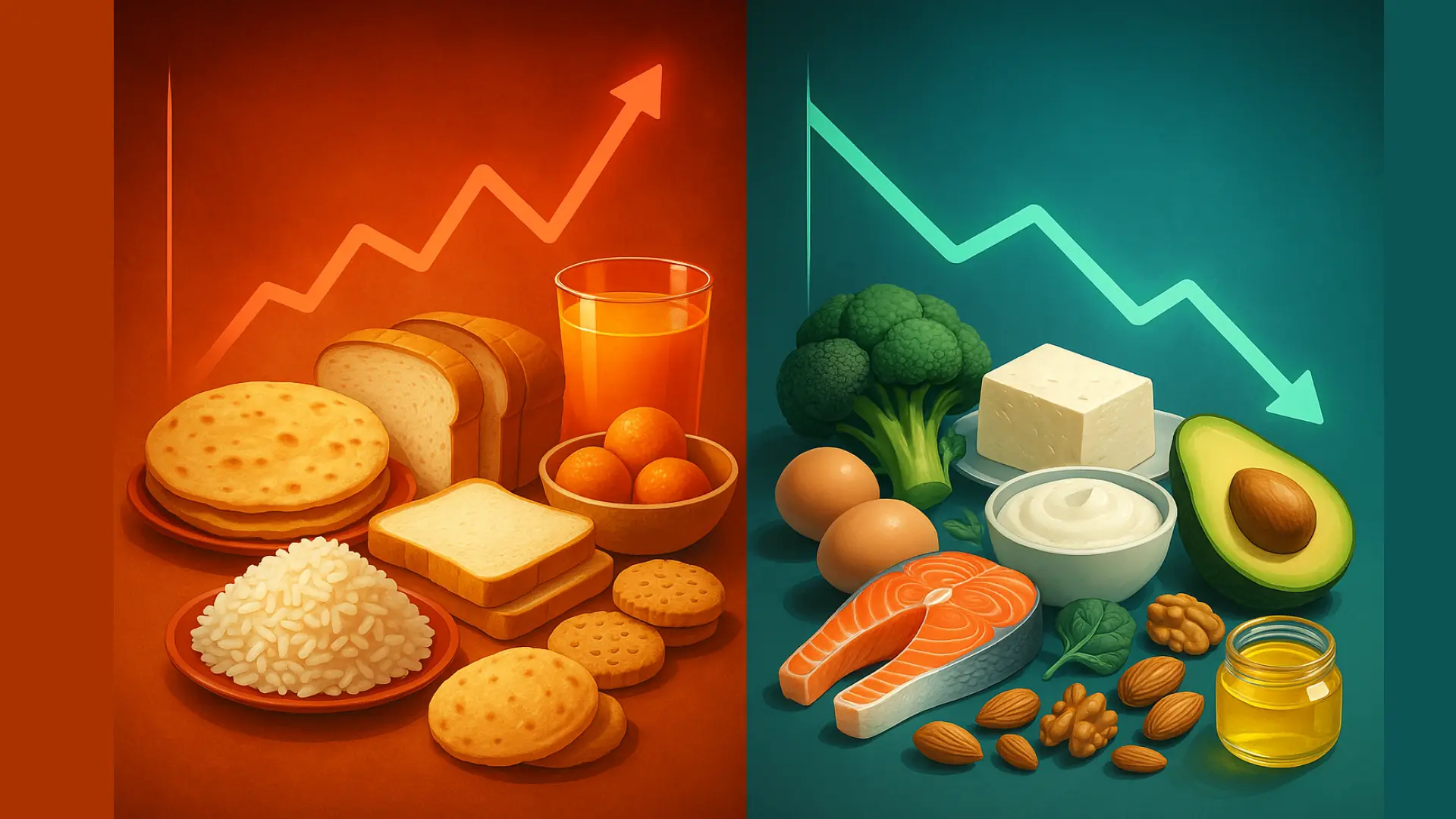
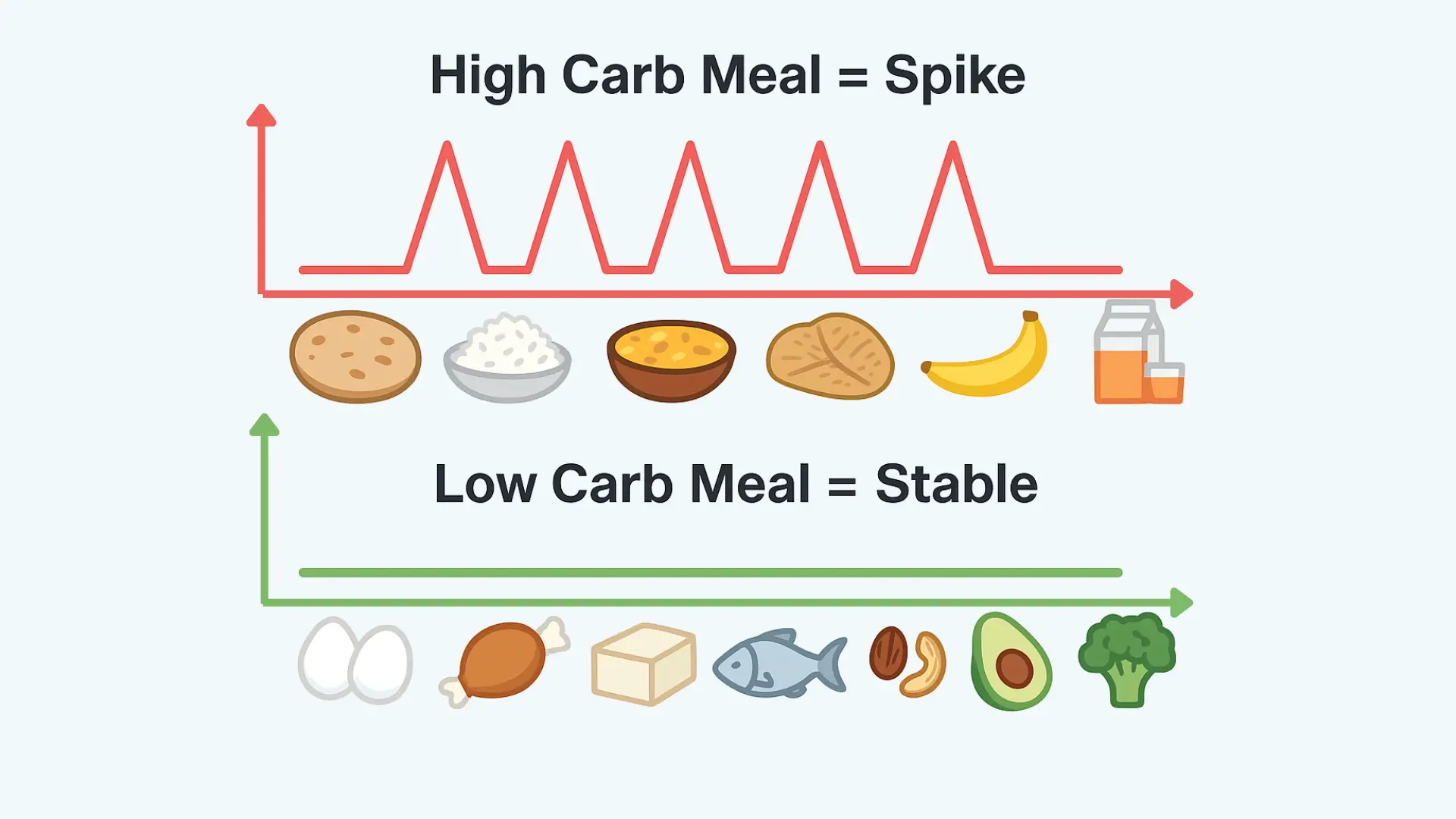
Years of high-carb meals—chapati, rice, poha, idli, dal, fruit juices, biscuits, and so-called “healthy cereals”—forced his body to produce large amounts of insulin. Over time, the cells stopped responding.
This condition is called insulin resistance, and it is the root cause of type 2 diabetes.
When insulin resistance develops:
- Blood sugar stays high
- Energy levels drop
- Hunger increases
- Belly fat accumulates
- More insulin gets released but nothing improves
The key to type 2 diabetes reversal is not avoiding sugar—it is reducing insulin resistance.
The Science Behind Diabetes Reversal
1. Reduce Carbohydrates → Reduce Sugar Load
Carbohydrates convert into glucose, which requires insulin.
Lowering carbs to 15–20% of total calories significantly reduces insulin demand and gives the pancreas relief.
This is why a low-carb diabetes diet is one of the most effective interventions.
2. Increase Protein → Better Satiety & Muscle Repair
Protein stabilizes appetite, builds muscle, and does not spike sugar.
We increase it to 25–30% of daily calories through paneer, tofu, eggs, chicken, fish, mutton, and Greek yogurt.
3. Add Healthy Fats → Stable Energy & Fewer Cravings
Healthy fats do not raise sugar or insulin.
Sources include desi ghee, white makkhan, coconut oil, olive oil, nuts, and seeds.
4. Strength Training → Muscle Becomes a Sugar Sponge
Walking is healthy, but muscle is what controls glucose.
Strength training 3–5 times a week dramatically improves insulin sensitivity and metabolic health.
To learn more about how muscle improves glucose control, explore our Diabetes Reversal Program.
What Happened to Rajesh?
We designed a personalised plan:
- Carbs reduced to 15%
- Protein increased to 25%
- Healthy fats at 60%
- Strength training every alternate day
The results:
- 4 weeks: Fasting sugar 170 → 98 mg/dL
- 6 weeks: Post-meal sugar 280 → 118 mg/dL
- 8 weeks: HbA1c 8.3% → 5.1%
His cholesterol improved. His energy returned.
He said: “Doctor saab, I feel like I have got my life back.”
This is diabetes reversal—not magic, not supplements, not starvation.
Just metabolic correction.
Frequently Asked Questions (FAQs)
1. Should medicines be stopped immediately?
No. Medications are tapered gradually under medical supervision.
2. Are fruits allowed?
Only low-GI options such as berries, kiwi, guava, and avocado are recommended.
3. Is desi ghee safe?
Yes. Healthy fats do not raise blood sugar and support hormonal balance.
4. How soon do results appear?
Many patients improve within 10–14 days. HbA1c changes normally take 8–12 weeks.
Final Verdict
Type 2 diabetes is not a lifelong label.
It is a reversible metabolic condition.
By lowering carbs, increasing protein, adding real fats, and building muscle, insulin resistance decreases—and blood sugar normalizes.
If you want structured guidance, explore:
Diabetes Reversal,
Obesity Reversal,
Hypertension Reversal,
PCOS Management,
Lifespan Extension,
Anti-Cancer Diet Support.
References
- Hallberg et al., 2018 (Virta Health Trial) – 60% of patients reversed diabetes using low-carb nutrition. NIH
- DiRECT Trial, The Lancet, 2017 – Nearly half achieved remission through dietary intervention.
- ADA Clinical Guidelines, 2023 – Low-carb diets recognized as effective for diabetes management.
- Nature Reviews Endocrinology, 2020 – Muscle mass strongly correlates with insulin sensitivity.

 Facebook
 Instagram
 LinkedIn