




Medically Reviewed By: Dr. Gagandeep Singh, MBBS
Last Updated: 23 October, 2026 · Redial Clinic, Green Park, New Delhi
Can yoga reverse diabetes? It is one of the most common questions we hear from people newly diagnosed with type 2 diabetes. The short answer: yoga is unlikely to reverse type 2 diabetes on its own, but trials suggest it can modestly improve blood sugar as part of a broader plan. At Redial Clinic, we treat yoga as a useful supporting practice. We rely on strength training, nutrition and medical supervision to address the insulin resistance behind the condition.
Many people feel calmer and more flexible after yoga. Whether it meaningfully changes insulin resistance is less clear, and reversal generally depends on reducing the insulin resistance that drives high blood sugar.
| Key Takeaways Yoga has not been shown to reverse type 2 diabetes on its own. Meta-analyses of randomised trials report modest HbA1c reductions with yoga in people with type 2 diabetes, roughly 0.4 to 0.7 percentage points, but the certainty of the evidence is low [1]. Diabetes remission is defined by the ADA consensus as HbA1c below 6.5% measured at least three months after stopping glucose-lowering medication [2]. Muscle is a major site of glucose disposal, so resistance training is central to our approach. Yoga and strength training can be combined. Speak to your doctor before starting, especially if you take insulin or sulfonylureas. |
What Diabetes Reversal Actually Requires
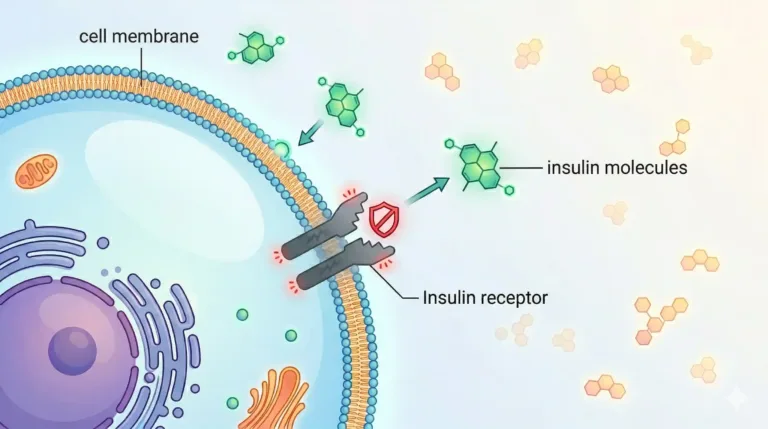
Type 2 diabetes is a disease of chronic insulin resistance, primarily affecting:
- Skeletal muscle
- Liver
- Visceral fat tissue
True diabetes reversal means:
- Normal fasting glucose
- Controlled post-meal glucose
- HbA1c below the diabetic range
- No dependency on medication
Reversal is usually described as remission: HbA1c below 6.5% for at least three months off glucose-lowering medication (ADA consensus) Riddle et al., 2021. How far someone gets depends on how long they have had diabetes, their remaining pancreatic function, their medications and overall health. For some people, the realistic goal is the best possible improvement with the least medication.
Getting there requires the body to pull glucose into cells efficiently and lower insulin demand, a process in which muscle tissue plays a major part.
Can Yoga Reverse Diabetes on Its Own?
Probably not. Trials show yoga can modestly lower blood sugar, but it has not been shown to produce remission by itself. Reversal usually depends on reducing insulin resistance through nutrition, muscle building and medical supervision.
1. Yoga Builds Less Muscle Than Resistance Training
Skeletal muscle is a major site of glucose disposal after meals. Resistance training builds muscle through progressive overload, which means gradually increasing the load your muscles work against. Most yoga styles rely on bodyweight and do not apply progressive overload, so they usually build less muscle than structured strength training. Less muscle gain means a smaller increase in glucose-handling capacity.
2. Yoga Is a Gentle Activity
Most yoga styles are low to moderate in intensity, so they usually burn fewer calories than brisk walking or resistance training. Some trials do report improvements in fasting insulin and insulin resistance markers with yoga (Dhali et al., 2023), though how this happens is not yet settled.
What Does the Research Say About Yoga and Blood Sugar?
Three meta-analyses of randomised trials give a consistent picture:
- A 2023 meta-analysis of 16 trials (1,820 participants) found yoga lowered HbA1c by 0.73 percentage points and fasting glucose by about 32 mg/dL compared with no regular exercise (Dhali et al.).
- A meta-analysis of 12 trials (864 patients) found HbA1c fell by 0.47 percentage points and fasting glucose by about 24 mg/dL. The authors noted high heterogeneity and called for longer studies (Cui et al.).
- A 2024 network meta-analysis of 85 trials (5,535 participants) found yoga lowered HbA1c by 0.45 percentage points. Differences between HIIT, combined exercise, yoga and aerobic exercise were not significant, and the evidence quality was low (Liang et al.).
What this means: yoga appears to help blood sugar modestly, in a range similar to other forms of exercise, though the evidence is low certainty. These studies measured glucose markers such as HbA1c and fasting glucose, not diabetes remission.
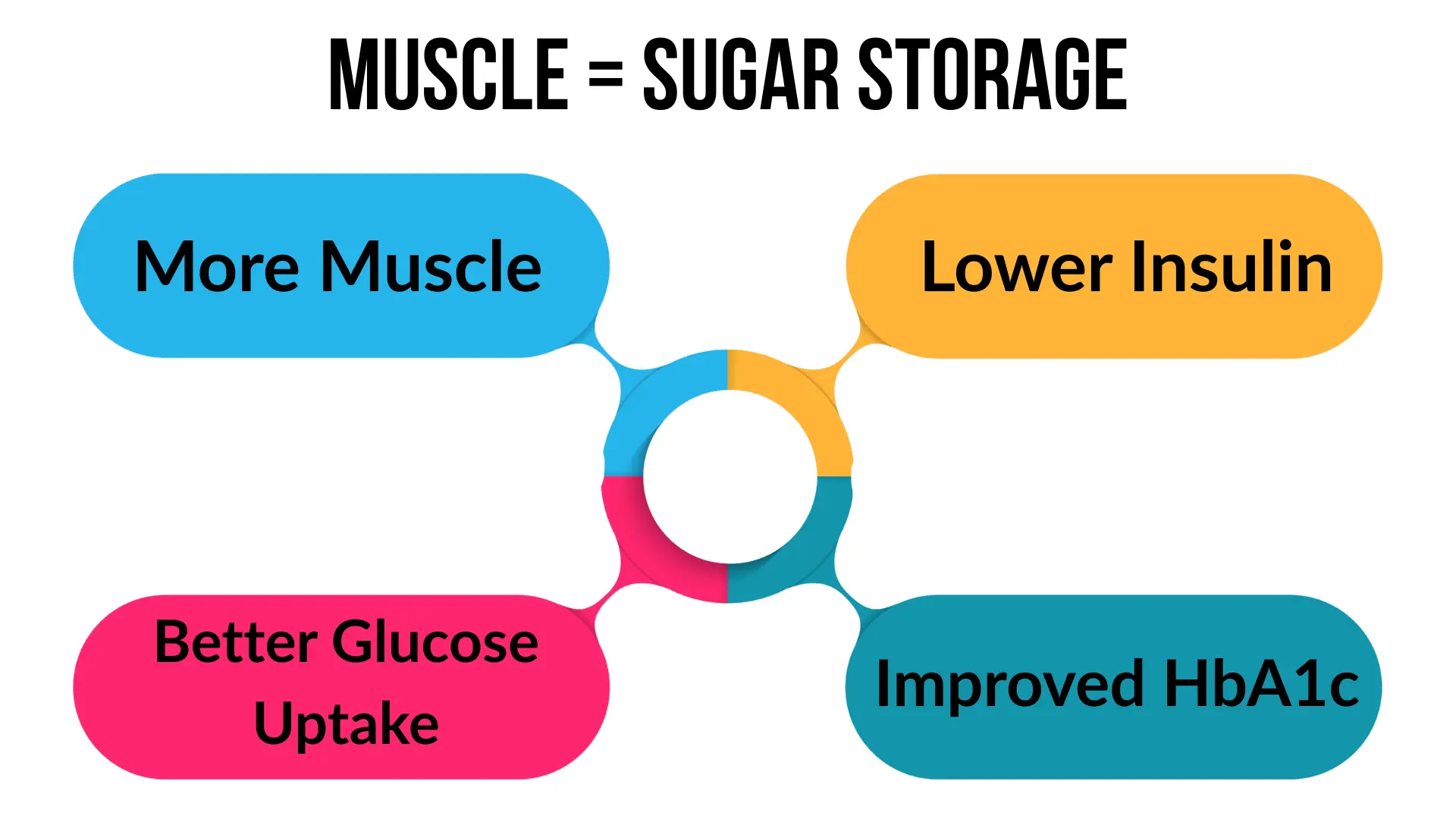
Muscle takes up glucose, so more muscle generally means better glucose handling and lower insulin demand.
What Helps Drive Diabetes Reversal?
As Dr. Singh explained to News18, simply “eating less and exercising more” rarely fixes type 2 diabetes.
Why Strength Training Is Central to Our Approach
Strength training can improve insulin sensitivity [5]. It:
- Increases muscle mass
- Supports GLUT-4 activity (GLUT-4 is the transporter that moves glucose into muscle cells) [6]
- Draws glucose into muscle cells
- Lowers insulin demand
Learn more about structured programs at our Diabetes Reversal Program. Not sure where to start? Dr. Singh outlined a simple 10-minute strength routine for type 2 diabetes in India TV. For more on strength training with type 2 diabetes, see our dedicated guide.
Why Does Muscle Matter for Blood Sugar?
In type 2 diabetes, insulin resistance makes muscle less efficient at taking up glucose, and losing muscle shrinks the tissue available to do that job. Trials of resistance training in people with type 2 diabetes and overweight or obesity have reported improvements in HbA1c and fasting glucose (Al-Mhanna et al., 2025), although the quality of evidence ranged from very low to moderate. Yoga has shown modest benefits for blood sugar in some trials, but it does not build muscle the way resistance training does. Individual results vary.
Dr. Gagandeep Singh explains why muscle matters for glucose control. Results vary from person to person.
Important: If you take insulin, sulfonylureas or other glucose-lowering medicines, do not start a new exercise programme or change your diet or medication without speaking to your doctor first.
Yoga vs Strength Training: What the Evidence Shows
| Factor | Yoga | Strength training |
| Muscle gain | Limited | Significant |
| Typical intensity | Low to moderate | Moderate to high, with progressive load |
| HbA1c effect in trials | Modest reduction (low-certainty evidence) [1] | Reduction reported in trials [8] [7] |
| Role in our protocol | Supporting practice | Core component |
What Is Yoga Good For?
Many people report that yoga helps with stress, flexibility and sleep, and these matter for people living with diabetes. They are not a substitute for treating the underlying insulin resistance, but they can make it easier to stay active and consistent.
The Redial Clinic Position
In our clinical experience, structured reversal relies on progressive strength training, insulin-sensitising nutrition, muscle preservation and growth, and long-term metabolic monitoring. We do not use yoga as the primary reversal strategy. We are comfortable with patients practising it alongside this plan for stress, flexibility and sleep, once their doctor has cleared them.
Bringing HbA1c down is only the first step. Keeping it down depends on addressing what drives it: building and maintaining muscle, reducing visceral fat (the fat around your organs) and monitoring your blood sugar over time. Dr. Singh covers this in the reel below.
Important: If you take insulin, sulfonylureas or other glucose-lowering medicines, do not start a new exercise programme or change your diet without speaking to your doctor first. Your doses may need adjusting as your blood sugar improves. Medication changes must always be made under medical supervision.
Who Should Be Careful Before Starting Yoga or Strength Training?
Speak to your doctor before starting a new exercise programme if you:
- take insulin or sulfonylureas, because exercise can lower blood sugar and your dose may need adjusting
- have nerve damage (neuropathy), eye complications (retinopathy), high blood pressure or kidney disease
- are pregnant, elderly, or have type 1 diabetes
Start gently, and build up gradually.
How Can You Combine Yoga and Strength Training?
We generally advise our patients to build muscle mass using strength training and resistance training, because increased muscle mass helps absorb excess blood sugar in the bloodstream and reduces the insulin load. Speak to your doctor before changing your exercise routine, especially if you take insulin or sulfonylureas.
Related reading: strength training for PCOS and what insulin resistance is and why it matters.
Frequently Asked Questions
Can yoga reverse type 2 diabetes?
Yoga alone is unlikely to reverse type 2 diabetes. Trials show modest improvements in HbA1c and fasting glucose, but reversal usually requires addressing insulin resistance through nutrition, muscle building and medical supervision. How much improvement is possible depends on how long you have had diabetes, your remaining pancreatic function, your medications and your overall health.
Can yoga replace strength training?
No. Yoga and strength training work differently. Strength training builds muscle, a major site of glucose disposal, while yoga builds less muscle but may help with stress, sleep and flexibility. Many people benefit from both, with their doctor’s approval.
Why is yoga commonly recommended for diabetes?
Because it is safe for many people, accessible, and has shown modest blood sugar benefits in clinical trials. Standard diabetes care is very good at lowering glucose. At Redial Clinic we also focus on the underlying insulin resistance, which is why we add strength training and nutrition.
How much exercise is recommended for people with type 2 diabetes?
Most adults with diabetes are advised to do at least 150 minutes of moderate-to-vigorous aerobic activity a week, spread over at least three days, plus 2 to 3 resistance-training sessions a week on non-consecutive days [5]. The WHO also advises at least 150 minutes of moderate-intensity activity a week for adults [9], and India’s RSSDI recommendations likewise list at least 150 minutes a week of moderate-intensity aerobic activity [10]. Your doctor can tailor this to your health, medicines and fitness, so build up gradually and check with them first, especially if you take insulin or sulfonylureas.
Is yoga safe if I have diabetes?
Gentle yoga is safe for many people with diabetes, but check with your doctor first, especially if you have neuropathy, eye problems, high blood pressure or kidney disease, or if you take insulin or sulfonylureas. Exercise can lower blood sugar, so your medication may need adjusting.
Bottom Line
Yoga is not a standalone route to reversing type 2 diabetes, but it can be a helpful supporting practice, with modest blood sugar benefits in trials. For many people, improvement depends on reducing insulin resistance through progressive strength training, nutrition tailored to the individual, and medical supervision. If you are on medication, never change it on your own.
Next Step
| If your blood sugar has been creeping up — or you have been managing type 2 diabetes for years without knowing what is actually driving it — a metabolic assessment can map your insulin resistance, liver fat and pancreatic reserve.
Book a Metabolic Assessment at Redial Clinic, Green Park, New Delhi. |
Medical Disclaimer
This content is for educational purposes only and does not substitute professional medical advice, diagnosis, or treatment. Always consult your physician or a qualified healthcare provider before making any changes to your medication, diet, or treatment plan. Individual results may vary.
References
- Liang Z, Zhang M, Wang C, Hao F, Yu Y, Tian S, Yuan Y, “The Best Exercise Modality and Dose to Reduce Glycosylated Hemoglobin in Patients with Type 2 Diabetes: A Systematic Review with Pairwise, Network, and Dose-Response Meta-Analyses,” Sports Med, 2024;54(10):2557-2570. https://doi.org/10.1007/s40279-024-02057-6
- Riddle MC, Cefalu WT, Evans PH, et al., “Consensus Report: Definition and Interpretation of Remission in Type 2 Diabetes,” Diabetes Care, 2021;44:2438-2444. https://doi.org/10.2337/dci21-0034
- Dhali B, Chatterjee S, Das SS, Cruz MD, “Effect of Yoga and Walking on Glycemic Control for the Management of Type 2 Diabetes: A Systematic Review and Meta-analysis,” J ASEAN Fed Endocr Soc, 2023;38(2):113-122. https://doi.org/10.15605/jafes.038.02.20
- Cui J, Yan J-H, Yan L-M, Pan L, Le J-J, Guo Y-Z, “Effects of yoga in adults with type 2 diabetes mellitus: A meta-analysis,” J Diabetes Investig, 2017;8(2):201-209. https://doi.org/10.1111/jdi.12548
- Colberg SR, Sigal RJ, Yardley JE, et al., “Physical Activity/Exercise and Diabetes: A Position Statement of the American Diabetes Association,” Diabetes Care, 2016;39:2065-2079. https://doi.org/10.2337/dc16-1728
- Richter EA, Hargreaves M, “Exercise, GLUT4, and Skeletal Muscle Glucose Uptake,” Physiol Rev, 2013;93:993-1017. https://doi.org/10.1152/physrev.00038.2012
- Al-Mhanna SB, Franklin BA, Jakicic JM, et al., “Impact of resistance training on cardiometabolic health-related indices in patients with type 2 diabetes and overweight/obesity: a systematic review and meta-analysis of randomised controlled trials,” Br J Sports Med, 2025;59:733-746. https://doi.org/10.1136/bjsports-2024-108947
- Umpierre D, Ribeiro PAB, Kramer CK, et al., “Physical Activity Advice Only or Structured Exercise Training and Association With HbA1c Levels in Type 2 Diabetes: A Systematic Review and Meta-analysis,” JAMA, 2011;305:1790-1799. https://doi.org/10.1001/jama.2011.576
- World Health Organization, “Physical activity,” fact sheet. https://www.who.int/news-room/fact-sheets/detail/physical-activity
- Bajaj S, “RSSDI clinical practice recommendations for the management of type 2 diabetes mellitus 2017,” Int J Diabetes Dev Ctries, 2018;38(Suppl 1):1-115. https://doi.org/10.1007/s13410-018-0604-7

 Facebook
 Instagram
 LinkedIn