



Written By: Dr. Gagandeep Singh
Medically Reviewed By: Dr. Gagandeep Singh
Last Updated: 01 March 2026
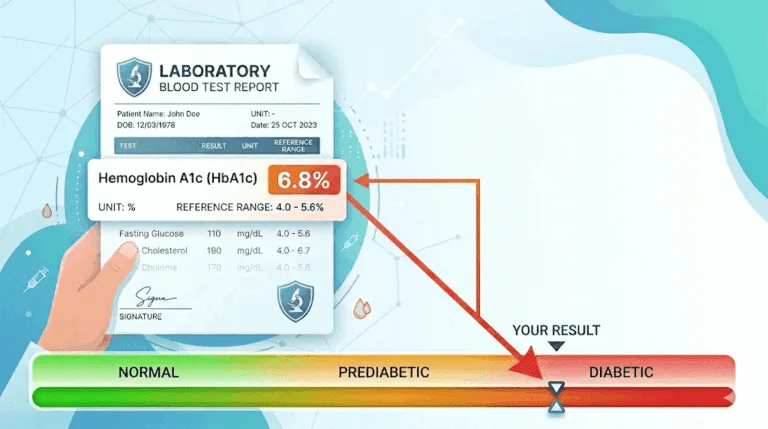
Your HbA1c report came back higher than expected. Maybe it’s 6.8%, or 7.4%, or even north of 9%. Your doctor has told you to “bring it down,” but nobody has explained exactly how — in a way that accounts for the roti on your plate, the stress at your desk, or the fact that you’ve been walking every morning and still not seeing results.
Here’s what we’ve learnt from working with hundreds of patients at Redial Clinic in Green Park, New Delhi: reducing HbA1c is not about one dramatic change — it’s about stacking the right small changes across diet, movement, sleep, and stress. And it’s absolutely achievable, often without adding new medication.
This guide explains how to reduce HbA1c level using evidence-based strategies, with specific Indian dietary examples and realistic timelines — not vague advice about “eating healthy” and “exercising more.”
✓ KEY TAKEAWAYS
- HbA1c reflects your average blood sugar over 2–3 months — a single fasting sugar reading cannot replace it.
- Dietary carbohydrate quality and quantity are the single biggest lever for lowering HbA1c, especially replacing refined carbs (maida, white rice) with fibre-rich alternatives.
- Structured exercise — particularly resistance training combined with walking — can lower HbA1c by 0.5–0.7% independently of weight loss.
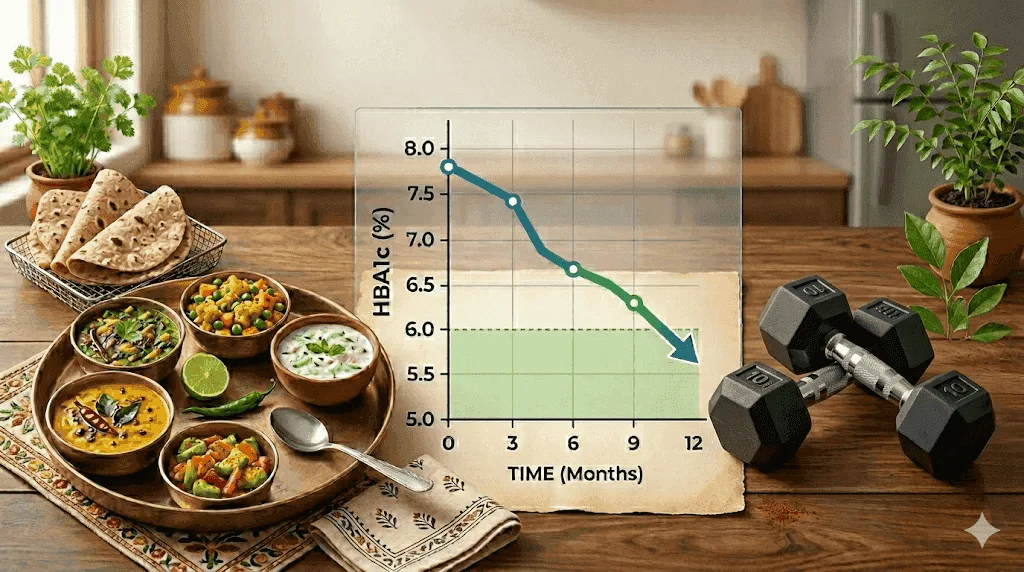
- Most patients see measurable HbA1c improvement within 8–12 weeks of consistent lifestyle changes, with the steepest drop occurring in the first 3 months.
- Sleep, stress, and meal timing are underappreciated factors that can keep HbA1c elevated even when your diet looks clean.
- Lifestyle intervention works best when guided by a clinician who can read your full metabolic picture — not just one number in isolation.
What Is HbA1c and Why Does It Matter?
HbA1c (glycated haemoglobin) is a blood test that measures the percentage of haemoglobin proteins coated with sugar, reflecting your average blood glucose over the previous 2–3 months. Unlike fasting blood sugar, which captures a single morning snapshot, HbA1c reveals how well your body has been managing glucose around the clock — after meals, during sleep, and under stress.
The test is widely regarded as the gold standard for long-term glycaemic monitoring by both the American Diabetes Association (ADA) and the Indian Council of Medical Research (ICMR). Because red blood cells live for roughly 120 days, HbA1c gives clinicians a running average that is far more stable — and far more honest — than a one-time fasting glucose reading.
In our clinic, we frequently see patients whose fasting blood sugar sits at a reassuring 95–100 mg/dL, while their HbA1c tells a very different story — sometimes 6.5% or higher. That gap usually means post-meal glucose spikes are doing the damage silently. This is exactly why reducing HbA1c, not just chasing a good fasting number, is the real goal of metabolic management.
If you’ve been relying only on fasting sugar tests to track your diabetes, you may find our detailed guide on why checking only fasting blood sugar is not enough helpful.
HbA1c Ranges: Normal, Prediabetic, and Diabetic Levels
An HbA1c below 5.7% is considered normal, 5.7–6.4% indicates prediabetes, and 6.5% or above on two separate tests confirms a diabetes diagnosis — according to both ADA and ICMR classification systems. These thresholds are your roadmap: knowing where you stand tells you how aggressively you need to act.
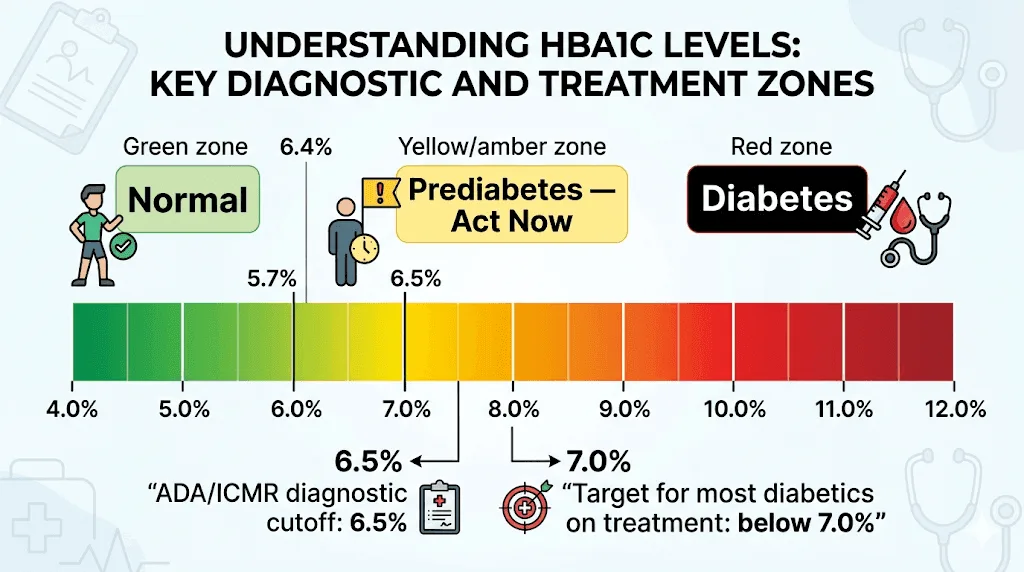
Important Indian context: ICMR guidelines note that South Asians develop insulin resistance and type 2 diabetes at lower BMI thresholds than Western populations. A “normal-weight” Indian patient with an HbA1c of 6.1% is not at low risk — they are in the intervention zone. At Redial Clinic, we treat prediabetes as an action signal, not a “wait and watch” diagnosis.
How Diet Helps Lower HbA1c — With Indian Meal Examples
Reducing refined carbohydrates and prioritising fibre, protein, and healthy fats at every meal is the single most effective dietary strategy for lowering HbA1c — research shows it can reduce levels by 0.5–2.0 percentage points over 3–6 months. The specific foods matter less than the overall pattern: fewer glucose spikes after meals means less sugar coating your haemoglobin over time.
But here’s where most online advice falls short: it talks about “whole grains” and “lean eating” without addressing the reality of an Indian plate. Let’s fix that.
Carbohydrate quality: the biggest lever
The typical Indian diet is carbohydrate-heavy — rice, roti, poha, upma, paratha, and sweets are staples across meals. The goal is not to eliminate carbs entirely, but to shift their quality and control their quantity.
- Replace white rice with hand-pounded or parboiled rice, or reduce the rice portion to one small katori and fill the rest of your plate with dal, sabzi, and a protein source.
- Switch from maida-based rotis/naans to bajra, jowar, or ragi rotis — these millet-based alternatives have a significantly lower glycaemic index and higher fibre content.
- Limit or avoid packaged breakfast cereals, muesli, and granola bars — they are marketed as healthy but often spike blood sugar as much as a mithai.
- Be cautious with fruit juices and chai with sugar. Whole fruit (with fibre intact) is fine in moderation; juice strips the fibre and delivers a concentrated sugar load. Cut chai sugar gradually from 2 spoons to 1 to none.
Protein and fat at every meal
One of the simplest and most overlooked changes we recommend at Redial Clinic is starting every meal with protein and fat before carbohydrates. Research published in Diabetes Care shows that this meal sequencing can reduce post-meal glucose peaks by up to 35%.
- Begin lunch with dal, paneer, egg, chicken, or fish before moving to roti or rice.
- Add a handful of nuts (almonds, walnuts) or a tablespoon of ghee/coconut oil to meals — fat slows gastric emptying and flattens the glucose curve.
- Evening snacking on namkeen, biscuits, or bread can be replaced with roasted chana, a boiled egg, or paneer cubes with cucumber.
Fibre: the underrated HbA1c weapon
A meta-analysis of 15 randomised controlled trials found that increasing dietary fibre by approximately 15 grams per day reduced HbA1c by 0.3–0.5 percentage points. Indian diets that include generous amounts of dal, rajma, chole, green vegetables, methi (fenugreek), and salads already have a fibre advantage — the key is not to offset it with excessive refined carbs.
If you’re looking for a structured Indian eating plan, our guide on the best Indian diet for diabetes reversal provides a week-by-week framework.
The Role of Exercise in Reducing HbA1c
Regular physical activity — especially the combination of aerobic exercise and resistance (strength) training — can lower HbA1c by 0.5–0.7% independently of dietary changes, according to a large meta-analysis published in Diabetologia. The mechanism is straightforward: exercising muscles become better at pulling glucose out of the bloodstream without needing as much insulin.
At Redial Clinic, we’ve seen the best HbA1c outcomes in patients who combine two types of movement:
Aerobic activity (walking, cycling, swimming)
- Aim for at least 150 minutes per week of moderate-intensity aerobic exercise — the ADA, WHO, and ICMR all align on this recommendation.
- A 30–45 minute brisk walk after dinner is one of the most practical and effective habits an Indian patient can adopt. Post-meal walking directly blunts the glucose spike from your last meal.
- High-intensity interval training (HIIT) has shown even larger HbA1c reductions than steady-state cardio in some trials, but it is best introduced gradually and with medical clearance.
Resistance training (weights, bands, bodyweight)
- Include at least 2–3 sessions per week targeting major muscle groups (legs, back, chest, arms).
- Building lean muscle mass increases your body’s baseline glucose disposal capacity — think of it as expanding the “sink” where glucose gets stored, so less remains in the bloodstream.
- You do not need a gym. Squats, lunges, push-ups, and resistance band exercises done at home are sufficient to start.
For a step-by-step plan, see our detailed post on the best exercise routines for diabetes and weight control.
Stress, Sleep, and Other Lifestyle Factors That Affect HbA1c
Chronic stress, poor sleep, and inconsistent meal timing can keep HbA1c stubbornly elevated even when diet and exercise are on track — because each of these factors independently raises cortisol and disrupts insulin signalling. Many patients who “do everything right” on paper still struggle with HbA1c until these hidden drivers are addressed.
Stress and cortisol
When you’re under sustained stress — work pressure, financial worry, family conflict — your body releases cortisol, which directly triggers the liver to dump glucose into the bloodstream. This is a survival mechanism that made sense for our ancestors running from predators, but it works against you in a modern office or commute.
We routinely ask patients about their stress levels during metabolic assessments, because we’ve seen cases where HbA1c only started dropping after the patient addressed a chronic work stressor or began a structured relaxation practice (even 10–15 minutes of daily deep breathing or yoga nidra).
Our article on stress and diabetes explores this connection in more depth.
Sleep quality and duration
A meta-analysis of 22 studies found that adults sleeping fewer than 6 hours per night had significantly higher HbA1c levels than those sleeping 7–8 hours. Poor sleep quality — even with adequate hours — had the same effect. The mechanism involves impaired insulin sensitivity, increased hunger hormones (ghrelin), and elevated cortisol.
- Target 7–8 hours of uninterrupted sleep. If you regularly wake up feeling unrested, discuss sleep apnoea screening with your doctor — it is common in patients with metabolic syndrome.
- Avoid screens for at least 30 minutes before bed and keep your bedroom cool and dark.
- Do not eat heavy meals within 2–3 hours of sleep. Late-night eating raises overnight glucose and morning fasting sugar.
Meal timing and frequency
Erratic meal timing confuses your body’s circadian insulin rhythm. Eating at roughly the same times each day — and finishing your last meal early in the evening — has been shown to improve glycaemic control. Some patients at our clinic have seen meaningful HbA1c improvement simply by shifting dinner from 9:30 PM to 7:30 PM and not eating again until morning.
How Quickly Can You Expect HbA1c to Drop?
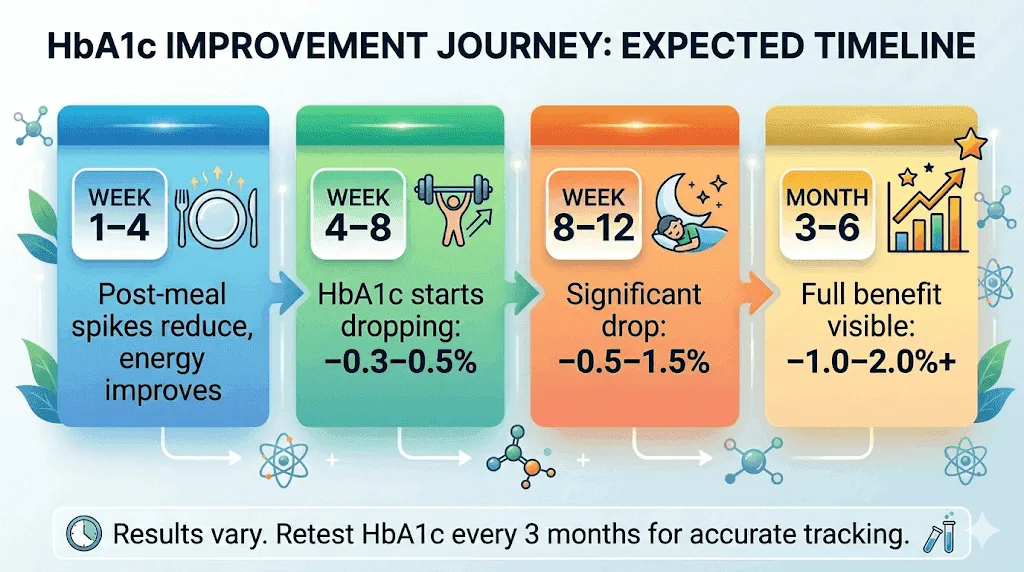
Most patients who consistently follow dietary and exercise changes see a measurable HbA1c reduction within 8–12 weeks, with the steepest decline typically occurring in the first 3 months. This is because HbA1c reflects a rolling average: once you reduce daily glucose spikes, it takes roughly one red blood cell lifecycle (~120 days) for the full benefit to show in the lab result.
Here is a realistic timeline based on clinical evidence and our experience at Redial Clinic:
A word of caution: If your starting HbA1c is above 9%, lifestyle changes alone may not be sufficient or safe as a first-line approach. In such cases, medication (often metformin) is typically started alongside lifestyle changes to protect you from complications while the metabolic improvements take effect. Reducing HbA1c quickly does not mean unsafely — a drop of 0.5–1.0% per 3-month cycle is a healthy and sustainable pace.
When Lifestyle Changes Alone Are Not Enough
Lifestyle modification is the foundation of HbA1c management, but some patients need medication to reach their target safely — particularly those with a starting HbA1c above 8–9%, those with a long duration of diabetes, and those with complications already present. This is not a failure; it is responsible medicine.
The ADA’s 2024 Standards of Care recommend metformin alongside lifestyle changes as first-line therapy for most newly diagnosed type 2 diabetes patients. For patients with HbA1c above 9% at diagnosis, combination therapy or insulin may be needed initially to bring glucose under control.
That said, medication and lifestyle are not mutually exclusive. In our clinical experience, patients who combine metformin with structured dietary changes and regular exercise often reduce their medication load over time — some achieving drug-free remission within 12–18 months. The goal is not to avoid medication at all costs; it is to use lifestyle as the engine and medication as the scaffold until the engine can run on its own.
If you’re interested in what drug-free management looks like, our article on diabetes reversal without medication provides a deeper look.
Frequently Asked Questions
Q1. Can HbA1c be reduced in one week?
No, HbA1c cannot meaningfully change in one week because it measures glucose exposure over 2–3 months of red blood cell life. However, the daily glucose improvements you make in week one — cutting sugary beverages, adding a post-meal walk, reducing refined carbs — will start coating fewer new red blood cells with sugar immediately. You just won’t see the result on a lab report until 8–12 weeks later. Think of HbA1c as a slow-moving average: the earlier you start, the sooner the average comes down.
Q2. What foods should I avoid to lower HbA1c?
The biggest offenders are refined carbohydrates and added sugars — white rice in large portions, maida-based breads and naan, packaged biscuits, fruit juices, sugary chai, and mithai. These foods cause rapid post-meal glucose spikes that drive HbA1c upward. You do not need to eliminate carbohydrates entirely; the goal is to replace refined sources with fibre-rich alternatives (millets, vegetables, legumes) and control portion sizes. Pairing carbs with protein or fat at every meal also helps blunt the spike.
Q3. Is walking enough exercise to reduce HbA1c?
Walking is an excellent starting point and can lower HbA1c on its own, especially post-meal walking. However, combining walking with resistance training (bodyweight exercises, weights, or bands) produces significantly greater HbA1c reductions than either activity alone. A meta-analysis in Diabetologia found that combined aerobic and resistance exercise lowered HbA1c more effectively than aerobic-only programmes. Aim for at least 150 minutes of walking per week plus 2–3 strength sessions for optimal results.
Q4. What is a good HbA1c target for someone with type 2 diabetes?
For most adults with type 2 diabetes, the ADA recommends a target HbA1c below 7.0%. However, this is not one-size-fits-all. Younger patients with recently diagnosed diabetes and no complications may aim for below 6.5%, while older patients or those with a history of severe hypoglycaemia may have a relaxed target of 7.5–8.0%. Your clinician should set a personalised target based on your age, duration of diabetes, medication use, and overall health. At Redial Clinic, we focus on driving HbA1c as low as is safely achievable for each patient.
Take the Next Step
If your HbA1c has been creeping up — or if it’s higher than expected despite your best efforts — a structured metabolic assessment can pinpoint exactly what’s driving the number and what will bring it down. At Redial Clinic, Green Park, New Delhi, we go beyond the standard sugar test to evaluate fasting insulin, post-meal glucose response, lipid markers, and lifestyle factors as a complete metabolic picture.
References
- Umpierre D et al., “Physical activity advice only or structured exercise training and association with HbA1c levels in type 2 diabetes: a systematic review and meta-analysis,” JAMA, 2011. https://doi.org/10.1001/jama.2011.576
- Diabetes Prevention Program Research Group, “Reduction in the incidence of type 2 diabetes with lifestyle intervention or metformin,” NEJM, 2002. https://doi.org/10.1056/NEJMoa012512
- American Diabetes Association, “Standards of Care in Diabetes — 2024,” Diabetes Care, 2024. https://doi.org/10.2337/dc24-SINT
- ICMR, “Guidelines for Management of Type 2 Diabetes,” Indian Council of Medical Research, 2018. https://main.icmr.nic.in/sites/default/files/guidelines/ICMR_GuidelinesType2diabetes2018_0.pdf
- Shukla AP et al., “Food order has a significant impact on postprandial glucose and insulin levels,” Diabetes Care, 2015. https://doi.org/10.2337/dc15-0429
- Reutrakul S, Van Cauter E, “Sleep influences on obesity, insulin resistance, and risk of type 2 diabetes,” Metabolism, 2018. https://doi.org/10.1016/j.metabol.2018.02.010
Medical Disclaimer: This article is for informational purposes only and does not constitute medical advice. Always consult a qualified healthcare professional before making changes to your diet, exercise, medication, or treatment plan.

 Facebook
 Instagram
 LinkedIn