



Last Updated: 13/01/2026
Authored by: Mansi BhattStrength training for PCOS is not just about physical fitness — it is a powerful metabolic and hormonal intervention that addresses the root causes of polycystic ovary syndrome. When applied correctly, it improves insulin resistance, reduces belly fat, restores menstrual regularity, supports fertility, and rebuilds emotional confidence.
A Story That Reflects Millions of Women
When Ritika, 27, visited the clinic, her concern wasn’t only weight. She carried emotional exhaustion, fear, body-image distress, and uncertainty about her future.
For four years, her life revolved around irregular periods, stubborn belly fat, acne, facial hair, mood instability, chronic fatigue, and a deep fear of infertility. Despite long cardio sessions, medications, supplements, and hormonal pills, nothing worked sustainably.
The turning point came when endless cardio and restrictive dieting were replaced with structured strength training for PCOS, supported by metabolic nutrition.
Within 12 weeks, her waistline reduced, periods became more predictable, insulin sensitivity improved, acne reduced, energy returned, and confidence resurfaced. Her transformation was not magic — it was physiology.
PCOS — Beyond Hormones and Ovaries
PCOS is often misunderstood as a gynecological disorder. In reality, it is fundamentally a metabolic condition driven by insulin resistance.
When insulin levels remain chronically high, ovaries are signaled to produce excess androgens, leading to irregular ovulation, skipped cycles, infertility, facial hair, acne, and abdominal fat accumulation.
This is why many women struggle despite eating less. Their cells are insulin-resistant, inflamed, and metabolically stressed. Strength training for PCOS directly targets this dysfunction.
How Strength Training Scientifically Heals PCOS
Strength Training Improves Insulin Sensitivity
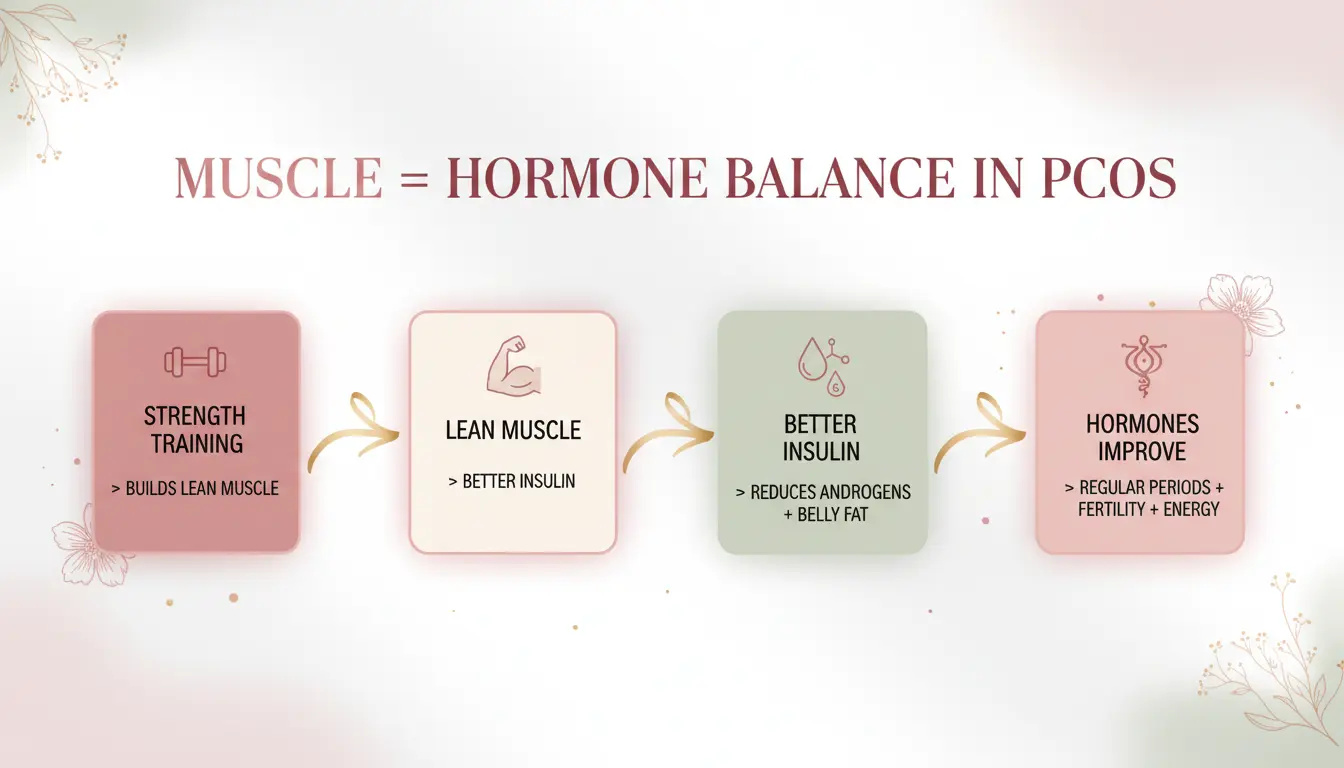
Resistance training activates muscle glucose uptake independent of insulin. As muscles become metabolically active, the body requires less insulin to manage blood sugar.
Lower insulin levels lead to reduced androgen production, improved ovarian function, restored ovulation, and more predictable menstrual cycles.
Strength Training Builds Lean Muscle and Boosts Metabolism
Muscle is metabolically active tissue. Increasing muscle mass raises resting metabolic rate, allowing the body to burn fat efficiently even at rest.
For women with PCOS, this reverses the cycle of fatigue, weight gain, and hormonal imbalance caused by chronic cardio and under-eating.
Strength Training Reduces Belly Fat and Inflammation
PCOS-related belly fat is visceral fat linked to inflammation and insulin resistance. Weight training for PCOS targets visceral fat more effectively than steady-state cardio.
As inflammation decreases, hormonal signaling improves, lowering risks of fatty liver and metabolic syndrome.
Strength Training Balances Hormones Naturally
Strength training regulates insulin, testosterone, estrogen-progesterone balance, and cortisol. As hormones stabilize, women experience improved skin, reduced facial hair, better mood stability, and cycle regularity.
Strength Training Enhances Fertility
Improved insulin sensitivity restores ovulation, which directly enhances fertility outcomes. Many modern fertility protocols include PCOS insulin resistance exercise as a core component.
Strength Training Supports Mental and Emotional Health
PCOS often brings anxiety, depression, emotional withdrawal, and self-doubt. Strength training releases endorphins, dopamine, and serotonin — rebuilding mental resilience alongside physical health.
What Kind of Strength Training Should PCOS Women Do?
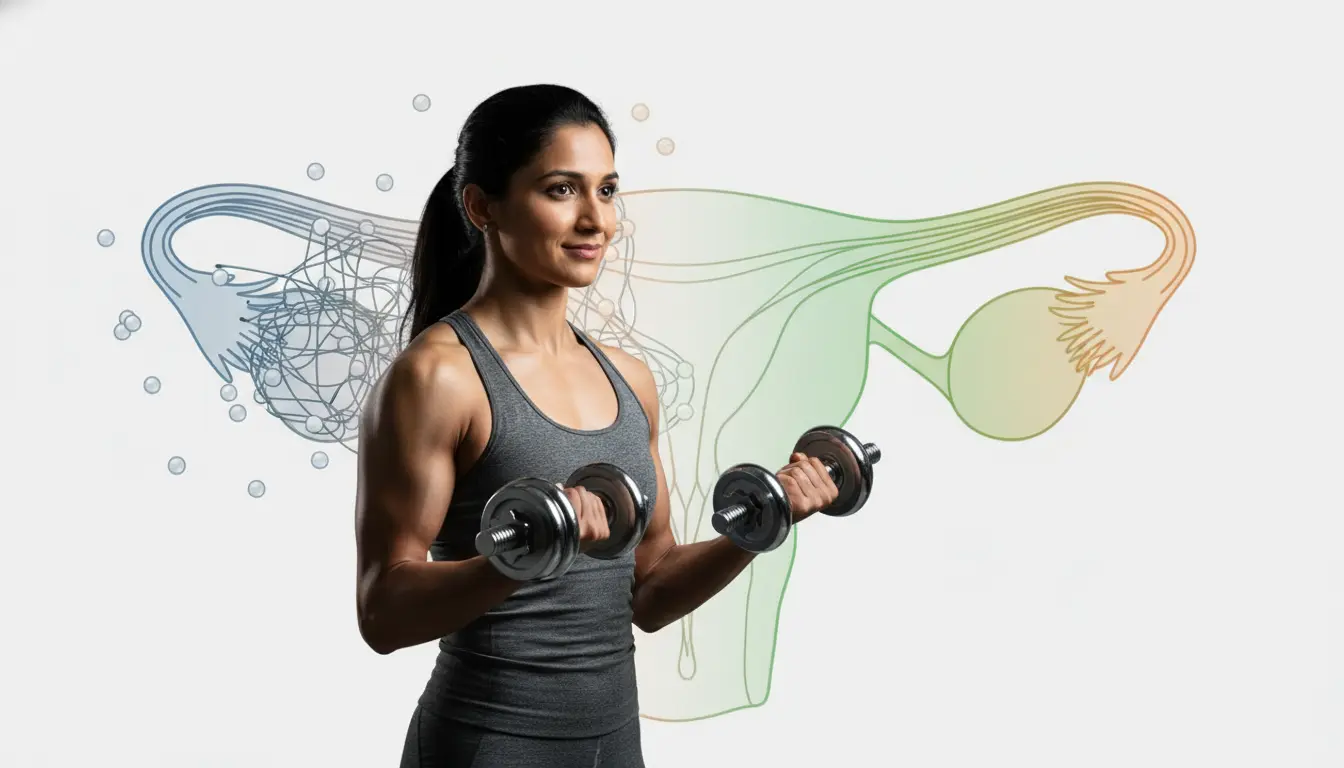
Compound exercises such as squats, lunges, deadlifts, push-ups, rows, and hip thrusts are ideal. Training 3–4 times per week for 30–45 minutes with progressive overload works best.
Women should avoid chronic over-cardio, crash dieting, overtraining, and unsupervised routines. Strength training works optimally when paired with balanced nutrition, good sleep, and stress management.
FAQs
Is strength training safe for women with PCOS?
Yes. It is one of the most recommended lifestyle interventions.
Will lifting weights make women bulky?
No. Women become lean, toned, and metabolically strong.
Can strength training help regulate periods?
Yes. By correcting insulin resistance and hormonal imbalance.
Should women stop cardio completely?
No. Walking and light cardio are helpful, but strength training should be primary.
How soon do results appear?
Energy and mood improve within 4–6 weeks. Physical and hormonal improvements occur within 8–12 weeks.
Can overweight women with PCOS start strength training?
Absolutely, with guided and gradual progression.
Final Verdict
Strength training for PCOS is metabolic therapy, hormonal therapy, and emotional rehabilitation. PCOS is not a life sentence — it is a condition that responds powerfully to intelligent lifestyle correction.
The strongest thing about a woman with PCOS is not her diagnosis, but her ability to rise stronger than it.
References
International Evidence-Based Guideline for PCOS (2023) – Recommends strength training as primary therapy.
Human Reproduction Update Journal – Shows improved ovulation and fertility with resistance training.
Diabetes & Metabolic Syndrome: Clinical Research & Reviews – Confirms reduction in visceral fat and insulin resistance.
British Journal of Sports Medicine – Links muscle mass with improved hormonal stability.

 LinkedIn