




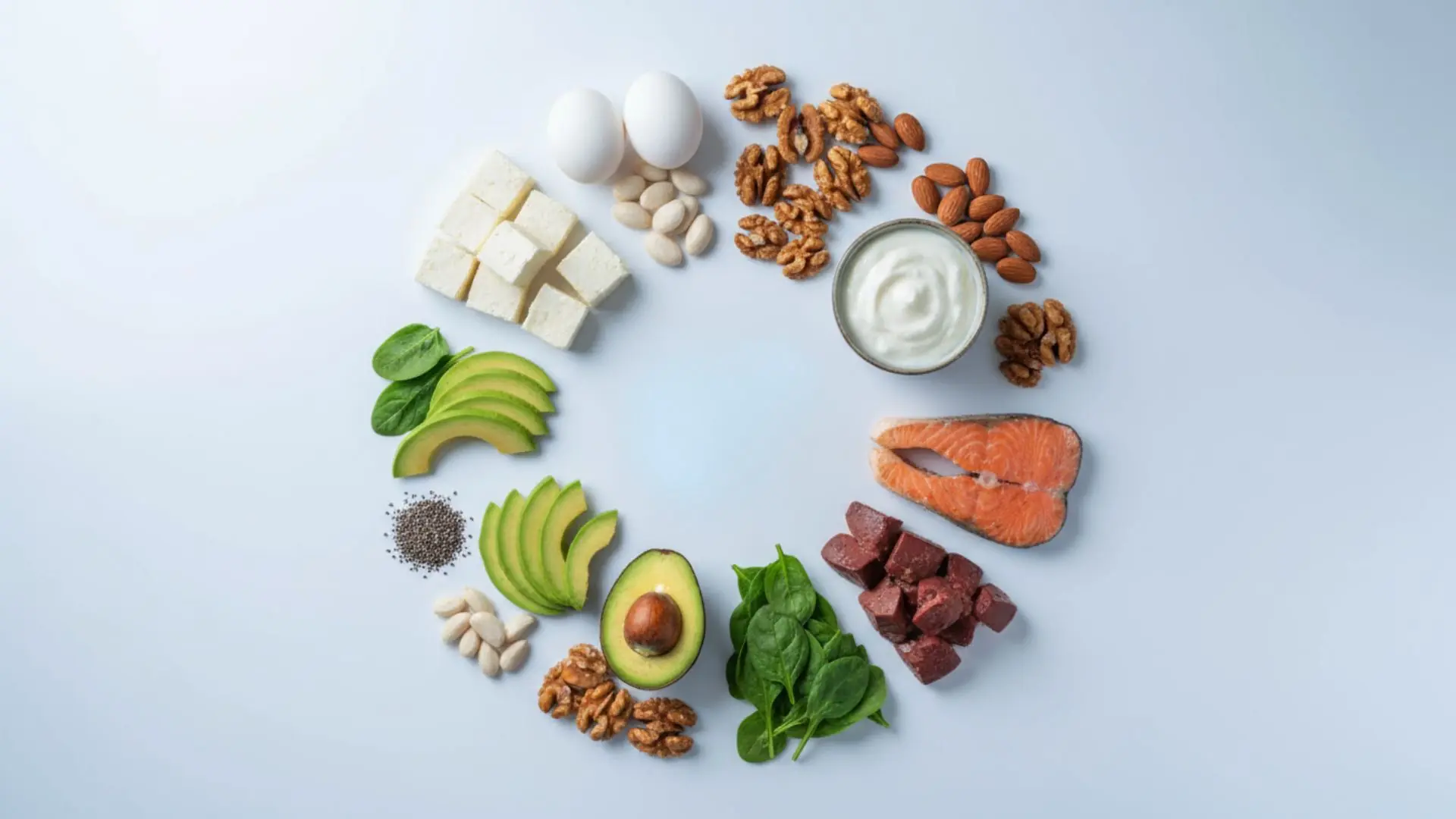
Introduction: Blood Sugar Control Begins With Insulin Control
Type 2 diabetes is not just a “high sugar problem.”
It is fundamentally a metabolic disorder caused by insulin resistance.
When insulin resistance is high, your body requires more and more insulin to clear the same amount of glucose. Eventually:
- Fatigue increases
- Hunger becomes frequent
- Belly fat accumulates
- Blood sugar rises
- Medications increase over time
The goal is to reduce insulin resistance, not just reduce sugar intake.
And food is the most powerful tool to achieve this.
The superfoods below have been selected because they:
- Improve insulin sensitivity
- Provide steady glucose control
- Reduce hunger and cravings
- Support muscle mass (muscle is the biggest glucose sponge!)
- Repair fatty liver, a silent driver behind diabetes
Each category has both vegetarian and non-vegetarian options — all easily available in India.
VEGETARIAN SUPERFOODS FOR BLOOD SUGAR CONTROL
1. Paneer (Cottage Cheese)
Nutrients (100 g)
Value
| Protein | 17–21 g |
| Carbohydrates | 1–2 g |
| Fat | 18–20 g |
| Glycemic Index | ~0 |
Why It Helps:
Paneer provides slow-digesting casein protein which helps maintain steady energy without spiking insulin. It also keeps hunger low between meals, reducing cravings.
How to Use:
Grilled, tandoori, tikka, bhurji.
2. Greek Yogurt (Unsweetened)
Nutrients (100 g)
Value
| Protein | ~10 g |
| Carbs | ~3 g |
| Probiotics | Present |
Why It Helps:
Supports gut microbiome and reduces inflammation — both essential for reversing metabolic damage.
How to Use:
Greek yogurt + chia seeds + kiwi/blueberries, salads.
3. Chia Seeds
Nutrients (1 tbsp)
Value
| Fiber | ~5 g |
| Net Carbs | <1 g |
| Protein | ~2 g |
Why It Helps:
Chia forms a gel-like texture that slows carbohydrate absorption and stabilizes glucose response after meals.
How to Use:
Add to Greek yogurt, mix into salads.
4. Non-Starchy Vegetables
(Lauki, Tinda, Turai, Bhindi, Cabbage, Cauliflower, Karela, Spinach)
Nutrients (100 g cooked — average)
Value
| Protein | 1–3 g |
| Fat | 0–1 g (depends on cooking fat added) |
| Carbs | 3–6 g (very low net carbs) |
| Fiber | 2–4 g |
| Key Micronutrients | Potassium, Magnesium, Folate, Vitamin C, Vitamin K |
These veggies are low carb and high volume, allowing you to eat large filling plates without blood sugar spikes.
How It Helps:
Very low in carbs and high in fiber, they prevent sugar spikes and actively support overall health.
How to Use:
Sabzi, curry.
5. Soya Chunks
Nutrients (100 g dry)
Value
| Protein | 48–52 g |
| Fiber | 13–15 g |
| Carbs | ~25 g |
| Fat | <1 g |
Why It Helps:
One of the highest vegetarian protein sources. Supports muscle growth, which improves insulin sensitivity.
How to Use:
Soya sabzi, tikka, grilled, add boiled to salads.
6. Tofu
Nutrients (100 g)
Value
| Protein | 8–14 g |
| Carbs | 1–2 g |
| Fat | 4–8 g |
Why It Helps:
It provides steady energy, keeps hunger low, and blends well with Indian flavors.
How to Use:
Tofu stir-fry, tikka, grilled, salads.
7. Tempeh
Nutrients (100 g)
Value
| Protein | 19–20 g |
| Fiber | 5–7 g |
| Probiotics | Present |
Why It Helps:
Being fermented, tempeh improves gut health, reduces inflammation, and enhances protein absorption.
How to Use:
Pan-seared cubes with salt, tikka, add to salads.
NON-VEGETARIAN SUPERFOODS FOR BLOOD SUGAR CONTROL
1. Eggs
Nutrients (1 whole egg)
Value
| Protein | ~6 g |
| Fat | ~5 g (healthy fats) |
| Carbs | ~0.6 g |
| Key Micronutrients | B12, Choline, Vitamin D |
Why It Helps:
Complete protein + good fats with almost zero carbs → no sugar spike, improves insulin sensitivity and supports hormone balance.
How to Use:
Boiled, omelette, scrambled, sunny side.
2. Fish
Nutrients (100 g cooked)
Value
| Protein | 20–22 g |
| Fat | 10–13 g (Omega-3 rich) |
| Carbs | 0 g |
| Key Micronutrients | DHA, EPA, Vitamin D, B12 |
Why It Helps:
Omega-3 fats reduce fatty liver, inflammation, and insulin resistance, helping sugars stabilize and cholesterol improve.
How to Use:
Grilled, pan-seared, curry, tawa fry.
3. Chicken (Breast & Thigh)
Nutrients (100 g cooked)
Value
| Protein | ~31 g |
| Fat | 3–9 g (varies by cut — breast lower, thigh higher) |
| Carbs | 0 g |
| Key Micronutrients | B3, B6, Selenium |
Why It Helps:
Lean, high-quality protein builds muscle → more muscle = better glucose uptake, reducing insulin resistance and improving metabolism.
How to Use:
Roasted, tandoori, pan-grilled, curry.
4. Mutton (Goat/Lamb)
Nutrients (100 g cooked)
Value
| Protein | 25–27 g |
| Fat | 15–20 g (clean animal fat) |
| Carbs | 0 g |
| Key Micronutrients | Iron, Zinc, B12 |
Why It Helps:
Clean animal fat + high iron improves hormone repair, red blood cells, stamina & metabolism. More satiating than chicken → reduced cravings & snacking.
How to Use:
Slow-cooked curry, grilled, bone broth.
5. Organ Meats (Goat/Lamb Liver)
Nutrients (100 g cooked)
Value
| Protein | 20–27 g |
| Fat | 4–6 g |
| Carbs | 3–4 g |
| Key Micronutrients | Vitamin A, B12, Iron, Choline |
Why It Helps:
Called nature’s multivitamin — boosts B12 & iron, repairs metabolism, reverses fatty liver, and improves energy & blood sugar regulation.
How to Use:
Liver fry, masala sauté, grilled, curry.
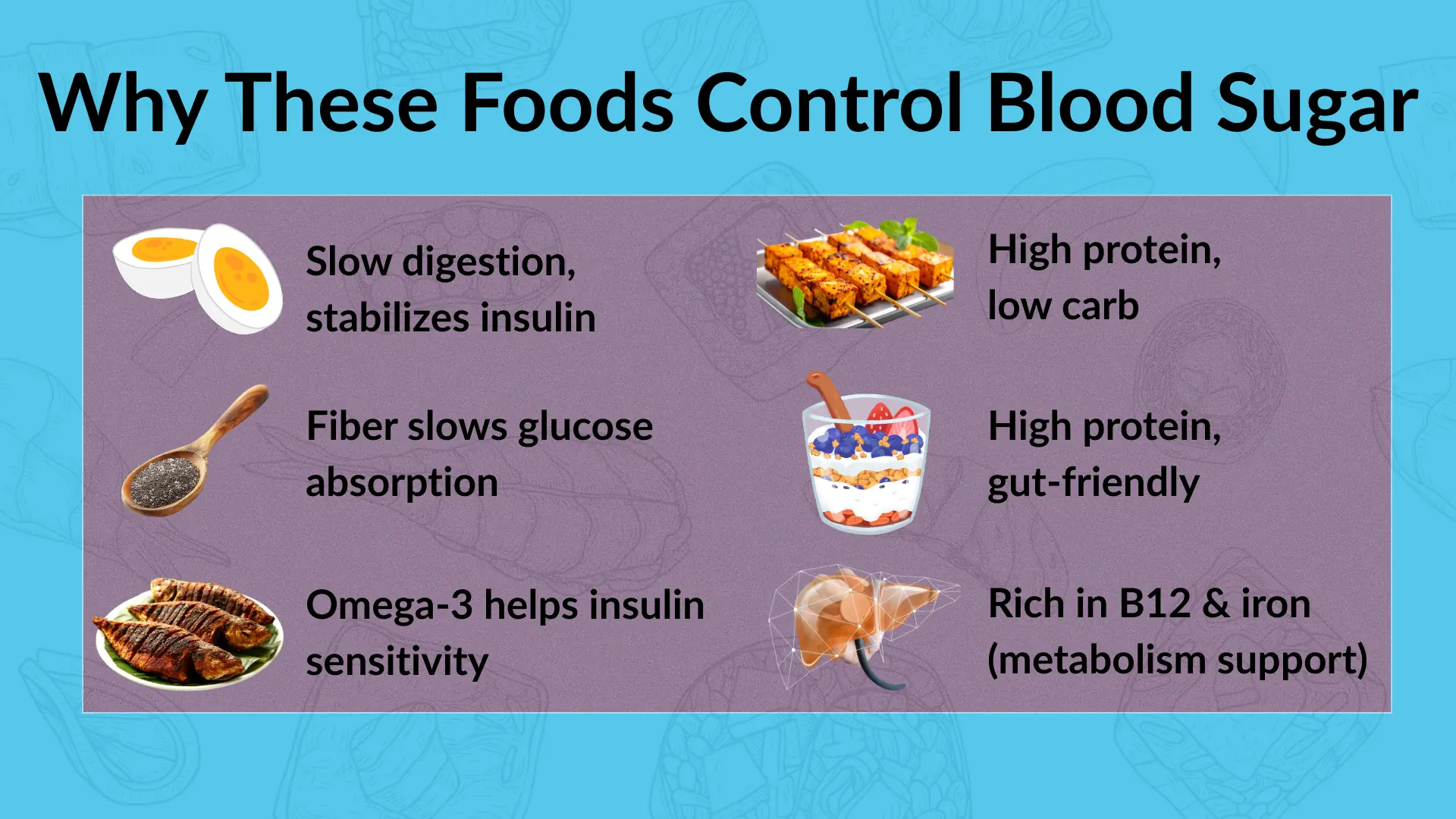
THE IDEAL DIABETES-FRIENDLY PLATE MODEL
Component
Purpose
| Protein | Stabilizes glucose and reduces hunger |
| Vegetables | Provides fiber and micronutrients |
| Healthy Fats | Improves insulin sensitivity |
FAQs
Q1. Can vegetarians reverse diabetes without non-veg?
Yes. Paneer + soya + tofu + tempeh + chia + greek yogurt provide complete protein.
Q2. Is liver safe?
Yes. It is extremely beneficial for diabetics with fatigue, fatty liver, and B12 deficiency.
Q3. When do improvements start?
Most patients see improvement in 2–4 weeks with consistent adherence.
Final Verdict
Diabetes reversal is not about “eating less” — it is about eating right.
Superfoods help because they:
- Reduce insulin demand
- Improve muscle and metabolic health
- Control hunger naturally
- Support fatty liver recovery
Balanced correctly, these foods make diabetes reversal not just possible, but sustainable.
At Redial Clinic (Green Park, Delhi), we design personalized low-carb, high-protein Indian meal plans tailored to lifestyle, culture, and medical needs.
Ready to begin your reversal journey?
Book your consultation today.
References
| No. | Source | Key Findings |
|---|---|---|
| 1 | DiRECT Trial (Lancet, 2018) | Demonstrated diabetes reversal through dietary intervention and weight loss. |
| 2 | EASD Consensus Report, 2019 | Endorses low-carbohydrate diets for diabetes management. |
| 3 | Ludwig & Ebbeling (JAMA, 2021) | Higher protein and fats reduce hunger and insulin spikes. |
| 4 | ICMR Dietary Guidelines, 2022 | Suggest reducing refined carbs to prevent metabolic diseases. |
Medical Disclaimer: This content is for educational purposes only and does not substitute professional medical advice, diagnosis, or treatment. Always consult your physician or a qualified healthcare provider before making any changes to your medication, diet, or treatment plan. Individual results may vary.