




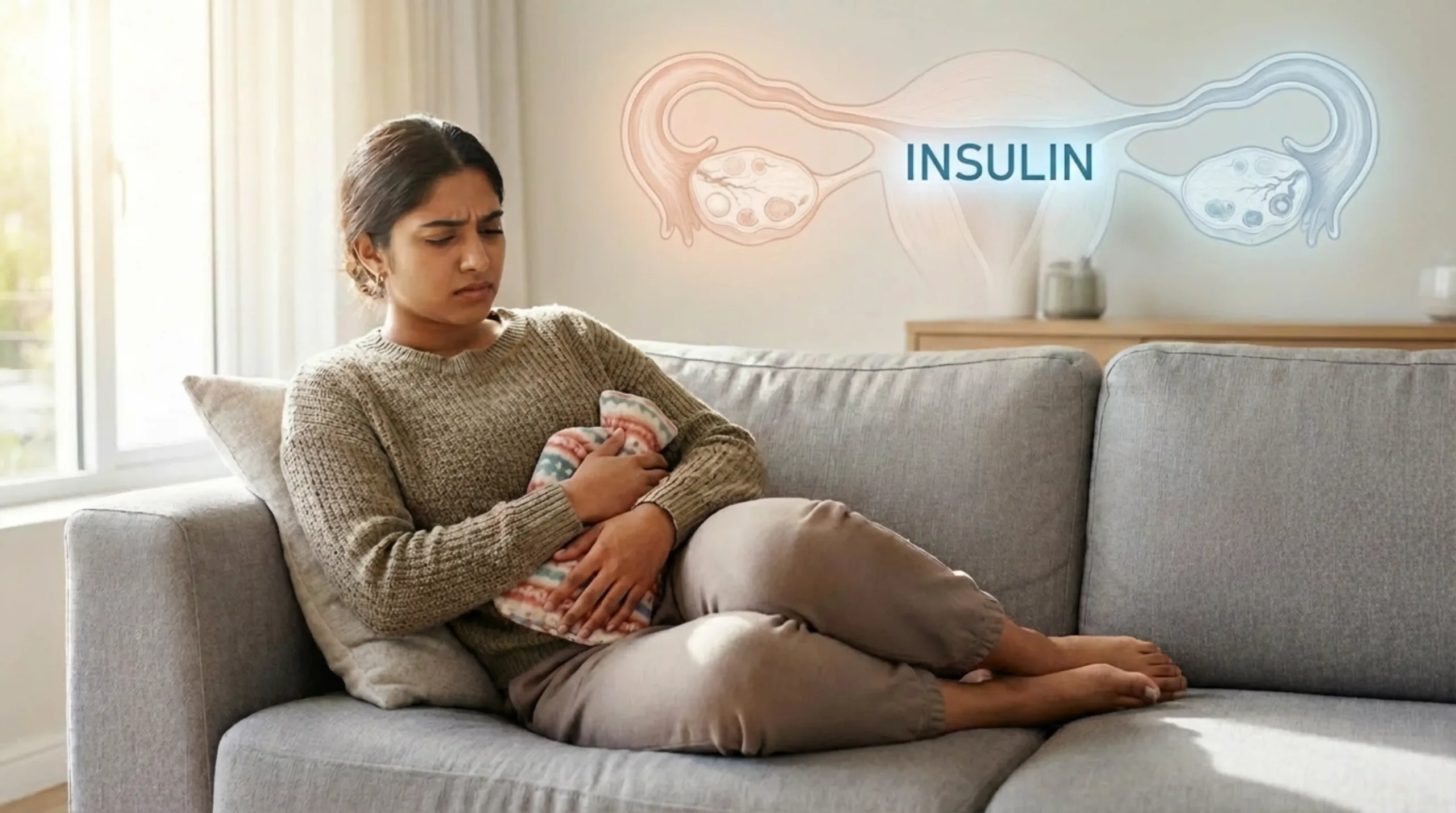
Managing Irregular Periods During PCOS Reversal: A Non-Hormonal Approach
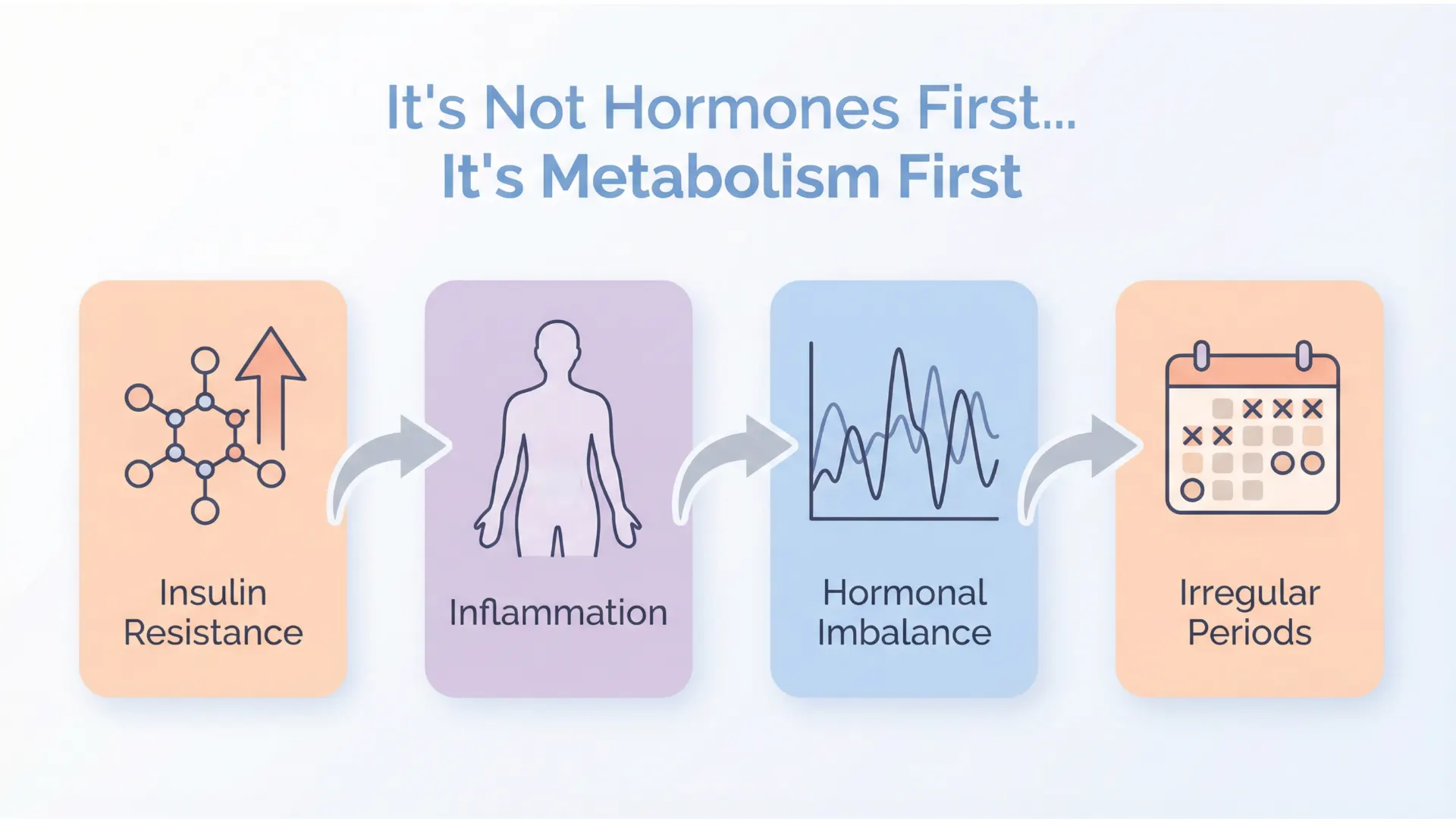
Irregular periods in PCOS often feel frustrating—especially when the cycle depends on hormonal pills. But a pill-induced bleed is not a natural period; it is a withdrawal bleed. The real goal is restoring healthy ovulation, and this becomes possible when irregular periods in PCOS are addressed at the metabolic root—insulin resistance.
PCOS is not just a reproductive disorder. It is a metabolic condition strongly tied to insulin resistance. Until insulin improves, menstrual cycles remain long, irregular, or absent—even if hormonal pills temporarily induce bleeding.
How PCOS Causes Irregular Periods
Understanding why cycles become irregular is the first step toward natural PCOS treatment. The disruptions occur due to three primary physiological imbalances:
| Root Cause in PCOS | Effect on Hormones | Result |
|---|---|---|
| Insulin resistance | High insulin → increases androgens (testosterone) | No ovulation |
| Low progesterone | Occurs when ovulation does not happen | Long or absent cycles |
| Chronic inflammation | Affects ovarian function | Poor egg quality & delayed ovulation |
Unless insulin resistance and inflammation are corrected, the cycles remain irregular—even when taking pills.
The Science-Backed Non-Hormonal Approach
This approach does not involve hormone pills, crash diets, or starvation. It focuses on metabolic correction and non hormonal PCOS management.
1. Low-Carb, High-Protein, Healthy-Fat Diet
A carb-heavy Indian diet (rice, rotis, poha, idli, dal, multigrain bread) raises insulin levels. When insulin stays high, ovulation remains disrupted, leading to irregular periods in PCOS. A corrective diet includes:
- Low carbs (15–20%) – non-starchy vegetables and fruits
- High protein (25–30%) – paneer, tofu, soya chunks, eggs, chicken, fish
- Healthy fats (50–60%) – ghee, coconut oil, white makkhan, EVOO
- Vegetables – lauki, bhindi, broccoli, cabbage, palak, cauliflower
This reduces insulin levels → decreases testosterone → allows ovulation to restart → periods become regular.
2. Strength Training — The Most Underrated Medicine
Strength training dramatically improves insulin sensitivity and supports ovulation. Women with PCOS need more than cardio for effective results.
- Improves insulin sensitivity
- Reduces inflammation
- Supports progesterone production
- Reduces belly fat
Ideal routine: 3–4 days/week of full-body strength training.
3. Fix Vitamin Deficiencies
Common deficiencies affecting cycles and ovulation:
- Vitamin D – low levels cause inflammation and delayed ovulation
- Vitamin B12 – affects energy and metabolic balance
- Iron – impacts ovulatory capacity
- Magnesium – essential for insulin sensitivity
4. Improve Gut Health
Poor gut health fuels inflammation, worsening ovulation. Reducing refined flour, packaged foods, and sugar improves gut integrity.
5. Sleep — The Hormone Reset Button
Women sleeping less than 6 hours show higher insulin and cortisol levels—both disrupt ovulation. Aim for:
- 7–8.5 hours of quality sleep
- Sleeping before 11 PM
- Avoiding late-night heavy meals
Results You Can Expect
| Timeline | Improvement |
|---|---|
| 2–4 weeks | Reduced cravings, less bloating, better energy |
| 6–10 weeks | Belly fat decreases, skin improves, cycle length shortens |
| 3–6 months | Natural ovulation returns → periods regularize |
| 6–12 months | Sustained weight loss & metabolic healing |
FAQs
1. Can periods come without hormonal pills in PCOS?
Yes. When insulin resistance improves, natural ovulation resumes, restoring real periods.
2. Do you need to lose weight for periods to normalize?
Even a 5–7% reduction in body fat can restart ovulation, especially when paired with a low-carb diet and strength training.
3. Is intermittent fasting helpful?
Yes, if meals are balanced with adequate protein and healthy fats.
Final Verdict
Irregular periods in PCOS aren’t fixed by forcing monthly bleeds with pills—they improve when ovulation is restored through insulin correction and metabolic healing. A low-carb, high-protein, healthy-fat diet combined with strength training, vitamin optimization, sleep, and gut health improvements can restore natural cycles without medication.
At Redial Clinic, we support women in achieving pain-free, regular periods through lifestyle-driven restore ovulation naturally programs tailored for Indian food habits and metabolic needs.
References
- American Journal of Obstetrics & Gynecology – Insulin resistance as primary driver of anovulation (NIH)
- Journal of Clinical Endocrinology & Metabolism – Low-carb diets improve ovulation
- Human Reproduction – Strength training improves reproductive function
- Diabetes & Metabolic Syndrome Journal – High-protein diets improve inflammation & hormonal balance
Internal Links:

 Facebook
 Instagram
 LinkedIn