




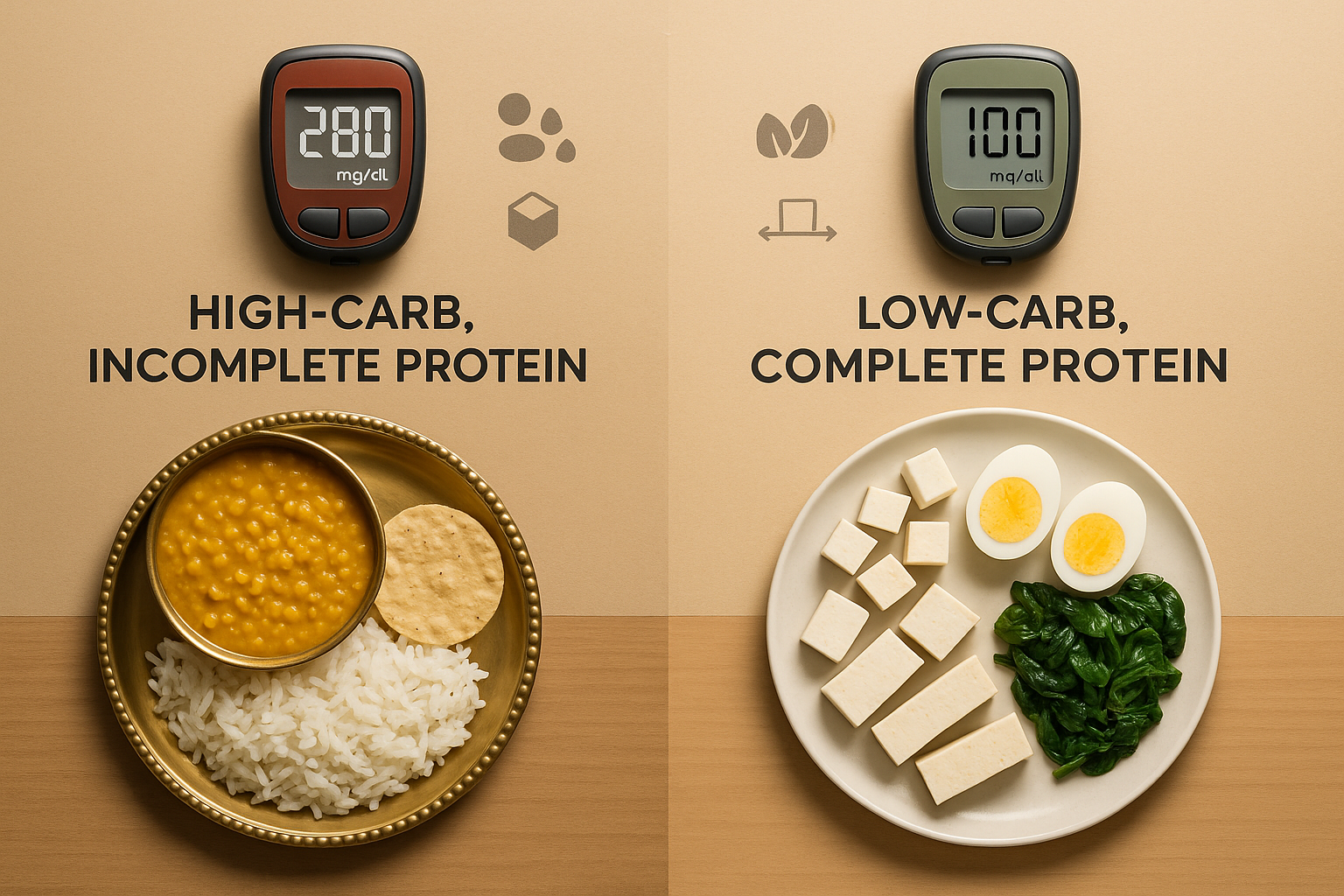
Across Indian households, lentils are often glorified as the ultimate vegetarian protein. You’ll hear it everywhere—dal is protein, dal builds muscle, dal is good for sugar. But are lentils a good source of protein, especially for diabetics?
As someone working daily with diabetic patients, I can confidently say this: lentils as a source of protein is one of the most misleading food myths in diabetes nutrition.
This blog explains why lentils aren’t the best source of protein, what the best plant-based proteins for diabetics are, and how to plan smarter meals for blood sugar control.
Are Lentils High in Protein? Let’s Look at the Data
Let’s break down protein in lentils per 100g, using raw masoor dal as an example:
| Nutrient | Masoor Dal (100g raw) |
|---|---|
| Calories | 353 kcal |
| Protein | 24g |
| Carbohydrates | 60g |
| Fiber | 11g |
| Fat | 1.3g |
At first glance, this looks promising. But are lentils high in protein compared to meat protein sources? Let’s see.
Lentils vs Meat Protein
Compare the above with chicken breast:
| Nutrient | Chicken Breast (100g) |
|---|---|
| Protein | 31g |
| Carbohydrates | 0g |
| Fat | 3.5g |
Chicken breast offers more protein with zero carbs, while lentils as a source of protein are carb-heavy foods disguised as protein.
This highlights why lentils vs meat protein is not even a competition—especially for diabetics aiming for sugar control and muscle preservation.
List of Lentils High in Protein – With a Catch
Here’s a list of lentils high in protein (per 100g dry weight):
| Lentil Type | Protein | Net Carbs |
|---|---|---|
| Masoor | 24g | 53g |
| Moong | 23g | 55g |
| Urad | 25g | 55g |
| Chana Dal | 22g | 60g |
| Toor Dal | 22g | 58g |
Yes, lentils contain protein, but they come bundled with 2–3x more carbs, making lentils as a source of protein unsuitable for diabetes management.
Are Lentils a Good Source of Protein?
Let’s compare lentils vs other protein sources (per 100g cooked weight):
| Food | Protein | Carbs | Complete Protein? |
|---|---|---|---|
| Lentils | 9g | 20g | ❌ |
| Boiled Eggs | 13g | 1g | ✅ |
| Chicken Breast | 31g | 0g | ✅ |
Lentils lose out again.
They not only provide less protein, but also lack essential amino acids like methionine, making them incomplete proteins. For diabetics, eating lentils as a source of protein risks high sugar spikes without providing full muscle-repair benefits.
Best Plant-Based Proteins for Diabetics
Here’s a table comparing best plant-based proteins for diabetics against lentils:
| Plant Source | Protein (100g dry) | Net Carbs | Complete? |
|---|---|---|---|
| Lentils | 24g | ~60g | ❌ |
| Paneer | 18g | ~2g | ✅ |
| Tofu | 10g | ~2g | ✅ |
| Tempeh | 19g | ~9g | ✅ |
| Soya Chunks | 52g | ~30g | ✅ |
Paneer, tofu, tempeh, and soya chunks emerge as better choices—lower in carbs, complete in amino acids, and safer for sugar levels compared to lentils as a source of protein.
Benefits of Lentils for Blood Sugar – The Real Truth
While many claim the benefits of lentils as a source of protein for blood sugar due to their fibre, the carb cost outweighs the perks for diabetics.
Slow-Digesting Carbs? Not Always
Lentils have complex carbs. But Indian portions (1–1.5 cups cooked) often spike post-meal glucose—especially in insulin-resistant bodies.
High Fiber Doesn’t Cancel Out High Carbs
Lentils carry 50–60g net carbs per 100g dry. Even with fibre, glycemic load remains high, making them unsafe as a main protein source in diabetic diets.
Low GI ≠ Low Impact
The glycemic index of lentils is 30–45, but their glycemic load is high in typical Indian servings, causing sugar spikes.
Are Lentils Good for Muscle Building?
Not really—at least not on their own.
While lentils contain protein, they lack the full amino acid profile needed for muscle repair and building.
To use lentils for muscle building, you would need:
- Large portions = sugar spike
- Grain pairing = more carbs
- Supplementation = complex planning
Thus, are lentils good for muscle building? Only if combined with better protein sources like paneer, soya, or eggs.
The Metabolic Cost of Overeating Lentils
Overusing lentils in diabetic diets can:
- Raise triglycerides due to excess carbs
- Worsen insulin resistance
- Impair fat loss efforts
- Cause post-meal sugar crashes and hunger spikes
While there are some benefits of lentils for diabetics (like potassium and magnesium), they should be treated as fiber-rich side dishes, not protein staples.
How to Include Lentils Without Mislabeling Them
Here’s how we guide patients at our Diabetes Reversal Clinic in Delhi:
Do:
- Limit to ¼–½ cup cooked dal
- Use as a side dish, not protein
- Pair with eggs, paneer, or soya chunks
- Add low-starch veggies like palak, lauki, or bhindi
- Cook with desi ghee to reduce sugar impact
Don’t:
- Combine dal + rice + papad + achar
- Call dal your “protein” without real protein present
- Eat sprouted dals as your only protein snack
What We Recommend at Redial Clinic
At Redial Clinic, Delhi’s leading Diabetes Reversal Clinic, we’ve helped thousands reverse diabetes through real food choices—not misleading myths.
Our stance?
- Lentils = complex carbs with some protein
- Not suitable as main protein in diabetic diets
- We see better muscle retention and sugar control with paneer, tofu, eggs, and soya
If you’re still treating dal as your main protein, it may be why your HbA1c isn’t improving despite “healthy eating.”
Conclusion: Lentils Are Not Reliable Proteins for Diabetics
Let’s get real.
The idea that lentils are protein-rich is only half the truth. When you break it down:
- Protein in lentils per 100g comes with too many carbs
- They’re incomplete proteins
- They fail to support muscle building effectively
- They can spike blood sugar levels dangerously
If you’re managing type 2 diabetes, it’s time to upgrade your plate. Choose vegetarian protein for diabetes that truly helps your body—not one that misleads you with carbs in disguise.
FAQs:
Q1: Are lentils a good source of protein for vegetarians?
Not if you’re diabetic. Better options include paneer, tofu, tempeh, soya chunks, and eggs.
Q2: Are lentils good for muscle building?
Only if combined with complete protein sources. On their own, lentils fall short.
Q3: What are the best lentils for protein?
Urad, masoor, and moong top the list—but they still carry high carb loads.
Q4: Can lentils be included in a diabetic diet?
Yes, in moderation. Use ¼ cup as a fiber-rich side, not as your protein source.
Q5: What’s a better vegetarian protein for diabetes than dal?
Paneer, tofu, tempeh, soya chunks—all offer complete proteins with fewer carbs.
Final Verdict
You’ve seen the comparisons. You’ve read the data.
If you’re diabetic and serious about healing, don’t fall into the “dal = protein” trap. It’s outdated. It’s misleading. And it holds you back from real sugar control and muscle health.
Ask yourself:
Still treating khichdi as healthy protein?
Still relying on moong dal for muscle gains?
Still struggling with sugar spikes despite eating “clean”?
If yes, it’s time for a reset.
At Redial Clinic, we offer:
- Evidence-based Diabetes Reversal Treatment
- Indian food choices that actually support sugar control
- Meal plans tailored to your condition—not myths
Visit redialclinic.com today to book your personalized consult.
Stop treating carbs as protein.
Start eating smart, healing better, and living freely.
References
| No. | Source | Key Findings |
|---|---|---|
| 1 | USDA Food Data Central | 100g raw lentils = 24g protein & 60g carbs—carb-dense, not protein-dense |
| 2 | Harvard T.H. Chan School of Public Health | Lentils are incomplete proteins, poor in methionine |
| 3 | ADA, Diabetes Care – Glycemic Index Tables (2019) | Low GI doesn’t equal low glycemic load for dal in Indian servings |
| 4 | Leidy H. et al., Journal of Nutrition, 2012 | Complete proteins offer better satiety and muscle support than plant carbs |
Medical Disclaimer: This content is for educational purposes only and does not substitute professional medical advice, diagnosis, or treatment. Always consult your physician or a qualified healthcare provider before making any changes to your medication, diet, or treatment plan. Individual results may vary.

 LinkedIn