



Written By: Dr. Gagandeep Singh, MBBS
Medically Reviewed By: Dr. Gagandeep Singh, MBBS
Last Updated: 25 September 2026
| Key Takeaways Belly fat is not one tissue. Subcutaneous fat (under the skin) is mostly cosmetic; visceral fat (around the liver, pancreas, and intestines) is hormonally active and drives insulin resistance, high blood pressure, and abnormal lipids. There are two real levers that reduce visceral fat: lowering the insulin load of your diet (fewer refined carbs and sugar spikes) and increasing glucose demand through resistance training, since skeletal muscle is the body’s largest site of glucose disposal. A head-to-head trial found that combining aerobic and resistance exercise reduced visceral fat by roughly a third over six months — more than either aerobic or resistance training alone — and the reduction tracked closely with improved insulin sensitivity. Diet and exercise are not competing strategies; they act on different parts of the same insulin/glucose system, which is why combining both levers consistently outperforms either alone. Waist circumference (not the bathroom scale) is the most practical proxy for visceral fat — South Asian thresholds are lower than Western ones because Indians tend to accumulate visceral fat at a lower BMI. |
How Do You Reduce Belly Fat?
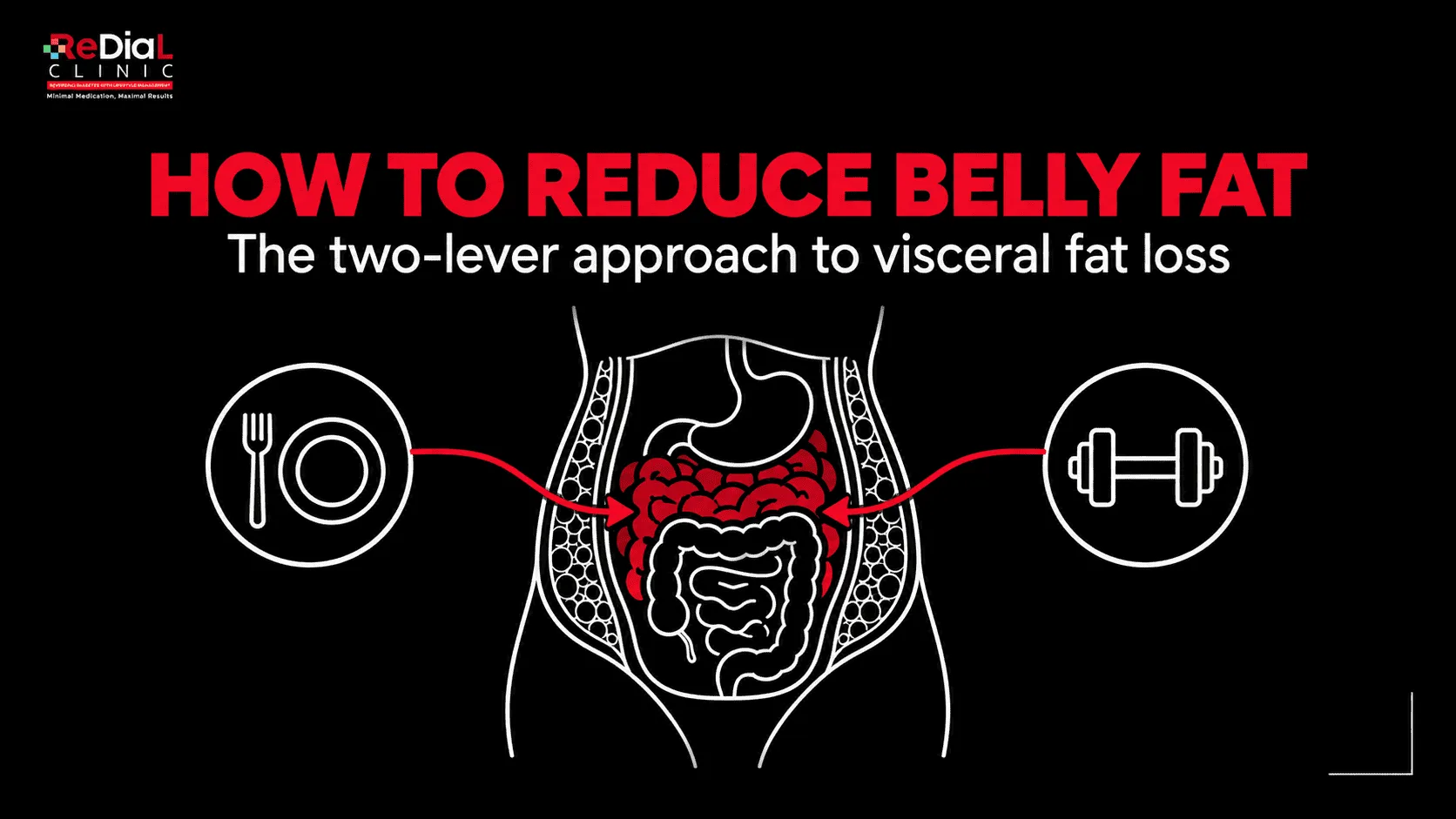
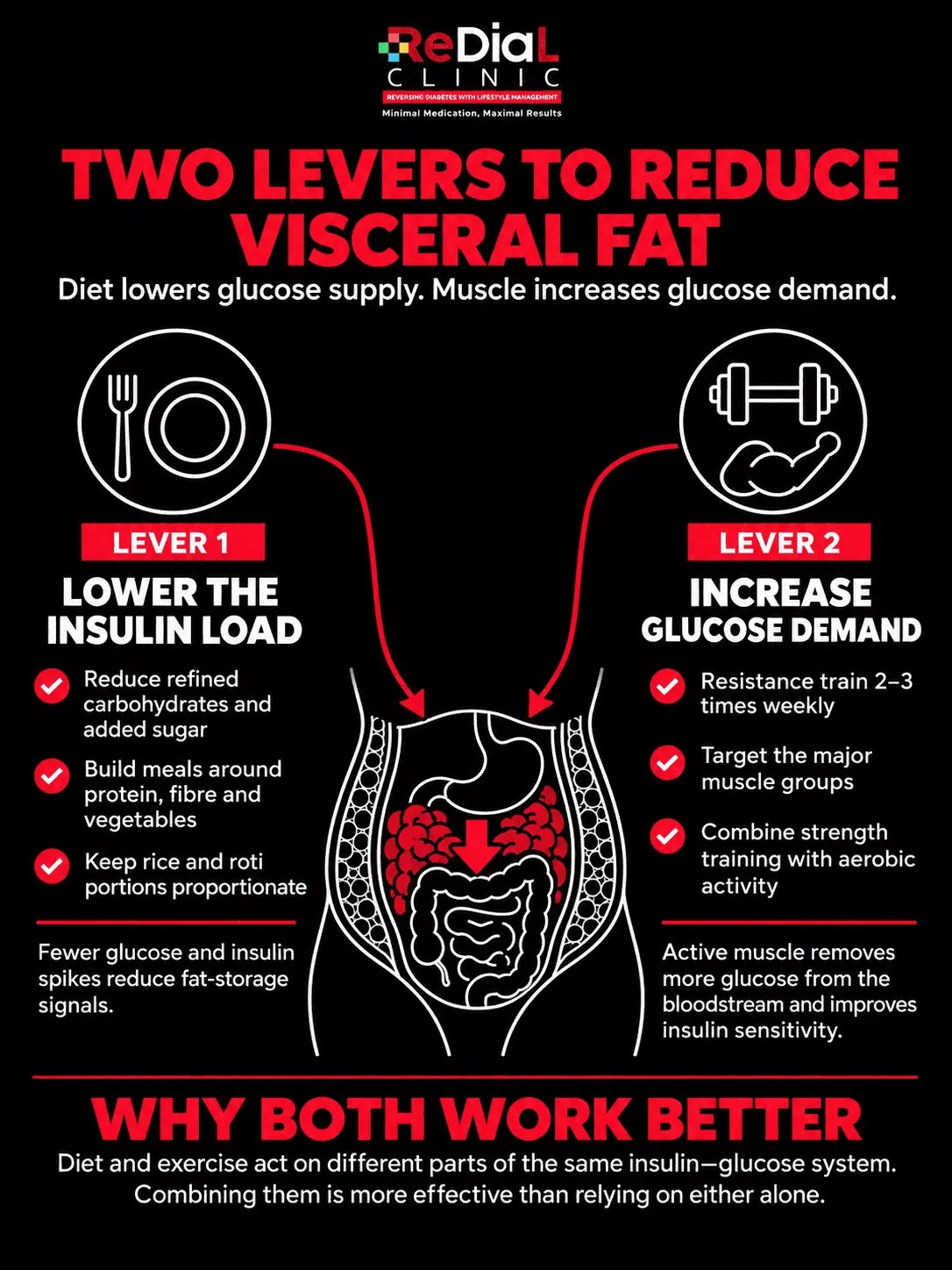
You reduce belly fat — specifically the metabolically active visceral fat around your organs — by pulling two levers together: lowering the insulin load of your diet (fewer refined carbs and sugary drinks) and increasing muscle glucose demand through resistance training. Neither lever alone works as well as both combined.
Belly fat is not just cosmetic — the visceral fat around your organs is metabolically active, and reducing it is one of the highest-leverage moves in metabolic health. It is also one of the most misunderstood: most advice online treats “belly fat” as a single problem solved by “cardio” or “cutting carbs,” when the science points to something more precise. Visceral fat responds to the same hormonal signal — insulin — that drives blood sugar, and it responds to the same physiological lever — muscle glucose uptake — that improves fitness. Understanding both is what separates a plan that stalls after four weeks from one that keeps working.
At our Green Park clinic, belly fat is rarely treated as a stand-alone cosmetic concern. It usually arrives attached to a blood pressure reading, a fasting glucose that has drifted upward, or a lipid panel that looks “borderline.” That is not a coincidence — it is the reason this article exists.
What Is Belly Fat, and Why Isn’t All Belly Fat the Same?
Belly fat is made of two distinct tissue types with very different health effects: subcutaneous fat, which sits under the skin and is largely a cosmetic and mechanical issue, and visceral fat, which packs around the liver, pancreas, and intestines and behaves as an active hormone-secreting organ. Visceral fat is the one that drives disease risk.
Subcutaneous fat is the fat you can pinch. It is the layer most people picture when they think of “belly fat,” and while excess amounts are associated with some metabolic risk, it is far less dangerous than the fat you cannot pinch — the fat packed between and around your internal organs. This deep abdominal fat, called visceral adipose tissue, does something subcutaneous fat does not: it releases inflammatory signalling molecules and free fatty acids directly into the portal circulation that feeds the liver, and it disrupts the balance of hormones (like adiponectin and leptin) that regulate insulin sensitivity.
This is why two people can have the same weight and even the same BMI, yet very different risk profiles — one may be storing fat mostly subcutaneously (lower risk), the other mostly viscerally (higher risk). This is also why a normal-BMI person can still be at meaningful metabolic risk if their visceral fat is high — a pattern sometimes called “TOFI” (thin outside, fat inside).
A patient came to us specifically because his BMI was completely normal — 23.1 and he was frustrated that his physician kept mentioning his “weight.” His waist circumference told a different story: well above the South Asian threshold, with a fasting insulin level that was quietly elevated. His visceral fat, not his overall weight, was the signal his BMI had been hiding.
Waist Circumference: The Practical Proxy for Visceral Fat
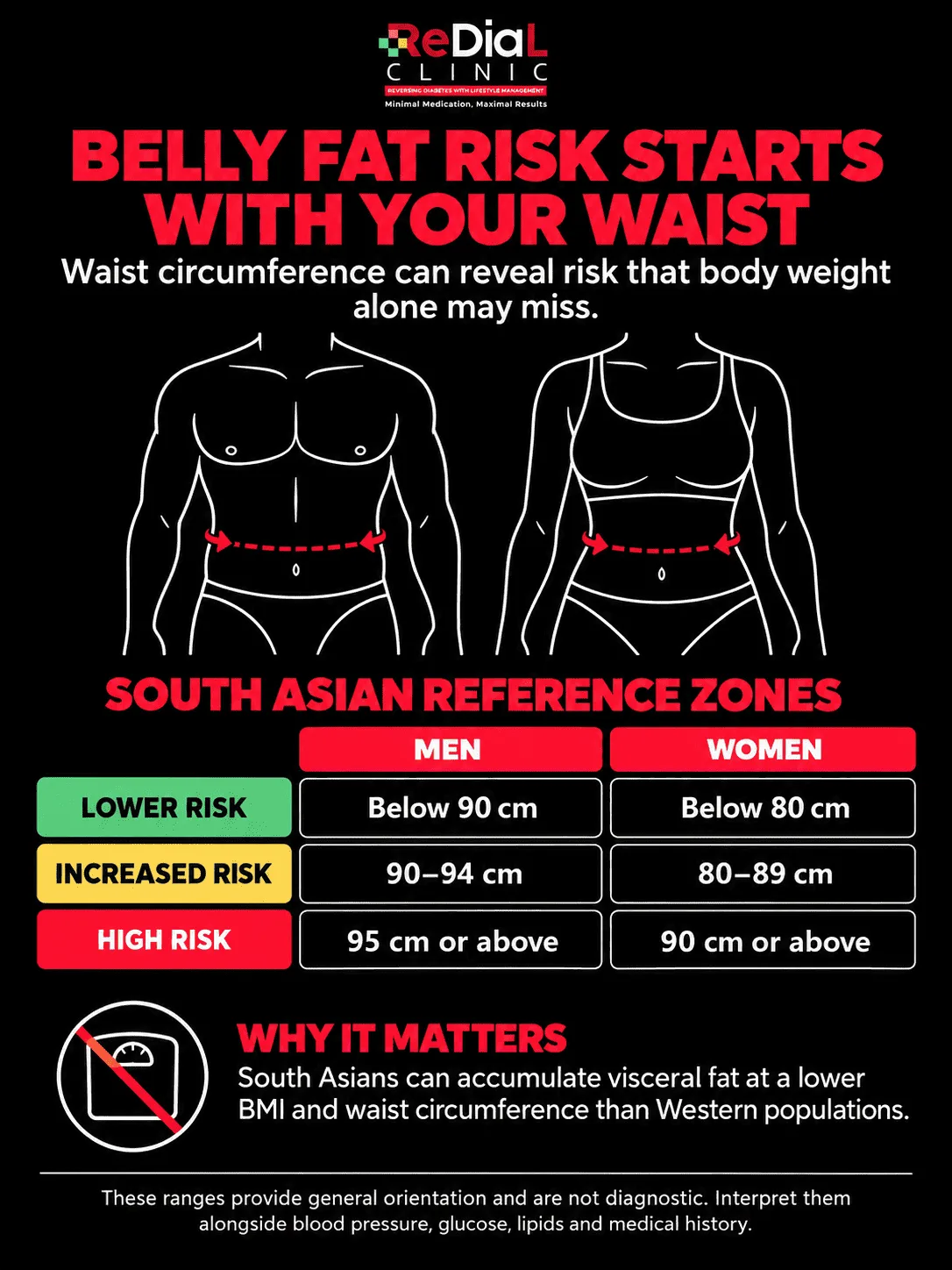
Waist circumference measured at the narrowest point between the lowest rib and the top of the hip bone is the most practical clinical proxy for visceral fat, and South Asian thresholds are lower than Western ones because Indians tend to accumulate visceral fat at a comparatively lower BMI.
| Category | Men (South Asian) | Women (South Asian) |
| Lower risk | < 90 cm | < 80 cm |
| Increased risk / caution | 90–94 cm | 80–89 cm |
| High risk — action needed | ≥ 95 cm | ≥ 90 cm |
Thresholds follow IDF (International Diabetes Federation) ethnicity-specific criteria for South Asians; exact cutoffs vary slightly by guideline body — use this as a general orientation, not a diagnostic tool, and discuss your individual risk with your physician.
Why Is Belly Fat Dangerous?
Belly fat — specifically visceral fat — is dangerous because it functions as an active endocrine organ that drives insulin resistance, raises blood pressure, and worsens cholesterol and triglyceride levels, rather than sitting passively as stored energy the way subcutaneous fat does.
Visceral fat cells are more metabolically active than subcutaneous fat cells: they release free fatty acids more readily, they secrete more inflammatory cytokines, and they sit anatomically positioned to drain directly into the liver via the portal vein. This matters because insulin resistance often begins in the liver — when the liver is exposed to a high, constant load of fatty acids and inflammatory signals from visceral fat, it becomes less responsive to insulin’s normal signal to stop producing glucose. The pancreas compensates by producing more insulin, and that compensatory hyperinsulinemia is itself a fat-storage signal, particularly for more visceral fat — a self-reinforcing cycle.
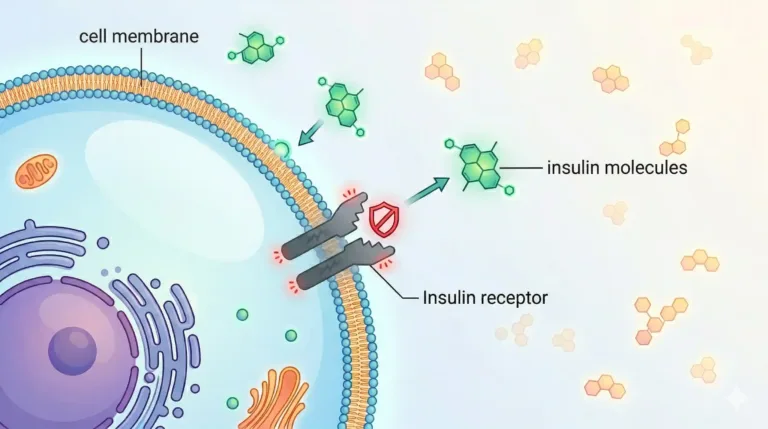
Skeletal muscle plays the opposite role: it is the body’s single largest site of insulin-stimulated glucose disposal. This is the core mechanistic link between insulin resistance, belly fat, and exercise — and it is central to how DeFronzo and Tripathy describe skeletal muscle insulin resistance as “the primary defect” driving the broader disease process in type 2 diabetes.
This is also why belly fat rarely travels alone. It clusters with high blood pressure, elevated triglycerides, low HDL, and impaired fasting glucose — a pattern our clinic and the broader literature refer to as metabolic syndrome. If you are managing high blood pressure, the mechanism connecting your waistline to your readings is covered in more depth in our companion article on
high blood pressure and belly fat — that piece focuses specifically on the RAAS/aldosterone and perivascular-fat pathways linking central obesity to hypertension, while this article stays focused on the general reduction strategy that applies regardless of which downstream marker you are tracking.
If your primary concern is why the scale will not move despite eating less, the hormonal explanation is covered in depth in our companion piece on
does insulin resistance cause weight gain — that article unpacks the lipogenesis/lipolysis switch in detail; this article focuses on what to actually do about it.
Lever 1: How Does Diet Reduce Belly Fat?
Diet reduces belly fat primarily by lowering the insulin load of what you eat — fewer refined carbohydrates, less added sugar, and more protein and fibre — which reduces the frequency and height of insulin spikes that promote fat storage, particularly in visceral depots.
The carbohydrate-insulin model of obesity, described by Ludwig and Ebbeling, proposes that it is not simply “calories in versus calories out” that determines where and how fat is stored — the hormonal environment created by diet composition matters independently. High-glycaemic-load carbohydrates (refined rice, maida-based foods, sugary beverages, most packaged snacks) produce sharper insulin spikes than the same calorie load from fibre, protein, or unsaturated fat. Because insulin is a fat-storage signal and suppresses fat breakdown, a diet that keeps insulin elevated for more hours of the day works against fat mobilisation — even at the same total calorie intake.
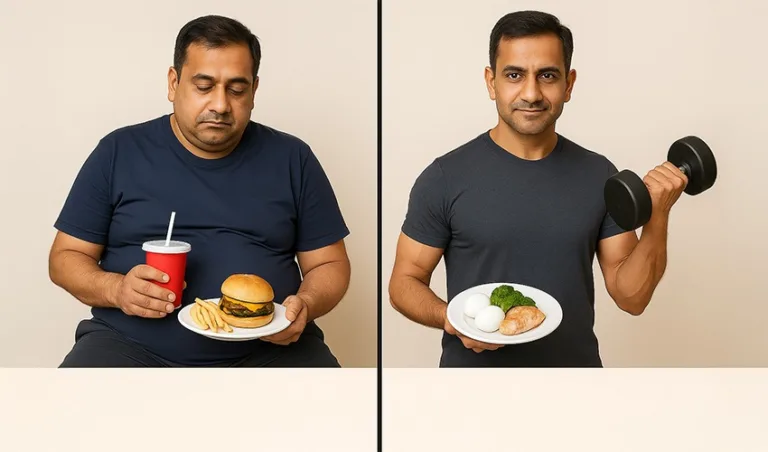
Practically, in an Indian dietary context, this does not mean eliminating rice, roti, or dal — it means changing the composition and sequence of the plate: building meals around dal, paneer, curd, eggs, or fish for protein; loading half the plate with non-starchy vegetables and fibre; and treating refined carbohydrates (white rice, maida, sugary chai, packaged snacks) as the smallest portion rather than the largest. Eating protein and vegetables before refined carbohydrates within a meal also blunts the glucose and insulin spike compared with eating carbohydrates first.
A patient in his late 30s made almost no change to his exercise routine but restructured his plate — cutting white rice portions, adding dal and vegetables first, and replacing his mid-morning biscuits with roasted chana. His waist circumference dropped meaningfully within six weeks, before his weight on the scale had moved by more than a kilogram — a pattern we see often, because early visceral fat loss can outpace total weight loss.
For a more detailed, Indian-context diet framework, see our companion guides on the best Indian diet for diabetes reversal and foods that help reverse diabetes — the same glycaemic-load principles that help reverse diabetes are the ones that reduce visceral fat, because both are downstream of the same insulin mechanism.
Medication safety note: If you are on insulin, sulfonylureas, SGLT2 inhibitors, or blood pressure medication, changing carbohydrate intake or starting a new exercise programme can change your medication requirements — sometimes quickly. Hypoglycaemia risk rises when carbohydrate intake drops on unchanged insulin or sulfonylurea doses. Any dose adjustment or deprescription must be made by your treating physician, not self-directed.
Lever 2: What Is the Best Way to Lose Visceral Fat Through Exercise?
The best evidence points to combining aerobic and resistance exercise rather than relying on either alone: a randomised trial in older adults with obesity found visceral fat dropped by roughly 36% with combined aerobic-plus-resistance training over six months, compared with about 19–21% with aerobic or resistance training alone — and resistance training builds the muscle mass that increases your long-term glucose disposal capacity.
Skeletal muscle is the body’s largest site of insulin-stimulated glucose uptake — a mechanistic point emphasised throughout the insulin-resistance literature. Exercise reduces visceral fat through two distinct routes: aerobic exercise creates an energy deficit and directly mobilises fatty acids for fuel, while resistance training builds muscle tissue that, once built, continues to soak up glucose from the bloodstream even at rest — increasing the body’s baseline “glucose demand” capacity for months and years afterward, not just during the workout.
The most direct evidence on this question comes from a randomised controlled trial (Waters et al., 2022) that compared aerobic exercise, resistance exercise, and combined aerobic-plus-resistance exercise during matched weight loss in older adults with obesity. Visceral adipose tissue, measured by MRI, decreased by 36% in the combined-exercise group versus 19% with aerobic exercise alone and 21% with resistance exercise alone — all three exercise groups outperformed diet-only controls, but combined training was significantly better than either single mode. Insulin sensitivity improved in step with visceral fat loss, reinforcing that the two are mechanistically linked, not just correlated.
The practical takeaway is not that resistance training makes aerobic exercise unnecessary, or the reverse — it is that they attack the problem from different angles, and stacking them outperforms choosing one. For most people starting from a low base, 2–3 resistance-training sessions per week (bodyweight or weighted, targeting major muscle groups) combined with 150 minutes per week of moderate aerobic activity (brisk walking, cycling) reflects what the evidence supports, though the right starting intensity depends on your current fitness and any existing cardiac or joint conditions — build up gradually and check with your physician first if you have known heart disease, uncontrolled blood pressure, or joint problems.
A patient who had been walking daily for over a year with almost no change in his waistline added two weekly resistance-training sessions — nothing elaborate, just basic compound movements with dumbbells. His waist circumference began decreasing within two months, even though his walking routine and diet stayed largely the same. His case is a reminder that cardio alone often plateaus, because it does not build the muscle mass that drives long-term glucose demand.
For a structured, at-home-friendly exercise framework, see our companion guide on the best exercise for diabetes: strength training, cardio, and home workouts.
Does Diet or Exercise Matter More for Belly Fat?
Diet generally has the larger effect on total fat loss because it is easier to create a substantial calorie and insulin-load reduction through eating than through exercise alone, but exercise — specifically resistance training — has an outsized effect on visceral fat specifically and on keeping fat off long-term by building metabolically active muscle.
This is not an either/or question, despite how it is often framed. Diet primarily controls the “supply” side of the insulin/glucose equation — how much glucose and insulin exposure your body has to deal with in the first place. Exercise, particularly resistance training, primarily controls the “demand” side — how efficiently your body can absorb and use that glucose once it is in the bloodstream. Both levers converge on the same downstream target: lower average insulin exposure, which favours fat mobilisation over fat storage, especially in visceral depots.
In practice, patients who address only one lever tend to plateau. Diet-only approaches often produce weight loss but proportionally less visceral fat loss and can result in some loss of muscle mass alongside fat, which lowers long-term glucose demand capacity. Exercise-only approaches (especially cardio-only) can improve fitness markers without producing much visceral fat change if the diet continues to keep insulin chronically elevated. The evidence consistently favours combining both — not because either lever is weak on its own, but because they address different parts of the same system.
How Long Does It Take to Reduce Belly Fat?
Meaningful visceral fat reduction is typically measurable within 8–12 weeks of consistently applying both levers, though the exact timeline varies by starting point, and waist circumference often changes before total body weight does.
In the Waters et al. trial, visceral fat reductions were measured at six months, but earlier studies of dietary insulin-load reduction have shown metabolic improvements (including waist circumference) within 6–8 weeks. This is consistent with what we see clinically: patients often notice their waist circumference and how clothes fit changing before the number on the scale reflects much change — because early fat loss is disproportionately visceral (it is more metabolically “active” and mobilises more readily than subcutaneous fat) even though it is a smaller fraction of total body mass.
This does not mean results are guaranteed on any fixed timeline for every individual — some patients, particularly those with more established insulin resistance or on medications that affect weight, will need longer and closer physician supervision to see comparable change.
Next Step
| Ready to see your own numbers? Waist circumference and body composition tell a different story than weight alone. At our Green Park, New Delhi clinic, a metabolic and body-composition assessment measures where your fat is actually distributed and what is driving it — not just whether the scale has moved.
Book a Metabolic Assessment at Redial Clinic, Green Park, New Delhi. |
Frequently Asked Questions
How do you reduce belly fat?
You reduce belly fat by combining two levers: lowering the insulin load of your diet (fewer refined carbohydrates and sugar spikes, more protein and fibre) and increasing resistance training, since muscle is the body’s largest site of glucose disposal. Combining both consistently outperforms either alone, and waist circumference is a more reliable early indicator of progress than body weight.
What is the best way to lose visceral fat?
The best-evidenced approach is combined aerobic and resistance exercise alongside a lower-insulin-load diet. A randomised trial found visceral fat dropped about 36% with combined training over six months, compared with roughly 19–21% with aerobic or resistance training alone — and the reduction closely tracked improvements in insulin sensitivity.
Why is belly fat dangerous?
Belly fat is dangerous specifically in its visceral form, because visceral fat behaves as an active endocrine organ — releasing inflammatory signals and fatty acids that drain directly into the liver, which drives insulin resistance. This is the shared upstream mechanism behind high blood pressure, abnormal cholesterol, and elevated blood sugar, which is why visceral fat rarely rises without other metabolic markers following.
Does diet or exercise matter more for belly fat?
Diet generally drives more total fat loss because it more directly reduces insulin and calorie load, but resistance training has an outsized, specific effect on visceral fat and on preserving the muscle mass that keeps glucose demand high long-term. The two are not competing strategies diet reduces glucose supply, exercise increases glucose demand, and both are needed for durable results.
Medical Disclaimer
This article is for educational purposes and does not replace individualised medical advice. Waist circumference, body composition and metabolic risk vary by individual; do not start, stop, or change any medication (including for blood pressure, diabetes, or insulin) based on this article. Any change to diet, exercise intensity, or medication dosing especially if you are on insulin, sulfonylureas, SGLT2 inhibitors, or blood pressure medication should be supervised by your treating physician.
References
- The Carbohydrate-Insulin Model of Obesity: Beyond ‘Calories In, Calories Out’
- Skeletal muscle insulin resistance is the primary defect in type 2 diabetes
- Effect of Aerobic or Resistance Exercise, or Both, on Intermuscular and Visceral Fat and Physical and Metabolic Function in Older Adults With Obesity While Dieting
- Metabolic non-communicable disease health report of India: the ICMR-INDIAB national cross-sectional study
- Insulin resistance in essential hypertension
- Obesity: a chronic relapsing progressive disease process

 Facebook
 Instagram
 LinkedIn