





Exercise Plans for Diabetes Reversal: Structured Routines for Absolute Beginners
Exercise plan for diabetes reversal does not start with long walks, treadmills, or exhausting cardio. At Redial Clinic, we focus on structured strength training that directly targets insulin resistance — even for absolute beginners.
Authored by Dr. Gagandeep Singh, MBBS
The Story: “I Can’t Walk Much… Will Exercise Still Help My Diabetes?”
When Sanjay, a 52-year-old patient with long-standing diabetes, first visited Redial Clinic, he felt defeated.
“Doctor, everyone tells me to walk 10,000 steps. I get tired just walking to the parking lot. Does that mean I can never reverse my sugar?”
Instead of prescribing walking, we explained a simple truth:
You don’t need long walks. You need strong muscles.
Sanjay began a beginner exercise routine for diabetics — 10 minutes of mobility, chair squats, and resistance bands.
- Fasting sugar dropped
- Energy increased
- Waist size reduced
- Muscle strength improved
- Insulin resistance started reversing
This is the exact exercise plan for diabetes reversal you’ll learn below.
Why Exercise Helps Reverse Diabetes
Walking is optional. Muscle activity is non-negotiable.
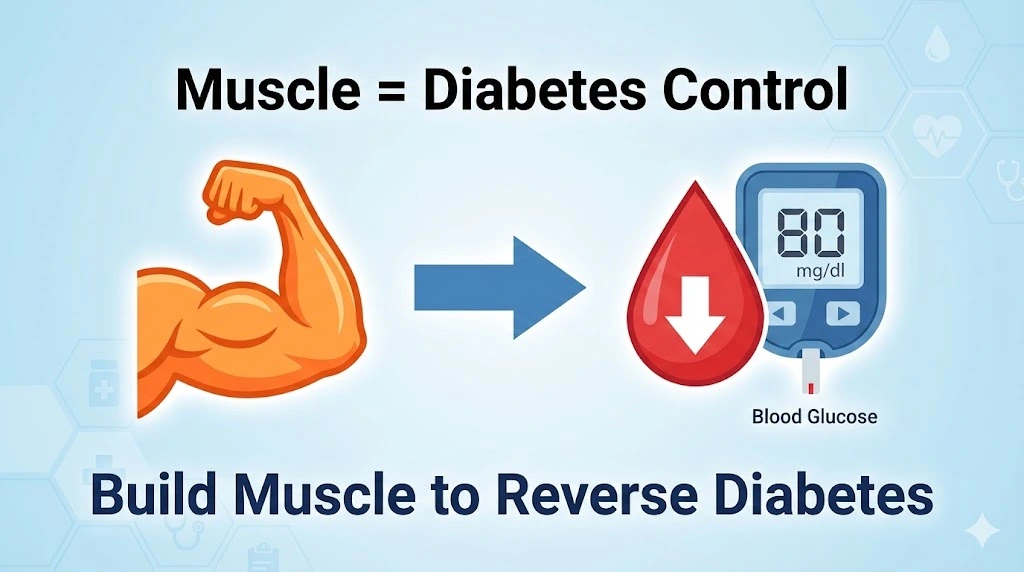
Strength training for diabetes activates GLUT-4 transporters, allowing glucose to enter muscle cells without insulin.
- Improves insulin sensitivity for 24–48 hours
- Reduces liver and visceral fat
- Stabilizes blood sugar fluctuations
- Improves metabolic flexibility
This is why insulin resistance exercise must focus on strength.
The Redial Beginner Routine
Weekly Structure
- Monday — Strength Day A
- Tuesday — Mobility + Conditioning
- Wednesday — Strength Day B
- Thursday — Mobility + Core Stability
- Friday — Strength Day A
- Saturday — Recovery
- Sunday — Recovery
Phase 1 (Week 1–2): Mobility + Muscle Activation
Daily Mobility Routine (10 minutes)
- Neck rotations
- Shoulder rolls
- Cat–camel
- Hip circles
- Torso twists
- Ankle rotations
- Deep breathing
Light Activation (5 minutes)
- Wall push-ups
- Chair squats
- Glute bridges
Phase 2 (Week 3–5): Strength Training Begins
Strength Day A
- Chair squats
- Wall push-ups
- Glute bridges
- Resistance band rows
- Bicep curls (bottles)
Strength Day B
- Step-ups
- Chair tricep dips
- Hip hinge
- Shoulder press
- Bird-dog
Conditioning (Tuesday)
Low-impact conditioning supports metabolism without joint stress.
Phase 3 (Week 6–8): Strength + Core
Advanced Strength Day A
- Weighted squats
- Incline push-ups
- Glute bridge holds
- Heavy band rows
- Farmer’s carry
Advanced Strength Day B
- Split squats
- Tricep dips
- Banded hip hinge
- Overhead press
- Dead bug
Core Stability (Thursday)
- Plank
- Side plank
- Bird-dog
- Seated knee tucks
Why This Exercise Plan for Diabetes Reversal Works
- Builds lean muscle mass
- Improves insulin sensitivity
- Reduces liver fat
- Joint-safe for beginners
- Ideal for overweight diabetics
This approach aligns with our Diabetes Reversal Program and supports obesity reduction through Obesity Reversal.
FAQs
Is walking necessary for diabetes reversal?
No. Strength training and insulin resistance exercise matter more than walking.
What if I can’t squat?
Chair squats or wall-supported movements work perfectly.
When will I see results?
Blood sugar improvements often appear within 10–14 days.
Final Verdict
Exercise plan for diabetes reversal must prioritise strength.
This structured beginner routine is safe, realistic, and clinically proven at Redial Clinic.
Your journey doesn’t start with steps. It starts with strength.
References
- Journal of Applied Physiology — GLUT-4 activation through muscle contraction
- Diabetes Care — Strength training improves glycemic control
- Harvard Medical School — Muscle mass and insulin sensitivity
- ADA Clinical Guidelines — Resistance training recommendations
- American Diabetes Association
Medical Disclaimer: This content is for educational purposes only and does not substitute professional medical advice, diagnosis, or treatment. Always consult your physician or a qualified healthcare provider before making any changes to your medication, diet, or treatment plan. Individual results may vary.

 Facebook
 Instagram
 LinkedIn