





Emotional Eating & Diabetes: Breaking the Cycle
Emotional eating and diabetes often go hand in hand, creating a hidden cycle that disrupts blood sugar control even when someone “eats healthy most of the time.” Many diabetic patients tell me:
“I know what to eat. My problem is—I eat when I’m stressed, angry, lonely, or tired.”
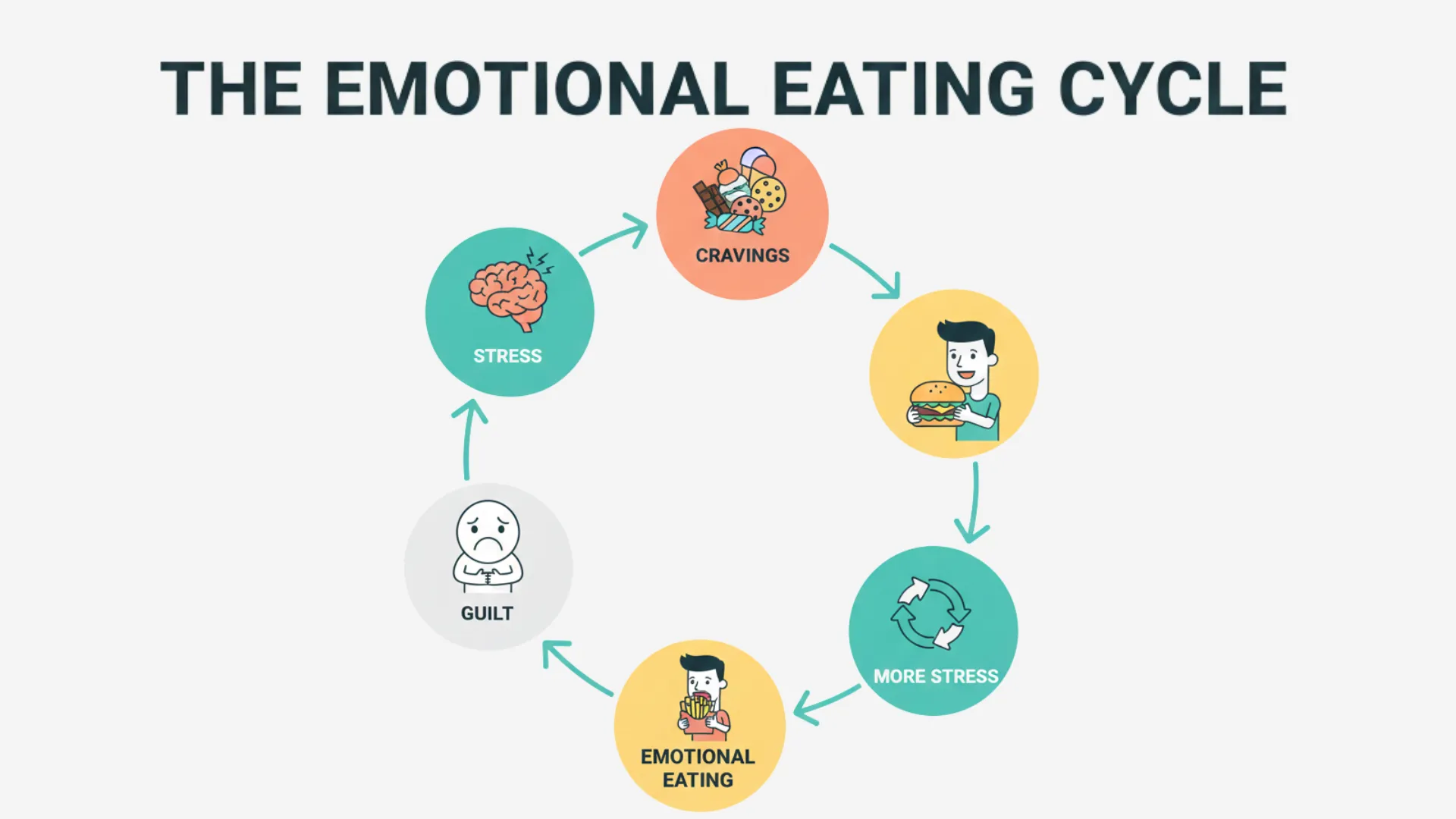
This isn’t a lack of discipline — it’s a deeply wired brain-emotion-food loop. When emotions rise, the brain seeks comfort. And comfort usually looks like:
- Sugary tea
- Biscuits & namkeen
- Sweets
- Chocolates
- Bread, pasta & rice
- Fried snacks
These foods create a dopamine spike — a moment of relief — followed by guilt… and rising blood sugar. That guilt becomes a new emotional trigger, continuing the cycle.
Why Emotional Eating Is More Common in Diabetics
Diabetic patients are biologically more vulnerable to stress eating diabetes patterns due to elevated insulin, unstable glucose, and chronic stress.
| Biological Factor | Impact |
|---|---|
| High insulin levels | Increase cravings and hunger |
| Fluctuating glucose | Increase irritability and anxiety |
| Sleep disturbance | Reduces self-control around food |
| Chronic stress | Elevates cortisol → cravings for sugar and refined carbs |
The brain learns:
Stress → Eat sugar → Temporary relief → Higher glucose → More stress.
Signs You Are Stuck in the Emotional Eating Cycle
- Sudden cravings after stress or conflict
- Eating without physical hunger
- Preferring junk for comfort
- Hiding eating from family
- Promising “never again” but repeating it
- Feeling guilt afterward
Case Reflection
A 44-year-old diabetic patient once told me:
“Stress from work pushes me to grab sweets. But then I stress more because my sugars stay high.”
Once we addressed the trigger instead of the food, her HbA1c dropped from 8.6 to 5.2 in just 18 weeks. Behavioral change was the key — not a stricter diet.
The Science Behind Why Stress Feels Like Hunger
Stress → ↑ Cortisol → ↑ Ghrelin → Cravings for:
- Chocolate
- Rice and desserts
- Fried comfort foods
This explains why emotional hunger vs physical hunger becomes confusing under stress. It is not a personal failure — it is biology.
How to Break the Cycle: Behavioral Approaches
1. Delay—Don’t Deny
When cravings hit, say: “I will have it after 10 minutes.”
Most emotional cravings last only 8–12 minutes.
2. Stress Replacement Ritual
Swap food-relief with non-food relief:
- Strength training (even 10 minutes)
- Reading
- Breathing exercises
- A short walk
3. Emotional Check-In
Before eating, ask yourself:
“Am I hungry in my stomach or in my mind?”
4. Build an “Emergency Comfort Kit”
Keep stabilizing foods ready:
- Black coffee
- Sauteed paneer
- Boiled eggs
- Greek yogurt
- Cheese cubes
- Nuts and seeds
What to Eat When Emotional Eating Is Triggered
| Best Comfort Choices | Why They Work |
|---|---|
| Greek yogurt + 5 almonds | Protein + fat reduce cravings |
| Egg omelette | Calms hunger hormones |
| Paneer or tofu | Slows digestion, stabilizes glucose |
| Chicken/mutton/fish | Long-lasting satiety |
Our goal is to soothe the brain safely — not punish it.
Final Verdict
Emotional eating and diabetes are closely connected. The moment you learn to soothe emotions without food:
- Cravings reduce
- Blood sugar stabilizes
- Weight loss becomes easier
- Mood improves
- Diabetes reversal becomes sustainable
Explore our scientific programs:
- Diabetes Reversal
- Obesity Reversal
- Hypertension Reversal
- PCOS Management
- Lifespan Extension
- Anti-Cancer Diet Support
FAQs
1. Is emotional eating different from food addiction?
Yes. Emotional eating is triggered by feelings, while food addiction is compulsive and persistent.
2. Why do I crave sweets when I’m stressed?
Stress increases cortisol, which signals the brain to seek fast-energy foods like sugar and refined carbs.
3. Does emotional eating increase HbA1c?
Yes. Repeated glucose spikes from binge eating raise HbA1c over time.
4. How long does it take to stop emotional eating?
Most patients see significant change in 4–8 weeks with structured behavioral strategies.
References
- Harvard Medical School – Stress, Appetite & Reward Pathway Report (NIH Source)
- American Diabetes Association — Emotional Eating & Blood Sugar Response Study
- International Journal of Obesity — Dopamine Reward Pathways
- Endocrine Society Review — Cortisol, Sleep & Cravings
Medical Disclaimer: This content is for educational purposes only and does not substitute professional medical advice, diagnosis, or treatment. Always consult your physician or a qualified healthcare provider before making any changes to your medication, diet, or treatment plan. Individual results may vary.

 Facebook
 Instagram
 LinkedIn