



The 7-day diabetes reversal meal plan you are about to read is not a diet — it is a system designed to stabilise glucose, protect muscle, reduce cravings, and support long-term metabolic reversal.
The Story: When Meera Realised Her Meals Needed a System
Meera, a 44-year-old HR professional, wasn’t overeating or secretly having sugar. Her real struggle was lack of structure. Breakfast was whatever was quickest, lunch was whatever the office served, and dinner was whatever her kids wanted. Nothing supported blood sugar. Nothing protected muscle.
At Redial Clinic, we didn’t give her complicated recipes. We gave her something far more powerful — a structured diabetes meal template she could plug into her real life. That template is exactly what you’re about to read.
The 7-Day Diabetes Reversal Meal Template
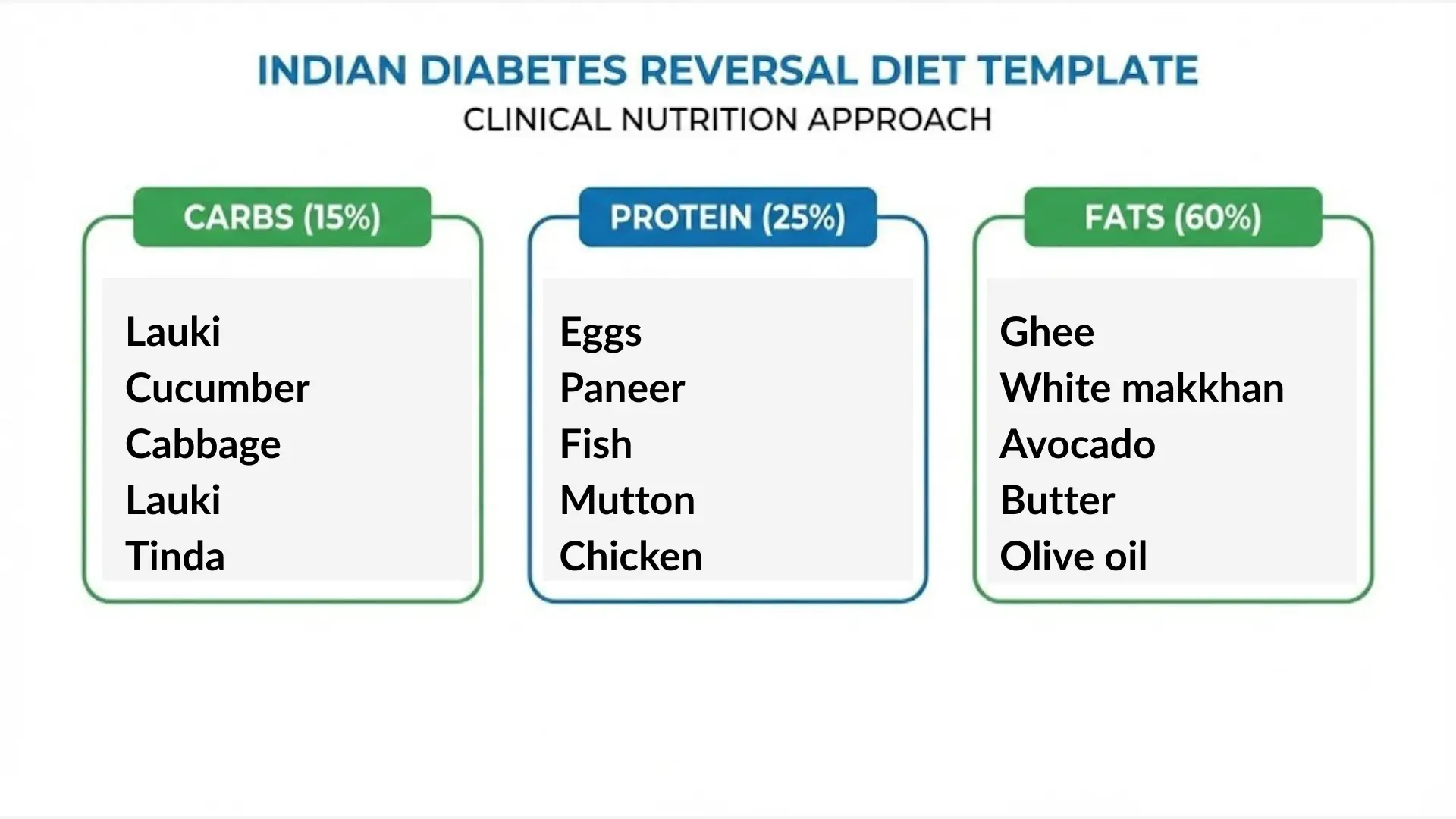
This template follows the core diabetes reversal framework: 15% carbs • 25% protein • 60% healthy fats. Oils include desi ghee, white makkhan, virgin coconut oil, and extra virgin olive oil.
Daily Meal Structure (Same for All 7 Days)
Breakfast Template (Stabilise Morning Glucose)
The 7-day diabetes reversal meal plan begins with stabilising morning glucose. The goal: protein + healthy fats + low carbs to prevent cravings for 4–5 hours.
A patient in their sixties with type 2 diabetes, high blood pressure and high cholesterol worked with us to identify which foods pushed the numbers up, with the plan adjusted monthly. After nine months HbA1c was 5.8%, fasting sugar was 86 and triglycerides had fallen from 390 to 66 [units to confirm]. Individual results vary
Choose:
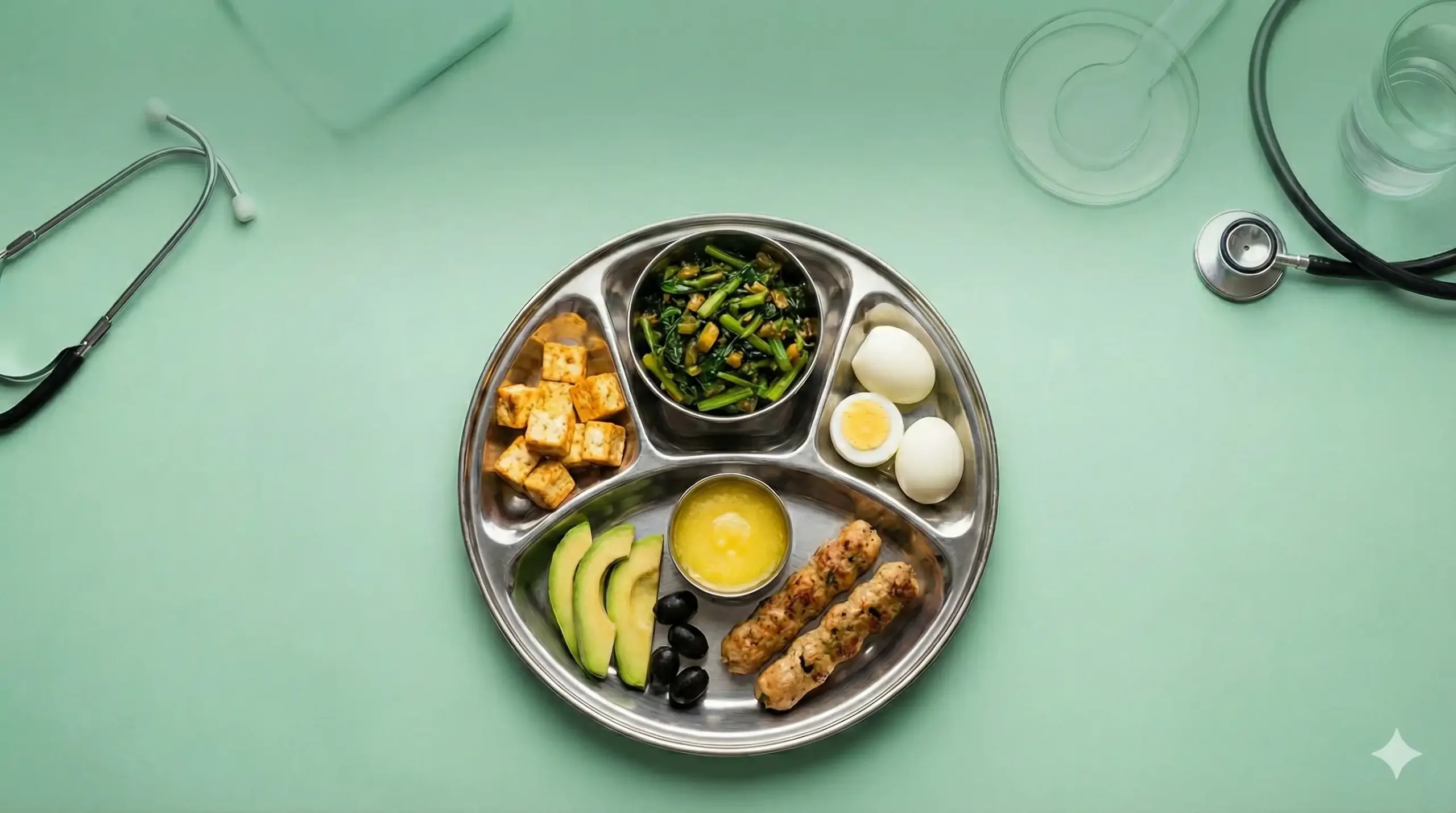
- Main protein: paneer, soya chunks, eggs, mutton, fish, chicken
- Healthy fat: ghee, coconut oil, nuts, seeds
- Hydration or fibre: cucumber, spinach, chia, lemon water
Example Template:
- Protein
- Healthy fats
- Low-GI support
Lunch Template (Heaviest Meal of the Day)
Lunch works best for nutrients because insulin sensitivity is naturally higher mid-day.
Choose:
- Protein: paneer, soya chunks, eggs, fish, mutton, chicken
- Vegetables: lauki, bhindi, palak, cabbage, or any non-starchy vegetable
- Healthy fats: ghee, olive oil, makkhan
- Optional: soup for added satiety
Example Template:
- Main protein
- Vegetable sabzi
- Soup
- Healthy fats
Dinner Template (Lightest Meal)
A light low-carb dinner improves fasting sugars by the next morning.
Choose:
- Protein: paneer, soya, eggs, chicken, mutton, fish
- Vegetable: any non-starchy option
- Soup or sautéed support vegetables
Example Template:
- Protein
- Veg
- Light soup OR sauté
Why This Template Works
- Reduces glucose load daily: Low-carb meals prevent spikes.
- Protects muscle mass: Higher protein lowers insulin resistance.
- Keeps hunger away: Healthy fats maintain satiety.
- Brings consistency without boredom: Template stays same, ingredients change.
- Creates a repeatable lifestyle: No recipes needed — just structure.A patient in their sixties with fatty liver, who had never drunk alcohol, had moderate liver fat on scan. After the role of carbohydrates was explained and the diet restructured, a repeat scan at three months showed mild fat. The patient had lost 7.5 kg and the waist was down from 43 to 39 inches. Individual results vary.
FAQs
1. Can I use this template for months?
Yes. This 7-day diabetes reversal meal plan is designed to be sustainable long-term.
2. Can vegetarians follow this?
Absolutely. Paneer, tofu, soya, and Greek yogurt offer excellent variety.
3. Are fruits allowed?
Only low-GI fruits like berries, kiwi, and avocado.
4. Should I pair this with exercise?
Yes. Strength training 3–4 days a week significantly improves insulin sensitivity.
5. How soon will sugars drop?
Most patients see improvements within 7–14 days with consistent structure.
In FreeStyle Libre data from two patients, average glucose over consecutive 14-day windows fell from 157 to 123 mg/dL in one and from 163 to 124 mg/dL in the other. These are individual readings, not trial results.
Final Verdict: Structure Beats Willpower Every Single Time
Most diabetic patients don’t fail due to lack of discipline — they fail due to lack of a system. This 7-day diabetes reversal meal plan is a metabolic framework that can be reused, customised, and scaled easily. It delivers:
- Stable blood sugars
- No cravings
- Better energy
- Improved cholesterol
- Reduced belly fat
- Strength for workouts
For a personalised 7-day or 4-week plan based on weight, blood tests, and daily routine, begin your individualized Diabetes Reversal Plan at Redial Clinic.
Next Step
Book a Metabolic Assessment at Redial Clinic, Green Park, New Delhi.
If your blood sugar has been creeping up — or you have been managing type 2 diabetes for years without knowing what is actually driving it — a metabolic assessment can map your insulin resistance, liver fat and pancreatic reserve.
References
- Evert AB, Dennison M, Gardner CD, et al., “Nutrition Therapy for Adults With Diabetes or Prediabetes: A Consensus Report,” Diabetes Care, 2019. https://doi.org/10.2337/dci19-0014
- Goldenberg JZ, Day A, Brinkworth GD, et al., “Efficacy and safety of low and very low carbohydrate diets for type 2 diabetes remission,” BMJ, 2021. https://doi.org/10.1136/bmj.m4743
- Jing T, Zhang S, Bai M, et al., “Effect of Dietary Approaches on Glycemic Control in Patients with Type 2 Diabetes: A Systematic Review with Network Meta-Analysis of Randomized Trials,” Nutrients, 2023. https://doi.org/10.3390/nu15143156
- Churuangsuk C, Hall J, Reynolds A, et al., “Diets for weight management in adults with type 2 diabetes: an umbrella review of published meta-analyses and systematic review of trials of diets for diabetes remission,” Diabetologia, 2022. https://doi.org/10.1007/s00125-021-05577-2
- Fan T, Lin M-H, Kim K, “Intensity Differences of Resistance Training for Type 2 Diabetic Patients: A Systematic Review and Meta-Analysis,” Healthcare, 2023. https://doi.org/10.3390/healthcare11030440
- Church TS, Blair SN, Cocreham S, et al., “Effects of aerobic and resistance training on hemoglobin A1c levels in patients with type 2 diabetes: a randomized controlled trial,” JAMA, 2010. https://doi.org/10.1001/jama.2010.1710
- Haghighatdoost F, Salehi-Abargouei A, Surkan PJ, Azadbakht L, “The effects of low carbohydrate diets on liver function tests in nonalcoholic fatty liver disease: A systematic review and meta-analysis of clinical trials,” Journal of Research in Medical Sciences, 2016. https://doi.org/10.4103/1735-1995.187269
- Ko G-J, Rhee CM, Kalantar-Zadeh K, Joshi S, “The Effects of High-Protein Diets on Kidney Health and Longevity,” Journal of the American Society of Nephrology, 2020. https://doi.org/10.1681/ASN.2020010028
Medical Disclaimer: This content is for educational purposes only and does not substitute professional medical advice, diagnosis, or treatment. Always consult your physician or a qualified healthcare provider before making any changes to your medication, diet, or treatment plan. Individual results may vary.

 LinkedIn