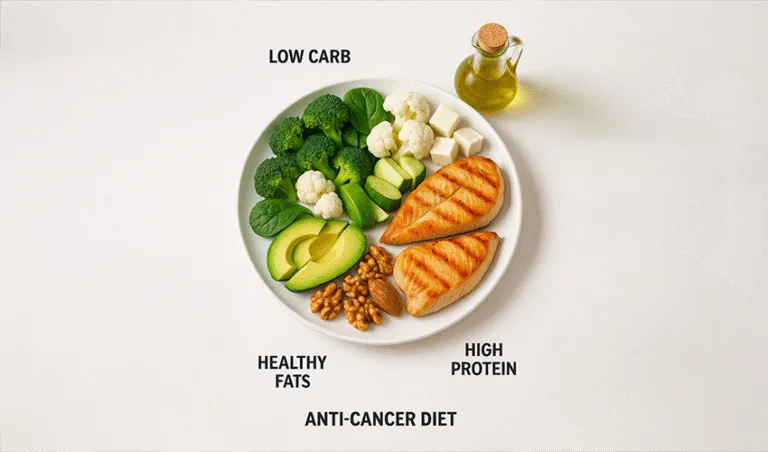




What role does nutrition play in cancer treatment?
Nutrition during cancer treatment is supportive care, not treatment itself. It cannot cure cancer. What it can do is help maintain nutritional status, preserve muscle mass, manage treatment side effects, support recovery, and improve quality of life during the treatment process. For many patients, good nutrition support is associated with better tolerance of chemotherapy, reduced treatment delays, and faster post-surgical recovery. International guidelines from ESPEN (European Society for Clinical Nutrition and Metabolism) and ASCO (American Society of Clinical Oncology) consistently recommend proactive nutritional care alongside oncology treatment.
What nutrition support genuinely helps with:
- Preventing unintentional weight loss and muscle wasting during treatment
- Managing chemotherapy-induced nausea, taste changes, and appetite loss
- Supporting recovery from surgery, including wound healing and return to normal eating
- Managing radiation-related swallowing difficulty or bowel changes
- Supporting immune function and general resilience during treatment
- Transitioning to long-term healthy eating patterns during survivorship
What nutrition support does not do:
- Cure cancer — no diet, supplement, or eating pattern cures cancer
- Replace chemotherapy, radiation, surgery, or other oncology-prescribed treatment
- Prevent all cancer recurrence — lifestyle factors reduce risk but do not eliminate it
- Justify extreme or restrictive diets that compromise nutritional status
Cancer cachexia — why unplanned weight loss is a clinical emergency
Cancer cachexia is a multifactorial syndrome characterised by unintentional loss of muscle mass and body weight during cancer treatment, driven by both reduced food intake and cancer-related metabolic changes. It affects roughly half of all advanced cancer patients and is directly associated with worse treatment tolerance, reduced quality of life, and poorer outcomes. Cachexia is not ordinary weight loss — it requires active clinical nutrition intervention, not a wait-and-see approach.
Key features that distinguish cachexia from ordinary weight loss:
- Disproportionate loss of muscle mass even when some fat is preserved
- Reduced appetite and food intake that is difficult to reverse with willpower alone
- Progressive functional decline — weakness, fatigue, reduced mobility
- Metabolic changes that mean calories alone do not fully reverse the muscle loss — protein adequacy and in some cases resistance exercise are essential
What effective cachexia nutrition support includes:
- Early identification — unintentional weight loss of 5% or more should trigger formal nutritional assessment
- High-protein dietary planning to preserve muscle, targeted to 1.2–1.5g per kg body weight daily (higher than general population targets)
- Energy-dense food strategies for patients with reduced appetite — smaller portions, more frequent meals, nutrient-dense preparations
- Oral nutritional supplements where diet alone cannot meet requirements — coordinated with oncology care
- Resistance-focused movement where clinically appropriate — muscle preservation benefits from use, not just nutrition
The Indian kitchen has exactly the right tools for preventing cachexia — when used with purpose. Moong dal khichdi cooked with one tablespoon of ghee and served with full-fat curd alongside is calorie-dense, protein-containing, soft, and tolerated even on difficult-appetite days. Soft scrambled eggs. Soft paneer. Full-fat milk warmed with ghee and haldi. A small banana when appetite is very low and calories are the immediate priority. These are not exotic interventions — they are familiar foods deployed with clinical intent.
The standard hospital diet advice for cancer patients — “eat light, easy on the stomach” — is nutritionally counterproductive. Light means fewer calories and less protein, which accelerates muscle loss. The correct approach is calorie-dense, protein-adequate, and soft-textured: not light. We plan for this distinction explicitly from the first consultation.
Early nutrition support — ideally before or at the start of treatment — consistently outperforms crisis intervention mid-way through a treatment cycle. By the time cachexia is flagged at 8–10% weight loss, the muscle loss is significant and much harder to reverse.
Nutrition during chemotherapy
Chemotherapy commonly causes nausea, vomiting, taste changes, mouth sores, fatigue, and appetite loss. Nutrition strategy during chemo focuses on maintaining adequate calorie and protein intake despite these challenges, managing specific side effects through food choices and timing, and supporting the immune system and recovery between treatment cycles. The specific plan depends on the chemotherapy regimen, your current nutritional status, and which side effects are most problematic for you.
Common chemotherapy nutrition issues and how we approach them:
- Nausea and vomiting — small, frequent, bland meals; cold foods often better tolerated than hot; separating fluids from solid meals; identifying trigger foods and avoiding them
- Taste changes — experimenting with flavours, including tart and savoury options; metallic taste often improves with plastic utensils and marinated foods; sweetness aversion is common
- Mouth sores (mucositis) — soft, bland, lukewarm foods; avoiding acidic, spicy, and rough-textured foods; adequate hydration; attention to oral hygiene
- Appetite loss — energy-dense foods in smaller portions; timing meals with the day’s best appetite window; oral nutritional supplements when food intake alone is insufficient
- Fatigue — adequate iron, B12, and calorie intake; family-supported meal preparation; working with treatment timing rather than against it
- Immune function — food safety during neutropenic phases; avoiding raw and undercooked foods when white cell counts are low; coordinated with oncology guidance
Indian kitchen equivalents that work during chemotherapy: Moong dal khichdi, cooked soft with ghee, is the single most useful food — calorie-dense, protein-contributing, easy to swallow, mild enough during nausea, and tolerated even on difficult days. Soft scrambled eggs. Plain full-fat curd served cold (cold foods are consistently better tolerated than hot during metallic-taste phases — a common chemotherapy side effect). Strained dal soup. Soft paneer. Warm milk with ghee and haldi when solid food is not possible.
This is the one phase of care where the three-structured-meals rule is suspended. During active chemotherapy, eating frequency and caloric adequacy take priority over meal structure. Small amounts more often, prioritising whatever the patient can tolerate, is the correct approach when appetite is severely suppressed.
Food safety during neutropenic phases is non-negotiable. This is specific guidance for Indian households: unpasteurised curd and street-bought dahi, raw salads and sprouts, unwashed fruit, and any food prepared outside the home should be avoided entirely when white cell counts are low. Home-cooked, well-heated food only. The risk is real and the consequence of a food-borne infection during active immunosuppression is severe.
Nutrition during radiation therapy and post-surgical recovery
Radiation therapy produces side effects specific to the area being treated — head and neck radiation causes swallowing difficulty and mouth sores; abdominal radiation causes bowel changes; pelvic radiation causes digestive and urinary changes. Post-surgical cancer care depends on the type of surgery — head and neck surgery affects swallowing, abdominal surgery affects digestion, and all surgical recovery benefits from protein adequacy for wound healing. Nutrition planning for both phases is site-specific and coordinated with the oncology team.
Head and neck radiation / surgery
Swallowing difficulty, mouth sores, taste loss, and reduced saliva can make eating extremely challenging. Strategies include soft and pureed food textures where needed, attention to hydration, coordination with speech and swallowing therapy where indicated, and high-calorie-density preparations so that reduced intake still delivers nutritional value.
Abdominal and pelvic radiation
Bowel irritation, diarrhoea, and changes in absorption are common. Plans often involve lower-fibre phases during acute treatment, gradual reintroduction, attention to hydration and electrolyte balance, and specific food avoidance for patients with radiation-induced enteritis.
Post-surgical nutrition
Recovery from cancer surgery requires higher-than-baseline protein intake for wound healing and muscle recovery, attention to specific surgical considerations (e.g. smaller meals more frequently after gastric surgery, adapted textures after head-and-neck surgery), and gradual return to normal eating patterns. We coordinate with the surgical team’s post-op dietary instructions — we do not override them.
Cancer survivorship — nutrition after treatment ends
After active cancer treatment ends, nutrition priorities shift from ‘getting through treatment’ to ‘building long-term resilience and reducing recurrence risk’. Survivorship nutrition focuses on sustained healthy dietary patterns, maintaining a healthy weight (but not aggressive weight loss), adequate physical activity, limited alcohol, and building the metabolic foundation that supports long-term wellbeing. Major oncology organisations — including the American Cancer Society, WCRF/AICR, and the American Institute for Cancer Research — publish consistent survivorship guidelines we align with.
Principles of survivorship nutrition:
- Sustained healthy eating pattern — generous vegetables and whole foods, adequate protein, controlled refined carbohydrate and ultra-processed food, reduced red and processed meat intake
- Weight management appropriate to the individual — avoiding both unintentional weight loss and metabolic-risk weight gain
- Regular physical activity, including resistance training to rebuild muscle lost during treatment, where medically appropriate
- Limited alcohol intake — alcohol is an established cancer risk factor and survivorship is not the time to liberalise
- Addressing the treatment-related metabolic consequences — some cancer treatments increase risk of diabetes, cardiovascular disease, and osteoporosis, all of which benefit from proactive nutrition care
- Indian-food-centric planning — sustainable over decades, culturally appropriate, family-compatible
What our nutrition support service includes
We provide structured nutritional assessment, phase-specific dietary planning coordinated with your oncology team, ongoing follow-up during treatment and into survivorship, and family education — because cancer nutrition is rarely a one-person project. The specific plan depends on your cancer type, treatment protocol, current nutritional status, and personal preferences.
Who this service is for — and who it is not for
This service is designed for
- Patients in active cancer treatment (chemotherapy, radiation, surgery) who want structured nutrition support
- Patients who have experienced unintentional weight loss, appetite issues, or treatment-related eating difficulty
- Cancer survivors in the post-treatment phase seeking sustainable long-term nutrition care
- Patients diagnosed with cachexia or at risk of it — early nutritional intervention is genuinely valuable
- Family members seeking guidance on feeding a loved one through cancer treatment
This service is not
- Alternative or replacement cancer treatment — we do not offer any nutrition-based approach in place of oncology care
- A cure-seeking program — diets, supplements, and eating patterns do not cure cancer
- A cancer-screening or diagnostic service — cancer diagnosis and staging belong to oncology
- A second opinion on your cancer treatment — we support the plan your oncology team has set, we do not override it
What we will not do — our ethical line
We will not offer or imply nutritional cancer cure. We will not recommend that any patient stop, delay, or modify oncology treatment based on dietary intervention. We will not endorse supplements, protocols, or diets that lack evidence or that interfere with active cancer treatment. If you arrive with expectations that we will work in place of oncology rather than alongside it, we will be honest that we are not the right fit — and we will say so clearly.
We hold this line because cancer patients are vulnerable to overpromising, and because the cost of bad cancer nutrition advice is not inconvenience — it can be worsened outcomes. The supportive care we offer is genuinely valuable. The supportive care we do not offer, we do not pretend to.